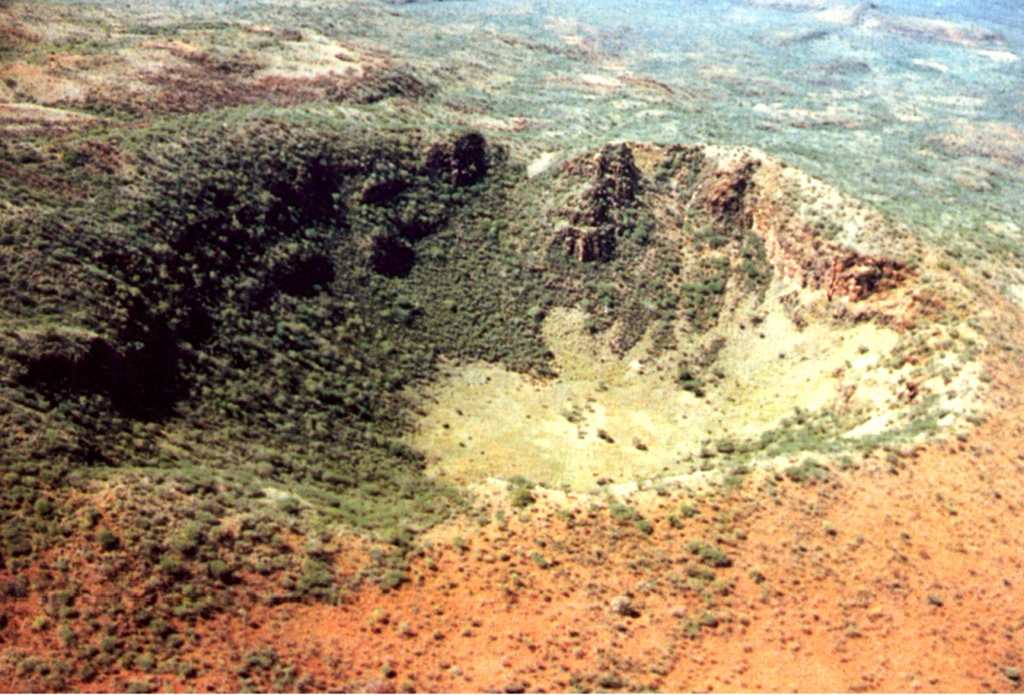
Rising quietly in the northern reaches of Lake Baringo, the Korosi Volcano stands as one of Kenya’s most fascinating yet least-explored geological wonders. Unlike many of its Rift Valley counterparts, Korosi is a shield volcano without a summit caldera, marking it as a unique feature in the chain of volcanic formations that define the Great Rift landscape. Its ancient lava veins and rugged terrain are the remnants of fissure eruptions that are believed to have occurred simultaneously with the formation of Ol Kokwe Island, located just to the south.
The Korosi volcanic field spans approximately 30 square kilometers, featuring steaming fumaroles, bubbling geothermal pools, and hot ponds scattered across its summit cones and flanks. These geothermal features serve as visible reminders of the immense natural energy simmering beneath the earth’s surface—a potential that Kenya’s Geothermal Development Company (GDC) is actively harnessing through the ambitious Korosi–Silali Geothermal Project.
The project, which includes three key geothermal sites—Silali, Paka, and Korosi—aims to produce up to 3,000 MW of renewable energy by 2030, cementing Kenya’s position as a leader in sustainable power generation in Africa. Infrastructure development around the volcano has already progressed, with a 70-kilometer access road completed to open up the Korosi–Silali geothermal zone for exploration and drilling.
Beyond its energy promise, Korosi Volcano remains an awe-inspiring natural landmark, showcasing the raw beauty and power of geological forces that continue to shape the Rift Valley. Its scenic lava plains, active fumaroles, and steaming vents offer a rare opportunity for geologists, adventure travelers, and nature enthusiasts to witness the earth’s energy in its purest form.
For visitors, Korosi is more than just a volcano—it is a living testament to Kenya’s volcanic heritage and renewable future, a place where ancient fire meets modern innovation beneath the wide Baringo skies.