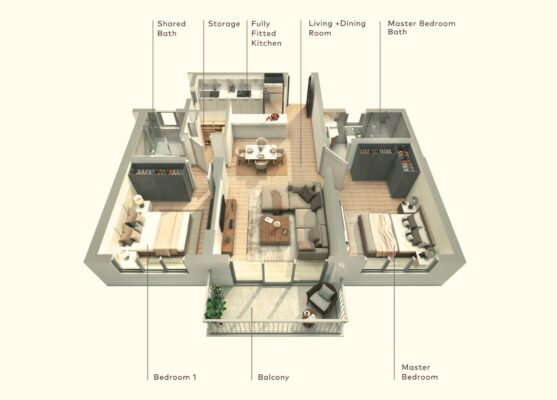
Kilimani 2 BR Apartment developments continue attracting strong investor attention as Nairobi’s upper-middle-income residential market evolves toward rental-focused urban property investing. Located in Kilimani, one of Nairobi’s most established residential and mixed-use districts, this apartment investment targets buyers seeking recurring rental income, long-term capital preservation, and exposure to one of Kenya’s most resilient urban property markets.
Priced from approximately KES 12 million, with estimated monthly rent of KES 65,000, projected rental yields of 6.5%, and annual appreciation estimates around 2%, the development reflects the growing investor preference for professionally planned urban apartments within prime Nairobi neighborhoods.
Kilimani remains one of the city’s most active apartment markets due to its proximity to Nairobi CBD, Westlands, Upper Hill, and major commercial zones. The area continues attracting professionals, expatriates, young families, and investors seeking modern housing with strong urban accessibility.
About Kilimani 2 BR Apartment
| Feature | Details |
|---|---|
| Project Name | Kilimani 2 BR Apartment |
| Location | Kilimani, Nairobi |
| Property Type | 2 Bedroom Apartment |
| Starting Price | Approx. KES 12 Million |
| Monthly Rent Estimate | Approx. KES 65,000 |
| Estimated Rental Yield | 6.5% |
| Estimated Appreciation | 2% p.a. |
| Building Age | 0–5 Years |
| Ownership Structure | Freehold |
| Developer | Mi Vida Homes |
The project reflects the continued strength of Nairobi’s urban apartment investment market.
Why Kilimani Remains a Prime Residential Zone
Kilimani has transformed significantly over the past two decades into one of Nairobi’s leading apartment investment districts.
Several factors continue driving demand:
- Proximity to major business hubs
- Strong road connectivity
- Growing expatriate population
- High demand for rental housing
- Expanding retail and lifestyle infrastructure
Unlike emerging commuter towns, Kilimani already functions as a mature urban residential ecosystem with established commercial activity and stable tenant demand.
Apartment Investing Is Reshaping Nairobi’s Property Market
Many Kenyan investors previously focused heavily on land ownership. However, apartment investments are increasingly becoming attractive because they generate recurring rental income while requiring relatively lower capital than standalone housing developments.
Developments such as the Kilimani 2 BR Apartment appeal to investors seeking:
- Monthly cash flow
- Long-term urban property exposure
- Professional tenant markets
- Capital preservation
- Modern lifestyle demand
This reflects broader urbanization trends across Nairobi’s upper-middle-income neighborhoods.
Understanding the 6.5% Rental Yield
Rental yield measures annual rental income relative to the property’s purchase price.
Rental Yield=Property PriceAnnual Rental Income×100
With estimated monthly rent of KES 65,000, the apartment targets investors seeking stable passive income within Nairobi’s premium rental market.
Rental Yield Comparison
| Property Type | Typical Yield |
|---|---|
| Prime Nairobi Apartments | 4%–7% |
| Satellite Town Apartments | 5%–8% |
| Commercial Real Estate | 7%–10% |
| MMFs | 9%–13% |
| Treasury Bonds | 10%–16% |
Actual returns depend on occupancy levels, maintenance costs, service charges, and market conditions.
Understanding the 2% Appreciation Estimate
Property appreciation measures the expected increase in asset value over time.
Future Property Value=Current Value×(1+r)t
Where:
- r represents annual appreciation
- t represents investment duration
A 2% annual appreciation estimate reflects relatively conservative growth expectations typical of mature urban apartment markets where prices are already elevated.
In areas like Kilimani, investors often prioritize rental stability and occupancy over aggressive appreciation.
Monthly Rental Income Potential
The estimated monthly rental income of approximately KES 65,000 positions the apartment within Nairobi’s mid- to upper-middle-income rental segment.
Factors Supporting Rental Demand
| Demand Driver | Impact |
|---|---|
| Urban Employment | Strong tenant demand |
| Expatriate Population | Premium rental market |
| Proximity to CBD | Better occupancy |
| Lifestyle Amenities | Tenant retention |
| Security Infrastructure | Higher desirability |
Rental performance may still fluctuate depending on economic conditions and market supply levels.
Freehold Ownership Adds Long-Term Security
The project offers freehold ownership, an important feature within Kenya’s real estate market.
Benefits of Freehold Ownership
Freehold ownership generally allows investors to:
- Hold property indefinitely
- Transfer ownership freely
- Use property as collateral
- Benefit fully from appreciation
- Avoid lease expiry concerns
Nevertheless, buyers should still conduct independent legal due diligence before purchase.
Comparing Kilimani to Other Nairobi Apartment Markets
| Area | Entry Apartment Prices | Rental Demand | Appreciation Potential |
|---|---|---|---|
| Kilimani | High | Very Strong | Moderate |
| Westlands | High | Very Strong | Moderate |
| Ruaka | Moderate | Growing | High |
| Syokimau | Moderate | Strong | Growing |
| Ruiru | Lower | Growing | High |
Kilimani remains attractive primarily because of stable urban demand and strong occupancy potential.
Who Should Consider the Kilimani 2 BR Apartment?
Passive Income Investors
The apartment may suit investors prioritizing stable monthly rental income.
Diaspora Investors
Managed urban apartments often appeal strongly to overseas Kenyan investors.
Young Professionals
The location suits professionals working in Nairobi’s commercial districts.
Long-Term Wealth Preservation Investors
Prime urban property often serves as a stable long-term asset within diversified portfolios.
Risks to Consider
Even premium urban property investments carry important risks.
| Risk | Potential Impact |
|---|---|
| Oversupply | Increased rental competition |
| Vacancy Risk | Reduced income |
| High Service Charges | Lower net returns |
| Economic Slowdowns | Weaker tenant demand |
| Interest Rate Increases | Higher financing costs |
Projected rental yields and appreciation rates are estimates rather than guaranteed outcomes.
Why This Investment Matters
Kilimani reflects Nairobi’s broader transformation into a high-density urban residential market driven by apartment living, mixed-use developments, and growing commuter populations.
The combination of:
- strong tenant demand,
- central urban positioning,
- modern apartment developments,
- and lifestyle infrastructure
continues supporting investor interest within the area.
As Nairobi grows vertically, apartment ownership in strategic urban districts may remain one of Kenya’s most important long-term wealth preservation strategies.
How Kenyan Investors Are Diversifying Wealth
Modern Kenyan investors increasingly combine property ownership with diversified financial products such as:
- Money Market Funds
- Treasury Bills
- SACCO savings
- NSE equities
- Pension investments
Urban apartments often serve as recurring income-producing assets within broader long-term financial portfolios.
Final Thoughts
The Kilimani 2 BR Apartment highlights the continued strength of Nairobi’s urban apartment investment market. Its location in Kilimani, projected rental yield, estimated monthly rental income, and freehold ownership structure position it as a potentially attractive option for investors seeking recurring income and long-term property stability.
However, investors should carefully evaluate service charges, financing costs, occupancy trends, and legal documentation before committing capital.
As Nairobi’s urban housing market continues evolving, professionally planned apartments in prime residential districts may remain among Kenya’s most resilient income-generating property investments.
Read Also: Imperial Gardens Kikuyu Investment Review