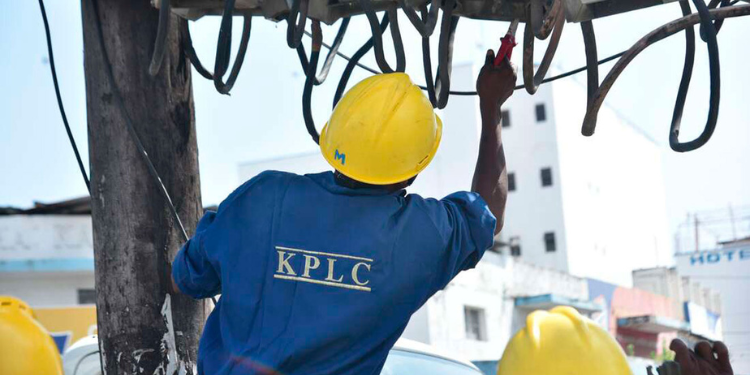
The ownership structure of Kenya Power and Lighting Company provides one of the clearest insights into how wealth, institutional capital, political influence, and long-term investing intersect in Kenya’s economy. Kenya Power is a public company listed in the Nairobi Securities Exchange (NSE). The company is a national electric utility company, managing electric metering, licensing, billing, emergency electricity service and customer relations.
In addition to electricity distribution to industry, offices, schools, hospitals, and domestic users, KPLC also offers optic fiber connectivity to telecommunication companies through its optical fiber cable network that runs along its high voltage power lines across the country mainly to manage the national power grid.
As the company responsible for electricity distribution across Kenya, Kenya Power occupies a uniquely strategic role in East Africa’s largest economy. Nearly every major sector depends on the utility giant:
- manufacturing,
- banking,
- transport,
- telecommunications,
- healthcare,
- government services,
- and households.
Because of its strategic importance, Kenya Power has attracted some of Kenya’s most powerful investors, including:
- the Kenyan government,
- nominee accounts linked to multinational banks,
- wealthy businessmen,
- investment firms,
- and prominent political figures.
The 2025 shareholder register reveals a fascinating picture of concentrated ownership and long-term wealth accumulation within Kenya’s stock market.
One of the most talked-about names on the register is Ndindi Nyoro, who emerged as one of the largest identifiable private shareholders in the company.
This article takes a detailed look at Kenya Power’s top investors, what their holdings mean, how nominee accounts work, and what ordinary Kenyans can learn from the company’s ownership structure.
Kenya Power’s Top 20 Shareholders
The shareholder register as of June 30, 2025 shows the following major investors in Kenya Power:
| Rank | Shareholder | Total Shares | Ownership % |
|---|---|---|---|
| 1 | The National Treasury and Economic Planning | 978,492,034 | 50.09% |
| 2 | Standard Chartered Kenya Nominees Ltd A/C 131550500013 | 58,000,000 | 2.97% |
| 3 | Standard Chartered Nominees RESD A/C KE11450 | 32,518,589 | 1.66% |
| 4 | Ndindi Nyoro | 26,918,500 | 1.38% |
| 5 | Standard Chartered Nominees NON-RESD A/C KE11794 | 24,076,800 | 1.23% |
| 6 | Naran Khimji Hirani & Virji Khimji Hirani | 24,055,364 | 1.23% |
| 7 | KCB Nominees Limited A/C 915B | 22,887,288 | 1.17% |
| 8 | Hydery (P) Limited | 15,068,500 | 0.77% |
| 9 | James Ochieng Ooko | 13,662,400 | 0.70% |
| 10 | Wilson Kimeli Maiyo | 12,100,000 | 0.62% |
| 11 | Kaleb Investments Limited | 12,000,100 | 0.61% |
| 12 | Wizpro Enterprises Limited | 11,898,500 | 0.61% |
| 13 | Nehemia Ikuah Ruhari | 11,273,655 | 0.58% |
| 14 | Kipkales Chetalam Kale | 11,100,355 | 0.57% |
| 15 | SBM Bank Nominees Ltd AC 0037 | 10,908,200 | 0.56% |
| 16 | Stanbic Nominees Limited AC R7551918 | 8,064,279 | 0.41% |
| 17 | John Njuguna Ngugi | 7,987,800 | 0.41% |
| 18 | Tapioca Limited | 7,112,500 | 0.36% |
| 19 | Kestrel Capital Nominee Services Limited A/C 13 | 6,500,000 | 0.33% |
| 20 | Darmes Naran Khimji Hirani & Naran Khimji Hirani | 6,478,300 | 0.33% |
The Kenyan Government Still Controls Kenya Power
The largest shareholder remains:
The National Treasury and Economic Planning.
The government owns more than:
- 978 million shares,
representing: - approximately 50.09% ownership.
This gives the state majority control over Kenya Power.
Why Government Ownership Matters
Governments often retain majority stakes in utility companies because electricity infrastructure is considered:
- critical national infrastructure,
- economically strategic,
- and essential for national security.
State ownership allows government influence over:
- electricity pricing,
- national electrification,
- rural connectivity,
- and energy policy.
However, government control can also expose companies to:
- political interference,
- tariff pressure,
- delayed reforms,
- and bureaucratic inefficiencies.
Ndindi Nyoro’s Massive Kenya Power Stake
One of the most notable revelations in the shareholder register is the presence of:
Ndindi Nyoro.
The register shows he owns:
- 26,918,500 shares,
worth approximately 1.38% of the company.
This makes him one of the largest publicly identifiable individual shareholders.
Estimated Value of Ndindi Nyoro’s Shares
The actual value depends on the market price.
If Kenya Power shares trade at:
- KES 8 per share,
the estimated stake value becomes:
26,918,500×8=215,348,000
Estimated value:
Approximately KES 215 million.
If the price rises to:
- KES 15 per share,
the valuation increases dramatically:
26,918,500×15=403,777,500
Estimated value:
Over KES 403 million.
Why Investors Buy Kenya Power Shares
Investors buy Kenya Power shares for several reasons:
- dividend income,
- long-term capital appreciation,
- strategic infrastructure exposure,
- and portfolio diversification.
Large shareholders often focus on:
- long-term wealth accumulation,
- passive income,
- and influence in strategic sectors.
Understanding Nominee Accounts
A significant portion of Kenya Power shares are held through nominee accounts.
Examples include:
- Standard Chartered Nominees
- KCB Nominees
- Stanbic Nominees
- SBM Nominees
What Is a Nominee Account?
A nominee account holds shares on behalf of:
- wealthy investors,
- pension funds,
- corporations,
- insurance firms,
- or foreign institutions.
The nominee acts as a custodian while the real beneficial owner remains private.
Why Wealthy Investors Use Nominee Accounts
Nominee accounts offer:
- confidentiality,
- easier portfolio administration,
- centralized custody,
- and efficient institutional investing.
This means some of Kenya Power’s true largest investors may not be publicly visible.
The Hirani Family Holdings
The register also highlights substantial holdings linked to the Hirani family.
Combined holdings associated with:
- Naran Khimji Hirani,
- Virji Khimji Hirani,
- and Darmes Hirani
represent tens of millions of shares.
This reflects how wealthy business families quietly accumulate major positions in listed companies over time.
Institutional Investors and Their Influence
Institutional investors remain central to Kenya Power ownership.
These include:
- banks,
- pension schemes,
- nominee custodians,
- insurance firms,
- and investment companies.
Institutional investors influence:
- board appointments,
- AGM voting,
- corporate governance,
- and strategic direction.
Local Retail Investors Still Matter
The shareholder analysis shows:
- local East African individual investors own approximately 28.84% of Kenya Power.
That demonstrates strong local participation despite institutional dominance.
Foreign Investor Participation
Foreign investors collectively control:
- approximately 126 million shares,
representing: - about 6.47% ownership.
Foreign participation usually reflects:
- confidence in Kenya’s economy,
- infrastructure growth potential,
- and long-term market opportunities.
Kenya Power’s Share Distribution Reveals Wealth Concentration
The shareholder distribution reveals how concentrated stock ownership is.
The company has:
- 35,011 shareholders.
But only:
- 145 shareholders own more than 1 million shares.
Those 145 investors collectively control:
over 1.59 billion shares.
Meanwhile:
- more than 18,000 shareholders own fewer than 1,000 shares each.
This demonstrates how financial wealth remains concentrated among relatively few investors.
How Major Investors Earn Money
Large investors make money through:
- Dividends
- Share price appreciation
Dividend Example
If Kenya Power declared:
- KES 0.50 dividend per share,
an investor holding:
- 20 million shares,
would earn: 20,000,000×0.50=10,000,000
Estimated annual dividend:
KES 10 million before tax.
This explains why long-term investors aggressively accumulate shares in strategic companies.
Risks Facing Kenya Power Investors
Despite opportunities, the company faces several risks:
- regulatory pressure,
- debt obligations,
- political influence,
- tariff disputes,
- inflation,
- and currency fluctuations.
These risks can affect:
- profits,
- dividends,
- and share prices.
Lessons From Kenya Power’s Investors
Kenya Power’s shareholder structure reveals several realities:
- ownership creates wealth,
- long-term investing matters,
- institutional capital dominates strategic sectors,
- and stock markets remain powerful wealth-building tools.
It also demonstrates how:
- quietly accumulating shares over years can create enormous financial influence.
Frequently Asked Questions About Kenya Power Investors
Who is the largest shareholder in Kenya Power?
The National Treasury is the largest shareholder with approximately 50.09% ownership.
How many shares does Ndindi Nyoro own?
Ndindi Nyoro owns approximately 26.9 million shares.
What are nominee accounts?
Nominee accounts hold shares on behalf of investors or institutions.
Can ordinary Kenyans buy Kenya Power shares?
Yes. Shares are available through the Nairobi Securities Exchange.
Why do wealthy investors buy utility stocks?
Utility stocks may provide:
- dividends,
- strategic infrastructure exposure,
- and long-term stability.
Conclusion
Kenya Power’s shareholder register offers a rare glimpse into the intersection of wealth, politics, institutional capital, and infrastructure ownership in Kenya. From government dominance to powerful nominee accounts and wealthy private investors, the company’s ownership structure reflects how strategic assets are controlled within modern economies.
The presence of major investors such as Ndindi Nyoro highlights how long-term stock accumulation can quietly generate immense wealth and influence. At the same time, the shareholder distribution demonstrates the significant concentration of capital among a relatively small group of investors.
For ordinary Kenyans, the lesson is clear:
- investing is accessible,
- ownership matters,
- and long-term participation in public markets can become a powerful tool for wealth creation.
Read Also: Fuliza Users Surge as Average Loans Shrink Sharply