Nyongesa Sande
No Result
View All Result
  • News
    • World
    • Africa
  • Politics
  • Business
  • Tech
  • AI
  • Telecom
  • Sports
  • Opinion
  • Lifestyle
  • Live
Nyongesa Sande
  • About Us
    • Nyosake Designers
      • Nyosake Webmasters
      • Nyosake Investment
  • Contact Us
    • Newsroom Contact
  • Ownership Disclosure
  • Advertise
No Result
View All Result
Nyongesa Sande
No Result
View All Result
  • News
  • Politics
  • Business
  • Tech
  • AI
  • Telecom
  • Sports
  • Opinion
  • Lifestyle
  • Live
ADVERTISEMENT

Home » If Mugabe Had Failed, He Would Be a World Darling

If Mugabe Had Failed, He Would Be a World Darling

NyongesaSande News Desk by NyongesaSande News Desk
1 year ago
in Africa
Reading Time: 3 mins read
A A

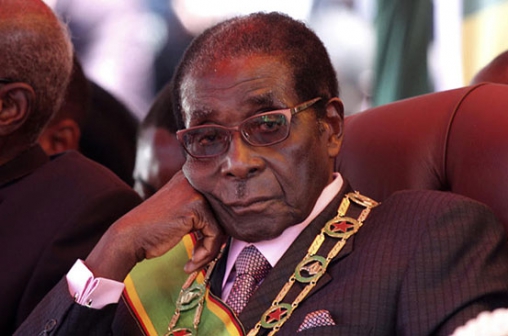
Like Uganda’s Idi Amin—but unlike South Africa’s Nelson Mandela—Robert Mugabe fully understood that national liberation meant little without economic emancipation. This stance made Amin and Mugabe enemies of the West, while Mandela was embraced as an icon. Those celebrating Mugabe’s fall fail to grasp imperialism’s role in shaping African leadership narratives. Mugabe’s legacy will be more appreciated in the coming years.

  • The Comparison Between Amin and Mugabe
  • Mugabe and Land Reform: The Root of His Villainization
  • The Western Shift in Perception
  • Zimbabweans and the Fall of Mugabe
  • Mandela vs. Mugabe: The Legacy Question

The Comparison Between Amin and Mugabe

While Mugabe came to power in 1980 as an anti-colonial hero, Amin exited in 1979 under Western vilification. Yet, both men saw independence as inseparable from economic liberation. Unlike South Africa, where the ANC settled for political freedom while postponing the economic question, Zimbabwe and Uganda sought immediate economic restructuring.

Under Amin’s rule, Ugandans first felt truly independent when he expelled Asians in 1972. Prior to this, Kampala’s economy was dominated by Indian businessmen. The West, particularly the UK, responded with aggressive anti-Amin propaganda, painting him as a tyrant. The BBC, The Guardian, and The Economist orchestrated his downfall, reinforcing imperialist narratives. The ensuing economic hardship was used to discredit him, despite being a product of colonial economic structures that had marginalized native Ugandans.

ADVERTISEMENT

Mugabe and Land Reform: The Root of His Villainization

Like Amin’s economic war, Mugabe’s land reform policies sought to rectify colonial injustices. By independence, a mere 6,000 white settlers controlled 15.5 million hectares of Zimbabwe’s best land, while 700,000 Black farmers were confined to poor soil. Land redistribution was a necessary step toward true liberation.

Mugabe’s policies mirrored the violence used by colonial settlers to acquire land. Zimbabwean war veterans used force to reclaim land from white farmers in the early 2000s. This triggered economic sabotage, orchestrated by Western interests. Like Amin, Mugabe became a global villain, with Western media gleefully dramatizing Zimbabwe’s economic turmoil while ignoring external economic warfare.

ADVERTISEMENT

The Western Shift in Perception

Both Mugabe and Amin were initially embraced by Western powers. Mugabe even received a knighthood. However, once they pursued radical economic policies, they were swiftly rebranded as dictators. The same happened with Congo’s Patrice Lumumba and Ghana’s Kwame Nkrumah. The pattern is clear: African leaders who resist economic imperialism become pariahs.

Zimbabweans and the Fall of Mugabe

Zimbabweans’ resentment toward Mugabe stemmed from three main factors:

  1. State-Building Struggles: Post-colonial African states faced immense challenges, including political instability and economic sabotage from the West.
  2. Mugabe’s Age and Leadership Style: His long rule, exacerbated by media portrayals of him as an aging dictator, weakened his popularity.
  3. Grace Mugabe’s Influence: Her extravagant lifestyle and perceived political overreach damaged Mugabe’s credibility.

Despite Mugabe’s removal, ZANU-PF and land reforms remain intact. This suggests that his vision, though controversial, is not entirely discarded.

ADVERTISEMENT

Mandela vs. Mugabe: The Legacy Question

Mandela’s South Africa faces increasing internal unrest over unresolved economic disparities. In contrast, Zimbabwe’s land reforms, despite their challenges, ensured land redistribution. As Africa continues to grapple with neocolonialism, Mugabe’s approach may gain greater recognition in hindsight.

Slavoj Žižek was right: Mandela will never be Mugabe. If Mugabe had abandoned economic liberation, he would have been a universal hero. Instead, he chose a difficult but necessary path—one that history may judge more favorably in the years to come.

Google Add as a Preferred Source on Google
Previous Post

There Will Be No Kings in Nigeria: Ending Monarchies to Unite Our Republic

Next Post

Imunify360 vs. cPHulk

NyongesaSande News Desk

NyongesaSande News Desk

Nyongesa Sande offers diverse content across news, technology, entertainment, and more, aiming to provide readers with a wide range of informative and engaging articles. NYONGESA SANDE's dedicated team provides our audience not only with the highly relevant news but also with outstanding interactive experience.

Related Posts

nairobi skyline 2026
Africa

Eastern Africa Cities: Top 10 Leading Urban Centres in 2026

3 days ago
Filing KRA Returns Via WhatsApp in 7 Steps
Kenya Revenue Authority (KRA)

Filing KRA Returns Via WhatsApp: A Simple Guide for Kenyans

3 days ago
Top 10 Largest Economies in Africa in 2026: Projected GDPs
Africa

African Union List of Member Countries

3 weeks ago
Uganda Expands Digital Number Plate Rollout
Uganda

Uganda Expands Digital Number Plate Rollout

1 month ago
KRA Says Personal M-PESA Transfers Won’t Be Monitored
Kenya Revenue Authority (KRA)

KRA Says Personal M-PESA Transfers Won’t Be Monitored

1 month ago
KRA landlord registration
Kenya Revenue Authority (KRA)

KRA Landlord Registration: 5 Key Changes in New Tax Plan

1 month ago
Load More
Next Post
Imunify360 vs. cPHulk

Imunify360 vs. cPHulk

60 Secret Android Codes You Need to Know in 2025

60 Secret Android Codes You Need to Know in 2025

ADVERTISEMENT

Who We Are

Nyongesa Sande

NyongesaSande.com is a digital news and media platform covering breaking news, business, technology, AI, politics, sports, world affairs and African innovation.

News Sections

  • News
    • World
    • Africa
  • Politics
  • Business
  • Tech
  • AI
  • Telecom
  • Sports
  • Opinion
  • Lifestyle
  • Live

Editorial Standards

  • Editorial Policy
  • Fact Checking Policy
  • Corrections Policy
  • Ethics Policy
  • AI Usage Policy
  • News Tips
  • Submit Press Release

Legal

  • Privacy Policy
  • Terms of Use
  • Cookie Policy
  • Disclaimer
  • Risk Disclaimer
  • DMCA
  • Ad Choices

Our Company

  • About Us
    • Nyosake Designers
      • Nyosake Webmasters
      • Nyosake Investment
  • Contact Us
    • Newsroom Contact
  • Ownership Disclosure
  • Advertise
  • Privacy Policy
  • Terms of Use
  • Cookie Policy
  • Disclaimer
  • Risk Disclaimer
  • DMCA
  • Ad Choices

NyongesaSande.com is an independent digital news and media platform covering Africa, business, technology, AI, politics and global developments.

© 2026 NyongesaSande.com. All rights reserved.

No Result
View All Result
  • News
    • World
    • Africa
  • Politics
  • Business
  • Tech
  • AI
  • Telecom
  • Sports
  • Opinion
  • Lifestyle
  • Live

NyongesaSande.com is an independent digital news and media platform covering Africa, business, technology, AI, politics and global developments.

© 2026 NyongesaSande.com. All rights reserved.