


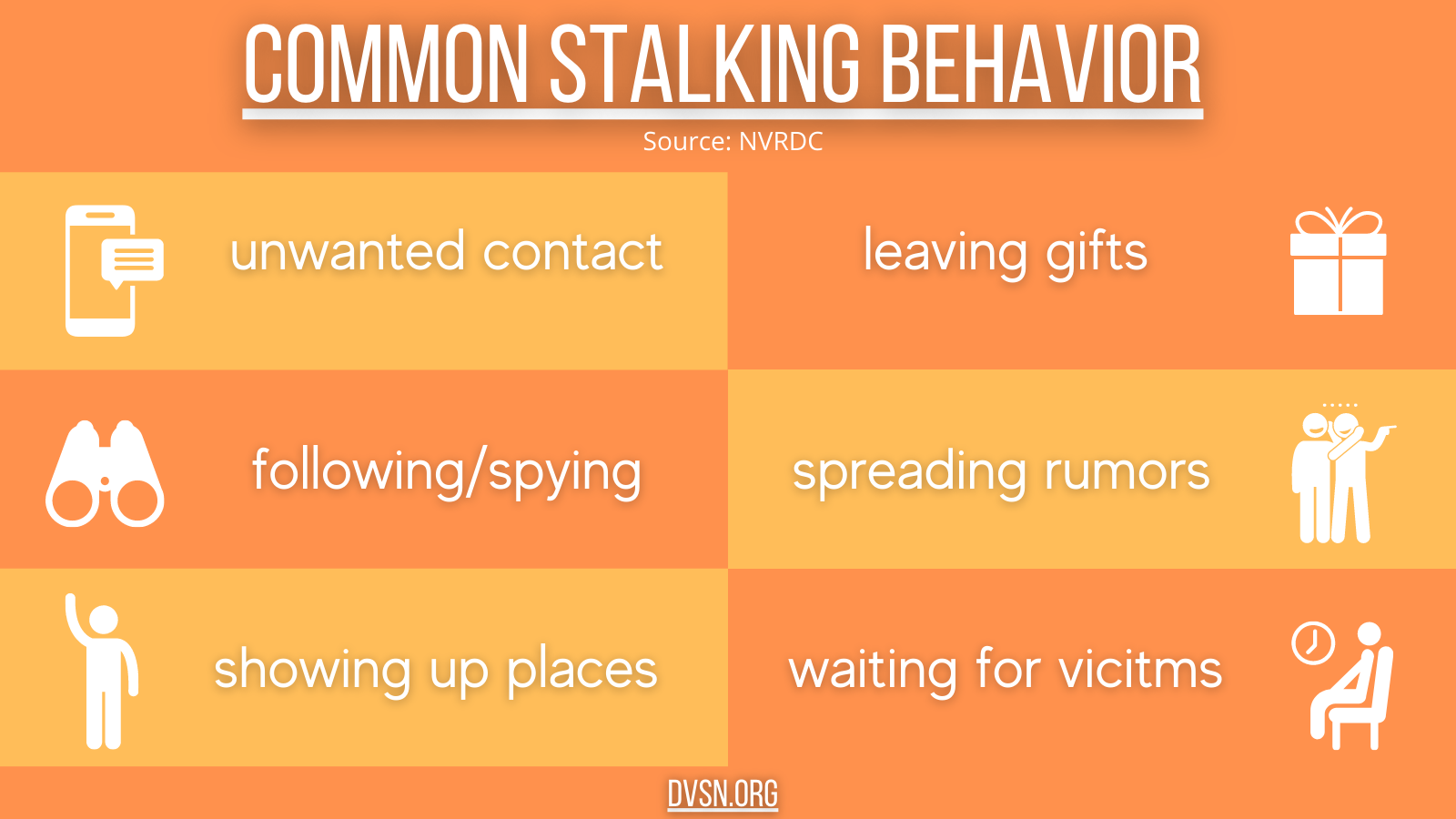
Spotting common stalking behavior is crucial for identifying and addressing potentially dangerous situations. Here are some signs of stalking behavior to watch out for:
- Unwanted Communication: Stalkers often attempt to initiate contact through various means, including phone calls, text messages, emails, social media messages, or letters, even after being asked to stop.
- Surveillance: A stalker may follow the victim or watch them from a distance, either in person or through the use of technology such as GPS tracking devices or spyware on phones and computers.
- Unwanted Gifts or Attention: Stalkers may send unsolicited gifts, letters, or other items to the victim, or show up uninvited at their home, workplace, or social events.
- Attempts to Control or Manipulate: Stalkers often try to control or manipulate the victim’s behavior, relationships, or daily activities. This could include monitoring their social media accounts, isolating them from friends and family, or interfering with their work or personal life.
- Harassment or Threats: Stalkers may engage in harassing or threatening behavior, including verbal threats, intimidation, or spreading rumors or false information about the victim.
- Repeated Violations of Boundaries: Stalkers may repeatedly violate the victim’s personal boundaries, such as showing up uninvited, loitering near their home or workplace, or refusing to respect their requests for privacy or space.
- Attempts to Intimidate or Frighten: Stalkers may use intimidation tactics to frighten or intimidate the victim, such as making threatening gestures or statements, damaging property, or displaying weapons.
- Unwanted Surveillance Online: Stalkers may monitor the victim’s online activity, including tracking their location through social media check-ins, commenting on their posts or photos, or creating fake accounts to harass or impersonate them.
- Unwanted Physical Contact: In some cases, stalkers may attempt to make unwanted physical contact with the victim, such as touching, grabbing, or even assaulting them.
- Persistent Behavior: Stalking behavior is typically persistent and ongoing, with the stalker continuing to pursue or harass the victim despite their efforts to avoid or discourage contact.
If you suspect that you are being stalked or if you observe any of these signs in someone else’s behavior, it’s important to take action to protect yourself or the victim. This may involve documenting incidents, seeking help from law enforcement or a trusted authority figure, and implementing safety measures to minimize the risk of harm.


