


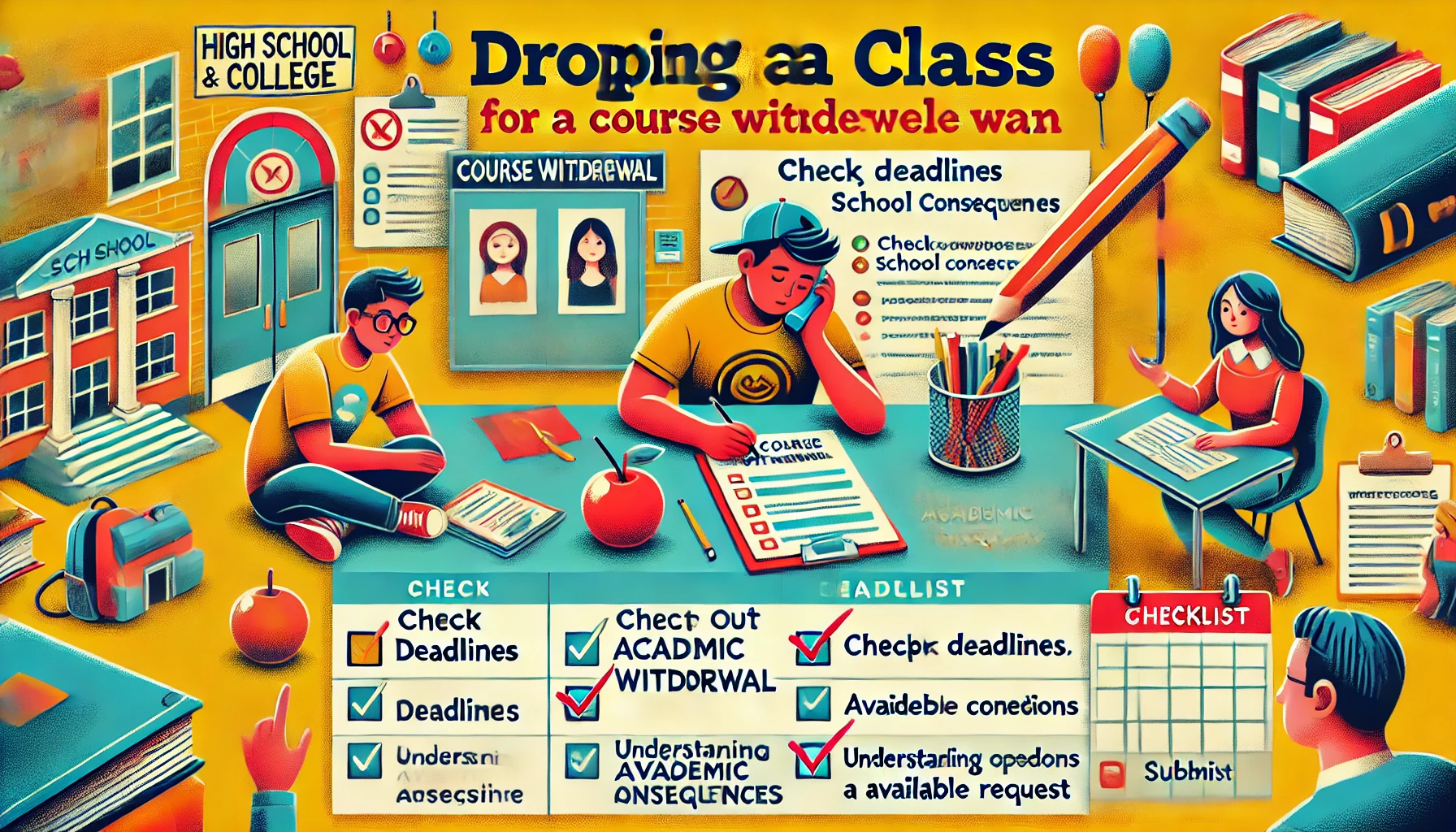
Sometimes, a class just isn’t the right fit. Maybe it’s too difficult, conflicts with your schedule, or you lost interest. Dropping a class can be a smart decision, but timing and process matter to avoid academic or financial penalties.
This guide covers how to withdraw from a class, key considerations, and tips to minimize negative consequences.
🔹 Part 1: Withdrawing from the Class
1. Check Your School’s Drop Deadline 📅
Every school has a withdrawal deadline, typically around week 8 of a 12-week semester.
🔹 Key Points to Remember:
✔ Dropping early = No record on your transcript.
✔ Withdrawing after the deadline = A “W” grade appears on your transcript.
✔ Missing the deadline = You receive a letter grade (which could lower your GPA).
🔹 Where to Find Deadlines:
- School website
- Registrar’s office
- Academic calendar
2. Withdraw Online via Your Student Portal 💻
Most schools allow withdrawals through the student registration system.
✅ Steps to withdraw online:
1️⃣ Log in to your student portal.
2️⃣ Go to class registration or add/drop section.
3️⃣ Find the class and select “Withdraw”.
4️⃣ Confirm your withdrawal and check for any notifications.
3. Contact the Registrar’s Office if Needed 🏫
If online withdrawal isn’t available, you may need to visit the registrar’s office or send an email.
✅ Steps for manual withdrawal:
✔ Visit the registrar’s office in person.
✔ Ask for a withdrawal form.
✔ Complete it with your name, student ID, and course details.
✔ Submit the form to finalize your withdrawal.
🔹 Tip: Some schools require a professor’s or advisor’s signature, so plan ahead.
4. Confirm Your Withdrawal is Processed ✅
Even after submitting your request, check your student portal or transcript to confirm the withdrawal was approved.
🔹 Why this is important:
✔ You don’t want to accidentally stay enrolled and receive a failing grade.
✔ Skipping class does NOT count as a withdrawal—you must officially drop the course.
🔹 Part 2: Should You Drop the Class?
1. Be Realistic About Your Reason 🤔
Consider why you want to drop the class.
✔ Good reasons to withdraw:
- The class is too difficult and will harm your GPA.
- The professor’s teaching style doesn’t work for you.
- You overloaded your schedule and feel overwhelmed.
- The class is not required for your degree or major.
❌ Think twice if:
- Dropping will make you fall below full-time student status.
- You need the class as a prerequisite for future courses.
- You’re dropping just because it’s boring—sometimes, required courses are necessary.
🔹 Pro Tip: If the class is hard, but you still want to succeed, consider tutoring, study groups, or talking to your professor before withdrawing.
2. Speak to an Academic Advisor 📞
Your advisor can help you:
✔ Understand withdrawal policies.
✔ Explore other options (e.g., taking the course pass/fail).
✔ Plan your schedule so dropping the class doesn’t delay graduation.
🔹 Tip: If you’re in high school, talk to your guidance counselor to see how dropping a class will affect your graduation requirements.
3. Check If Withdrawing Affects Your Financial Aid 💵
🔹 Key considerations for financial aid students:
✔ Dropping below full-time status could reduce your aid.
✔ Some grants and loans require you to complete a minimum number of credits.
✔ You may owe money back if your financial aid package is affected.
✅ What to do:
✔ Contact your school’s financial aid office before withdrawing.
✔ If necessary, replace the dropped class with another course to stay eligible.
4. Check How It Affects Your Eligibility for Programs 🏅
Some programs require you to maintain a certain number of credits:
✅ Who should be careful before dropping?
- Student-athletes – Must stay eligible under NCAA rules.
- International students – Dropping too many credits could affect your visa status.
- Scholarship recipients – Many scholarships require you to maintain a full course load.
🔹 Tip: If dropping will cause eligibility issues, talk to a school official to see if there are alternative solutions.
🔹 Part 3: Alternatives to Dropping a Class
✅ If you’re struggling, but don’t want to drop, try these:
1. Talk to Your Professor 📚
Many professors want to help and may offer:
✔ Extra help outside class
✔ Extensions on assignments
✔ Alternative grading options
🔹 Tip: Office hours are the best time to discuss your concerns!
2. Switch to Pass/Fail Instead of Letter Grade 🔄
Some schools allow you to take a class as Pass/Fail so it doesn’t affect your GPA.
🔹 How it works:
✔ If you pass, you get credit (without affecting GPA).
✔ If you fail, it may count as an incomplete.
3. Request an “Incomplete” Grade 📝
If personal issues (e.g., illness, family emergency) prevent you from finishing, you may qualify for an incomplete instead of withdrawing.
🔹 How to request:
✔ Talk to your professor and academic advisor.
✔ Provide documentation (e.g., medical records, personal statements).
✔ Complete the coursework later within an agreed timeframe.
🔹 Part 4: Final Steps After Dropping a Class
✅ What to do after you successfully withdraw:
1. Adjust Your Schedule 🗓
✔ If needed, add a replacement class to maintain credit hours.
✔ Update your study plan to stay on track for graduation.
2. Notify Financial Aid (if applicable) 💰
✔ Make sure dropping doesn’t affect your scholarship or aid.
3. Learn from the Experience 📖
✔ Reflect on why you dropped the class.
✔ Improve time management or study habits for future classes.
🎯 Final Tips for Success!
✅ Drop the class before the deadline to avoid transcript issues.
✅ Speak to an advisor before making a final decision.
✅ Check how it affects financial aid, eligibility, or graduation plans.
✅ Consider alternative options like tutoring, pass/fail grading, or an incomplete.
Dropping a class can be a smart decision if done strategically. By following the right process, you’ll avoid unnecessary stress and keep your academic goals on track.
🔹 Have you ever dropped a class? Share your experience below! 👇


