


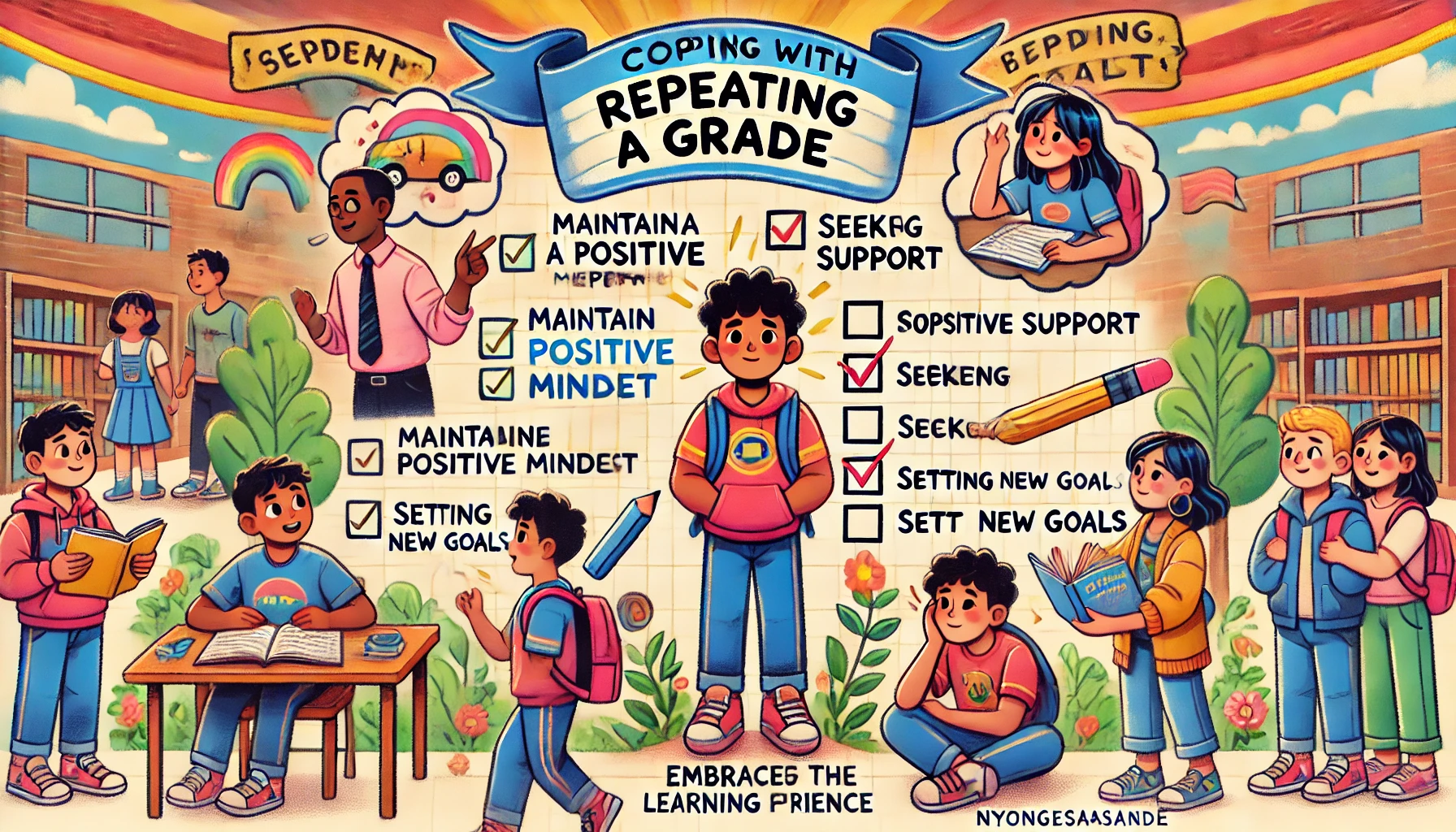
Being held back a grade can feel discouraging, but it’s not the end of the world. Many students repeat grades for different reasons—missed school days, struggling with material, or personal challenges.
Instead of viewing it as a setback, see it as an opportunity to master subjects, build confidence, and develop better habits. This guide will help you navigate the social impact, improve your academic performance, and make the most of your second chance.
🔹 Part 1: Handling the Social Impact
✔ 1. Don’t Be Too Hard on Yourself
✅ Repeating a grade does not mean you are stupid or a failure.
✅ Schools hold students back to help them succeed—not to punish them.
✅ Many successful people repeated grades, including Walt Disney and Albert Einstein.
🔹 Tip: Instead of feeling down, use this as motivation to prove you can succeed.
✔ 2. Decide How to Tell Others
✅ Some people may ask questions or make jokes—stay calm and confident.
✅ If someone teases you, respond with:
- “I’m taking my time to master things. Nothing wrong with that.”
- “I’ll be better prepared for the future now.”
🔹 Tip: If a friend truly supports you, they will stick by you regardless of your grade.
✔ 3. Stay in Touch With Old Friends
✅ Just because you’re not in their class doesn’t mean friendships have to end.
✅ Schedule hangouts, join clubs, or play sports together.
✅ If certain friends pressured you into bad habits, it may be time to move on.
🔹 Tip: Surround yourself with people who encourage your success.
✔ 4. Make New Friends
✅ Connect with your new classmates—they may share interests with you.
✅ Join sports, clubs, or extracurriculars to meet more people.
✅ Participate in class discussions—this makes meeting people easier.
🔹 Tip: Focus on confidence and being yourself—new friends will come naturally.
🔹 Part 2: Improving Academically
✔ 1. Understand Why You Were Held Back
✅ Be honest—was it missing school, struggling with a subject, or not putting in effort?
✅ If it was due to missing school, work on better attendance and time management.
✅ If it was academic struggles, focus on new study methods and extra help.
🔹 Tip: Identifying past mistakes will help you prevent repeating them.
✔ 2. Create a Study Plan
✅ Organize a schedule to manage homework, study time, and breaks.
✅ Use flashcards, online resources, and educational videos to improve understanding.
✅ Break tasks into small steps so studying feels less overwhelming.
🔹 Tip: Studying a little every day is better than cramming the night before.
✔ 3. Pay Attention in Class
✅ Sit near the front of the classroom to minimize distractions.
✅ Take clear notes and ask questions when confused.
✅ If you don’t understand something, review it before moving on.
🔹 Tip: Teachers notice effort—when you show dedication, they are more willing to help.
✔ 4. Complete All Assignments on Time
✅ Late work leads to lower grades and missing key concepts.
✅ Keep a homework planner or digital reminders.
✅ Create a study space at home—quiet, organized, and free of distractions.
🔹 Tip: If you struggle with assignments, talk to your teacher early before it becomes a bigger issue.
✔ 5. Improve Study Habits
✅ Find a study method that works for you:
- Flashcards for memorization
- Mind maps for visual learners
- Practice tests for exam prep
✅ Set realistic goals, like improving one subject at a time.
🔹 Tip: Reward yourself when you achieve study goals (small breaks, snacks, or fun activities).
🔹 Part 3: Seeking Extra Help
✔ 1. Speak Up When You Need Help
✅ If you’re struggling, ask for help early—don’t wait until it’s too late.
✅ Teachers appreciate students who take responsibility for learning.
✅ If you’re shy, write down your questions and ask after class.
🔹 Tip: There is no shame in needing help—smart students seek solutions.
✔ 2. Get a Tutor if Needed
✅ Schools often have free tutoring programs—ask a counselor.
✅ Some older students may offer tutoring for free or a low cost.
✅ Consider online resources like Khan Academy, Quizlet, or YouTube tutorials.
🔹 Tip: One-on-one help can make a huge difference in understanding difficult subjects.
✔ 3. Join Study Groups
✅ Studying with classmates makes learning more interactive and fun.
✅ Group members can quiz each other and explain confusing topics.
✅ Be sure to choose a group that actually studies, not just socializes.
🔹 Tip: Teaching a topic to someone else helps you understand it better.
🔹 Part 4: Maintaining a Positive Mindset
✔ 1. Stop Comparing Yourself to Others
✅ Everyone learns at different speeds—it’s okay to take your time.
✅ Focus on your progress, not what classmates are doing.
✅ Confidence helps you learn better—believe in yourself!
🔹 Tip: Your academic journey is unique—own it!
✔ 2. Develop a Growth Mindset
✅ See challenges as opportunities to grow, not failures.
✅ If you fail a test, learn what went wrong and try again.
✅ Instead of saying, “I’m bad at math,” say, “I’m getting better at math.”
🔹 Tip: Success comes from effort, persistence, and learning from mistakes.
✔ 3. Focus on the Future
✅ Repeating a grade does not define your future success.
✅ Many successful people struggled in school but achieved great things.
✅ Set long-term goals—whether it’s college, a dream job, or personal growth.
🔹 Tip: Your current struggle is temporary—keep pushing forward!
🔹 Conclusion: You Can Overcome This!
Repeating a grade may feel frustrating, but it’s a second chance to succeed. Instead of seeing it as a failure, use this time to build better habits, improve academically, and gain confidence.
✅ Key Takeaways:
✔ Stay positive—this is a chance to grow, not a punishment.
✔ Focus on effort and improvement instead of comparison.
✔ Seek help—teachers, tutors, and study groups can support you.
✔ Make new friends and keep old ones—social life doesn’t end.
✔ Look toward the future—this one year won’t define your life.
🔹 Final Tip: Success isn’t about being perfect—it’s about progress. Keep going, and you will achieve your goals! 🚀🎓


