


The Philippines is a popular destination for tourists, business travelers, and expatriates. Whether you’re visiting for leisure, work, study, or permanent residency, securing the correct Philippine visa is essential.
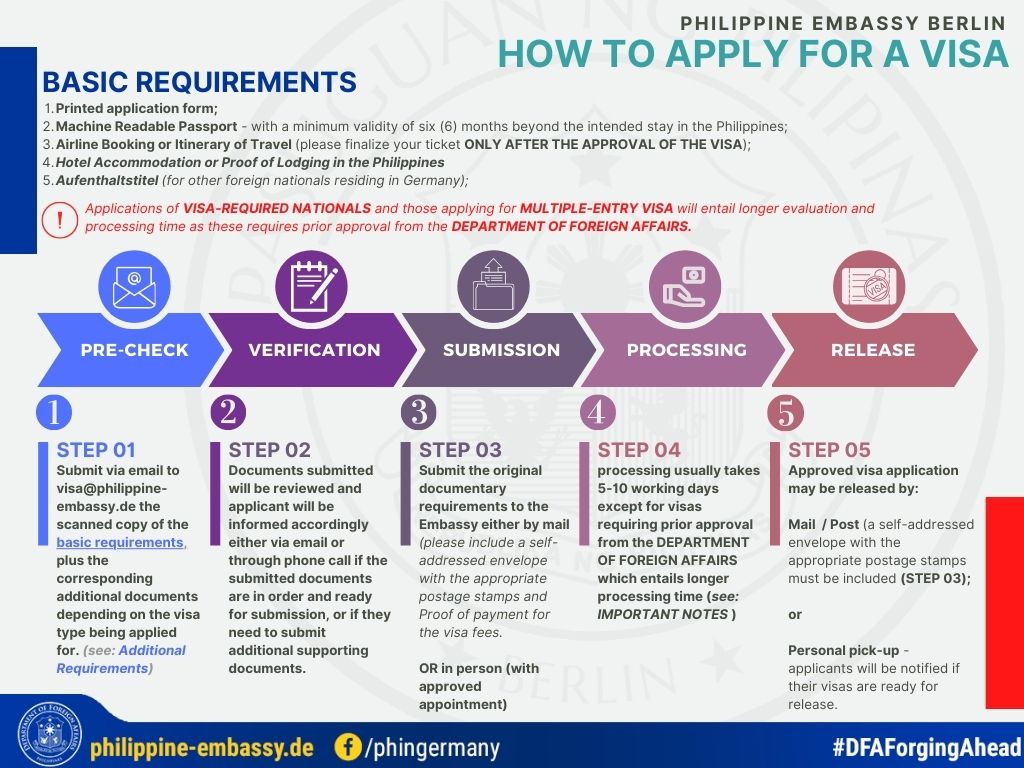
This step-by-step guide provides a detailed application process for obtaining a Philippine visa, including the types of visas, required documents, application fees, and processing times.
Types of Philippine Visas
The Philippine Bureau of Immigration (BI) and Department of Foreign Affairs (DFA) issue different types of visas depending on the applicant’s purpose of travel.
1️⃣ Non-Immigrant Visas (Temporary Stay)
✔ 9A Tourist Visa – For foreign nationals visiting for tourism, family visits, or business trips.
✔ 9C Seaman Visa – Issued to foreign seafarers entering Philippine ports.
✔ 9D Treaty Trader Visa – For foreign nationals investing in or trading with Philippine businesses.
✔ 47A2 Special Non-Immigrant Visa – For foreign nationals working in special government-approved projects.
✔ 9F Student Visa – For foreign students enrolled in accredited Philippine universities.
✔ 9G Pre-Arranged Employment Visa – For foreign workers with employer sponsorship in the Philippines.
2️⃣ Immigrant Visas (Permanent Stay)
✔ 13A Marriage Visa – For foreign spouses of Filipino citizens (valid indefinitely).
✔ 13G Returning Former Filipino Visa – For former Filipinos who wish to settle in the Philippines.
✔ Quota Visa (13 Series) – For foreign nationals with special skills, investments, or exceptional backgrounds (limited yearly).
3️⃣ Special Visas
✔ Special Investor’s Resident Visa (SIRV) – For foreign investors in Philippine businesses.
✔ Special Retiree Resident Visa (SRRV) – For foreign retirees under the Philippine Retirement Program.
✔ Special Economic Zone Visa (PEZA/Clark/Subic Freeport) – For foreign workers or investors in special economic zones.
Step 1: Determine Your Visa Type
Before applying, decide which Philippine visa suits your travel purpose.
📌 Tourists, family visitors, or business travelers? ➡ 9A Tourist Visa
📌 Going to study in the Philippines? ➡ 9F Student Visa
📌 Married to a Filipino citizen? ➡ 13A Marriage Visa
📌 Moving to work? ➡ 9G Work Visa
Once you’ve identified your visa type, gather the necessary documents for your application.
Step 2: Prepare the Required Documents
Each visa type has specific requirements, but general documents include:
📌 General Requirements (All Applicants)
✅ Completed Visa Application Form (available at Philippine embassies or DFA website)
✅ Valid Passport (at least 6 months validity from travel date)
✅ Passport-size Photos (2 copies, white background)
✅ Proof of Travel Purpose (e.g., flight itinerary, hotel booking, business invitation)
✅ Proof of Sufficient Funds (e.g., bank statements, employment certificate)
✅ Visa Application Fee (varies by country and visa type)
📌 Additional Requirements per Visa Type
📍 For Tourist Visa (9A):
✔ Tourist Itinerary & Accommodation Booking
✔ Round-trip Flight Ticket
✔ Invitation Letter from a Sponsor (if applicable)
📍 For Work Visa (9G):
✔ Employment Contract & Company Endorsement Letter
✔ Alien Employment Permit (AEP) from DOLE
✔ Bureau of Immigration Clearance
📍 For Student Visa (9F):
✔ Acceptance Letter from a Philippine University
✔ Proof of Tuition Payment & Financial Support
✔ Medical Clearance & Police Background Check
📍 For Marriage Visa (13A):
✔ Marriage Certificate (PSA Copy)
✔ Proof of Relationship (photos, joint bank accounts, etc.)
✔ NBI Clearance & Foreign Police Clearance
📍 For Business Visa (9D or SIRV):
✔ Investment Documents & Business Registration Papers
✔ Endorsement from the Department of Trade & Industry (DTI) or SEC
💡 Tip: Always check with the Philippine Embassy or Consulate in your country for updated requirements.
Step 3: Submit Your Visa Application
There are two main ways to apply for a Philippine visa:
Option 1: Apply at a Philippine Embassy/Consulate
1️⃣ Visit the Philippine Embassy or Consulate in your home country.
2️⃣ Submit the completed visa application form and required documents.
3️⃣ Pay the visa processing fee (fees vary per visa type and country).
4️⃣ Wait for the processing period (usually 5-10 working days for tourist visas).
5️⃣ Receive your visa stamp on your passport upon approval.
💰 Visa Fees (Estimated)
- Tourist Visa (9A) – $30 to $50 (varies by country)
- Work Visa (9G) – $100 to $200
- Student Visa (9F) – $150+
- Marriage Visa (13A) – ₱8,000 to ₱10,000
💡 Tip: If applying for a permanent visa, you may be required to attend an interview at the embassy.
Option 2: Apply for a Visa on Arrival (VOA)
Certain nationalities are eligible for a Visa on Arrival (VOA), valid for 30 days and extendable up to 59 days.
📌 Countries Eligible for Philippine VOA (as of 2025)
✔ United States
✔ Canada
✔ United Kingdom
✔ Australia
✔ Japan
✔ European Union Countries
👣 Visa on Arrival Process:
✔ Arrive at a Philippine airport with required documents (passport, return ticket, proof of stay).
✔ Proceed to the Visa on Arrival counter and fill out a VOA application form.
✔ Pay the Visa on Arrival fee (₱2,700 or ~$50 USD).
✔ Get your passport stamped with a temporary tourist visa.
🔹 Visa Extension: If you plan to stay longer, visit the Bureau of Immigration (BI) for an extension.
Step 4: Track Your Visa Application
After submitting your application, check the processing status via:
📌 Philippine Embassy/Consulate Website (some embassies offer online tracking)
📌 Calling the Embassy Visa Section
📌 Personal Visit (if required)
⏳ Processing Time Estimates:
- Tourist Visa (9A) – 5-10 business days
- Work Visa (9G) – 2-4 weeks
- Student Visa (9F) – 4-6 weeks
- Marriage Visa (13A) – 1-2 months
Step 5: Arrival in the Philippines & Immigration Clearance
Once your visa is approved, you can travel to the Philippines. At the airport:
✔ Present your passport with visa to the Philippine Immigration Officer.
✔ Provide return ticket & proof of sufficient funds (if required).
✔ Undergo customs & health checks.
✈ Tip: Immigration officers may ask for hotel bookings, travel itinerary, or business contacts – be prepared.
Frequently Asked Questions (FAQs)
1. Can I extend my Philippine tourist visa?
✔ Yes, you can extend a 9A Tourist Visa at the Bureau of Immigration (BI) in the Philippines for up to 59 days.
2. Can I work in the Philippines with a tourist visa?
❌ No, you need a 9G Work Visa or Special Work Permit (SWP) to legally work in the Philippines.
3. Do I need a return ticket for a tourist visa?
✔ Yes, proof of onward travel (return flight or exit ticket) is required.
4. How long is a Philippine visa valid?
✔ Tourist visas are valid for 30-59 days.
✔ Work & Student visas are usually 1-3 years, renewable.
Final Thoughts
Applying for a Philippine visa requires proper preparation and document submission. Whether for tourism, work, or residency, follow the correct process to ensure a smooth application.
🌍 Planning to visit the Philippines? Get your visa today and explore this tropical paradise! 🇵🇭✈


