


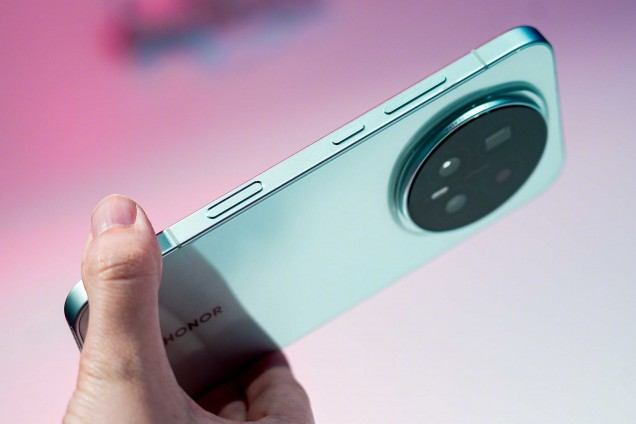
The Honor Magic8 Pro enters the flagship fight with the usual formula: a top Snapdragon chip, a high-end OLED panel, a big battery, and an ambitious camera system. On paper, it looks like a direct rival to the best premium Android phones. In practice, it gets many fundamentals right, especially display brightness, battery endurance, speaker quality, and rear-camera stills.
Still, this is not a flawless cameraphone. Honor clearly wants the Magic8 Pro to be seen as an AI-heavy flagship with strong imaging, but the results are mixed in a few important areas. The rear cameras are excellent for photos, especially in daylight and at night with AI enhancement, yet the video output is less convincing, and the selfie camera surprisingly loses autofocus and introduces odd artifacts. That combination keeps the phone from being an easy, universal recommendation.
Specifications Table
| Category | Details |
|---|---|
| Display | 6.71-inch LTPO OLED, 1256 x 2808, 120Hz, Dolby Vision, HDR Vivid |
| Chipset | Snapdragon 8 Elite Gen 5 |
| RAM and Storage | 256GB/12GB, 512GB/12GB, 512GB/16GB, 1TB/16GB, UFS 4.1 |
| Rear Cameras | 50MP main, 200MP 3.7x telephoto, 50MP ultrawide |
| Front Camera | 50MP + ToF 3D |
| Battery | 7100mAh global, 6270mAh Europe, 7200mAh China |
| Charging | 100W wired global, 80W wireless, reverse wireless |
| OS | Android 16, MagicOS 10 |
| Build | NanoCrystal Shield front, fiber-reinforced plastic back, IP68/IP69K |
| Extras | Ultrasonic fingerprint reader, 3D face unlock, Wi-Fi 7, eSIM, IR blaster |
Design and Build Quality
The Magic8 Pro looks very close to the previous generation. The changes are subtle, with a slightly smaller camera island, a relocated flash, and the addition of the new AI button. If you liked the Magic7 Pro design, this one will feel immediately familiar.
That AI button is the biggest visual and functional addition. It supports presses, pressure actions, and swipes, and can be used for shortcuts, AI tools, and camera controls. It is not essential, but it is more practical than a gimmick when used for launching the camera or taking photos.
The phone also keeps two uncommon flagship traits on Android. First, it has a proper 3D face unlock system, which works reliably and can unlock straight to the homescreen. Second, it uses an ultrasonic fingerprint scanner that is quick, accurate, and well positioned. Those two biometric options make the Magic8 Pro feel more premium in daily use than many rivals.
There is one material choice some buyers may dislike. The rear panel is not glass, but fiber-reinforced plastic. It does not feel cheap, and it may resist shattering better than glass, but it can feel underwhelming on a flagship at this price. The phone is also slippery, much like a matte glass device. On the plus side, you still get IP68 and IP69K protection.
Honor Magic8 Pro Display Performance
The display is one of the best reasons to buy this phone. The 6.71-inch LTPO OLED panel is sharp, adaptive, and extremely bright. In testing, it reached 856 nits manually, around 1,837 nits on a large bright area in auto mode, and over 5,000 nits on a small HDR-style highlight. That puts it among the brightest displays in its class.
Honor has also packed in extensive eye comfort features. You get high-frequency PWM dimming up to 4320Hz, DC dimming in brighter regions, blue light controls, ambient tone adjustment, and additional visual comfort tools. For users sensitive to OLED flicker or harsh color balance, this is one of the more feature-rich displays available.
Refresh-rate behavior is exactly what you want from an LTPO flagship. The panel can scale from 1Hz to 120Hz depending on content, and the phone offers Dynamic, Standard, and High modes. It also supports high frame rate gaming and all major HDR standards, including HDR10, HDR10+, Dolby Vision, and HDR Vivid. Streaming support is excellent in both Netflix and YouTube.
Performance and Benchmarks
The Magic8 Pro runs on the Snapdragon 8 Elite Gen 5, so day-to-day speed is never a problem. In CPU benchmarks it sits right alongside the best Android flagships using the same chip, and overall system performance is comfortably top tier. This is a fast phone in every normal task.
GPU performance is also strong, though not the absolute highest among Elite Gen 5 devices. More importantly, GPU stability under sustained load is better than average. In the Wild Life Extreme stress test, the Magic8 Pro maintained a solid 65 percent stability result, which is a good outcome for such a powerful chip.
Honor Magic8 Pro real-world performance
In everyday use, the phone feels effortless. MagicOS 10 is heavy with features, but it is polished and responsive. App launches are quick, multitasking is easy, and there is more than enough power for gaming, editing, and demanding camera processing.
Honor Magic8 Pro thermal performance
CPU throttling is the weak point. In Performance mode, the phone holds very high output briefly, then drops hard and falls into uneven peaks and dips. Balanced mode is steadier, but less aggressive. That means the Magic8 Pro is better suited to short bursts of heavy work than long, sustained CPU loads. GPU behavior is better than CPU behavior, which is the opposite of what some buyers may expect.
Camera Performance
The Magic8 Pro uses a familiar triple-camera setup with only modest hardware changes. The biggest update is the new 200MP Samsung HP9 telephoto sensor paired with an 85mm equivalent lens for 3.7x optical zoom. The main camera remains a 50MP 1/1.3-inch unit with OIS, while the ultrawide stays notably wide and still uses autofocus. The front camera remains 50MP, but now appears to be fixed-focus, which is a downgrade.
Honor Magic8 Pro main camera analysis
The main camera is excellent in daylight. Photos are detailed, clean, bright without looking washed out, and backed by wide dynamic range. White balance is dependable, colors are vibrant, and human subjects look good with natural facial detail and pleasing skin tones. The 2x crop from the main sensor is also very strong and produces surprisingly sharp results.
At full 50MP resolution, though, the output is less impressive. The higher-resolution mode looks softer and blotchier than the standard processed output. For most users, the default mode is the better choice.
Honor Magic8 Pro telephoto camera
The telephoto camera is a real strength. At its native 3.7x zoom, it delivers very good daylight images with strong detail, wide dynamic range, and attractive color. The 7.4x results are still good, and even 10x remains usable for the right scenes. At night, the telephoto holds up well too, and AI enhancement can noticeably improve detail, though it can also invent textures and distort small text.
This is where the Magic8 Pro becomes a little controversial. Its AI-enhanced zoom and low-light processing can produce photos that look sharper and more dramatic, but they are not always faithful. If you care about absolute photographic realism, you may find that uncomfortable. If you care more about impressive-looking results, you may love it.
Honor Magic8 Pro ultrawide camera
The ultrawide camera is excellent in daylight. It combines very broad coverage with unusually good detail, dependable dynamic range, and attractive color. That makes it one of the better ultrawides in the segment. At night it remains useful, though AI enhancement is not available here.
Honor Magic8 Pro selfies
Selfies are the biggest disappointment in the camera package. The front camera lacks autofocus now, and images can show random areas of softness and odd rendering artifacts. Colors and dynamic range are fine, but the results are not at the level you expect from a flagship phone with a 50MP front sensor. That is a real miss.
Honor Magic8 Pro video performance
Video is where the Magic8 Pro slips behind its best rivals. The phone records 4K up to 120fps on the rear cameras, but the actual video quality is described as unimpressive under most conditions. If your priority is still photography, the Magic8 Pro is easier to recommend. If video is equally important, other flagship cameraphones do better.
Battery and Charging
Battery capacity depends on market. China gets 7200mAh, the global version gets 7100mAh, and Europe gets 6270mAh. Even so, the European unit still posted an excellent 19:07 active-use score, which is a huge improvement over the previous model and enough to place it among the better endurance flagships.
Charging is another strong point. With a 100W Honor charger, the phone reached full in about 40 minutes and hit 81 percent in 30 minutes. USB PD charging also works very well if you have a capable adapter, though the best results come from chargers that support the right PPS profiles. Wireless charging is supported up to 80W with Honor’s own charger, but third-party wireless charging appears much slower.
Honor also includes battery-protection features such as smart charging, capacity limiting, and options to stop at 70, 80, or 90 percent. That helps the Magic8 Pro feel better prepared for long-term ownership.
Software and User Experience
MagicOS 10 is heavily customized, polished, and packed with AI features. Honor leans hard into AI across the interface, from Magic Portal and translation tools to AI Memories, text extraction, and image editing. The software is flashy, but it is also practical in places.
The update policy is also excellent. Honor promises seven years of OS releases and ongoing updates for this flagship line, which puts the Magic8 Pro among the best-supported Android phones on paper. That makes the phone easier to justify at a premium price.
Connectivity and Extras
Connectivity is fully flagship level. You get 5G, eSIM, Wi-Fi 7, Bluetooth 6.0, NFC, infrared, and modern audio features like aptX HD, aptX Adaptive, LHDC 5, Auracast, and ASHA. Emergency satellite messaging and calling remain China-only, but the rest of the package is rich.
Honor also deserves credit for the speaker hardware. The Magic8 Pro uses two large stereo drivers and a separate earpiece, and this setup helps produce class-leading loudness and unusually full sound. It is one of the rare phones where the speakers alone are a selling point.
Audio and Multimedia
The multimedia story is excellent overall. The display is extremely bright, HDR support is broad, and the stereo speakers are among the best in the smartphone market. In testing, the phone achieved an Excellent loudness score and improved on the previous generation with cleaner vocals and tighter bass. Compared with rivals like the vivo X300 Pro and Oppo Find X9 Pro, the Magic8 Pro comes out ahead on speaker quality.
That makes it a very strong entertainment device, especially for users who watch a lot of video or listen without headphones. Few flagships combine this level of screen brightness and speaker strength so well.
Competition and Market Position
The Magic8 Pro sits in the very top Android tier, so its rivals are serious. The Oppo Find X9 Pro and vivo X300 Pro may still edge it out as pure cameraphones, especially if you care about video or the cleanest photographic output. The Xiaomi Ultra line offers even more camera flexibility, while Samsung and Google provide stronger software ecosystems for some buyers.
Where the Honor fights back is value, especially with early-bird pricing, plus its class-leading speakers, great battery life, super-bright display, rich software feature set, and excellent rear stills. It does not dominate the flagship class, but it has enough strengths to stay very relevant.
Verdict
The Honor Magic8 Pro is a very good flagship, but not quite the great cameraphone it could have been. Its rear still photography is excellent, its display is one of the brightest available, its speakers are among the very best, and its battery life is strong even in the smaller-capacity European version. It also charges fast and comes with a long software promise.
The weaknesses are clear too. CPU throttling is heavy, video quality is underwhelming for a flagship, and the selfie camera is oddly compromised by the loss of autofocus and inconsistent rendering. That keeps the Magic8 Pro from being an easy best-in-class pick.
If your priorities are display quality, speaker quality, battery life, and rear-camera stills, the Magic8 Pro is easy to like. If you want the most complete flagship camera experience, especially for video and selfies, you should compare it carefully against its closest rivals first.
The Review
Honor Magic8 Pro
The Magic8 Pro builds on the lineup's strong points, without making too big of a splash. It delivers a solid camera experience, so long as you're mostly focused on stills, and it will test your ethical boundaries with its AI-enhanced low-light performance. Its video quality is a bit behind the curve though, and selfies have gotten worse compared to the previous generation - what's that about?
PROS
- IP68/IP69-rated build.
- One of the brightest displays around, Dolby Vision support, eye care features aplenty.
- Great battery life (even with the smaller EU battery), fast charging.
- Class-leading speakers.
- Performance to spare, GPU stability better than most.
- Feature-rich software package, AI this and that.
- Excellent stills from the rear cameras.
- Particularly impressive AI-enhanced low-light results.
CONS
- Reduced battery capacity in EU markets.
- Heavy CPU throttling.
- Unimpressive video quality under most conditions.
- Selfie camera lacks autofocus and images have odd artefacts.
 Honor
Honor


