Apple has suffered another legal setback in Europe after the European Union’s General Court rejected the company’s attempt to overturn its designation as a Apple DMA gatekeeper under the bloc’s Digital Markets Act (DMA). The decision preserves one of the EU’s most significant regulatory rulings against large technology companies and ensures Apple must continue complying with strict obligations designed to increase competition across its digital ecosystem.
The ruling reinforces the European Commission’s position that Apple’s App Store ecosystem functions as a single Core Platform Service rather than a collection of separate marketplaces for different devices. That interpretation has significant implications for how Apple manages its software distribution platform and its relationships with developers operating across the company’s devices.
Although Apple can still pursue a final appeal before the Court of Justice of the European Union, the latest judgment represents another victory for regulators seeking to curb the market power of the world’s largest technology companies. The decision also leaves open the possibility of future regulatory scrutiny of Apple’s messaging platform, iMessage, even though it has not yet been designated as a gatekeeper service.
The judgment arrives as Apple continues to contest several European regulatory decisions, including interoperability requirements under the DMA and a separate €500 million penalty related to anti-competitive App Store steering policies.
For developers, digital businesses and investors, the outcome highlights the continuing importance of European competition policy in shaping the future of global technology platforms.
Apple DMA Gatekeeper Status Remains in Force
The dispute centered on how Apple’s various application stores should be treated under the Digital Markets Act.
Apple argued that it operates five distinct app stores serving different products, including the iPhone, iPad, Apple Watch, Apple TV and Mac. According to the company, only the iOS App Store should qualify as a Core Platform Service because it alone reaches the threshold established under the DMA.
The European Union disagreed.
The General Court concluded that Apple’s app stores share the same fundamental objective despite serving different hardware products. Judges ruled that they collectively connect software developers with end users and facilitate application distribution, meaning they should be regarded as a single Core Platform Service.
That interpretation leaves Apple’s App Store ecosystem subject to the DMA’s interoperability and competition requirements.
Background: Why This Story Matters
The Digital Markets Act represents one of the European Union’s most ambitious efforts to regulate dominant digital platforms.
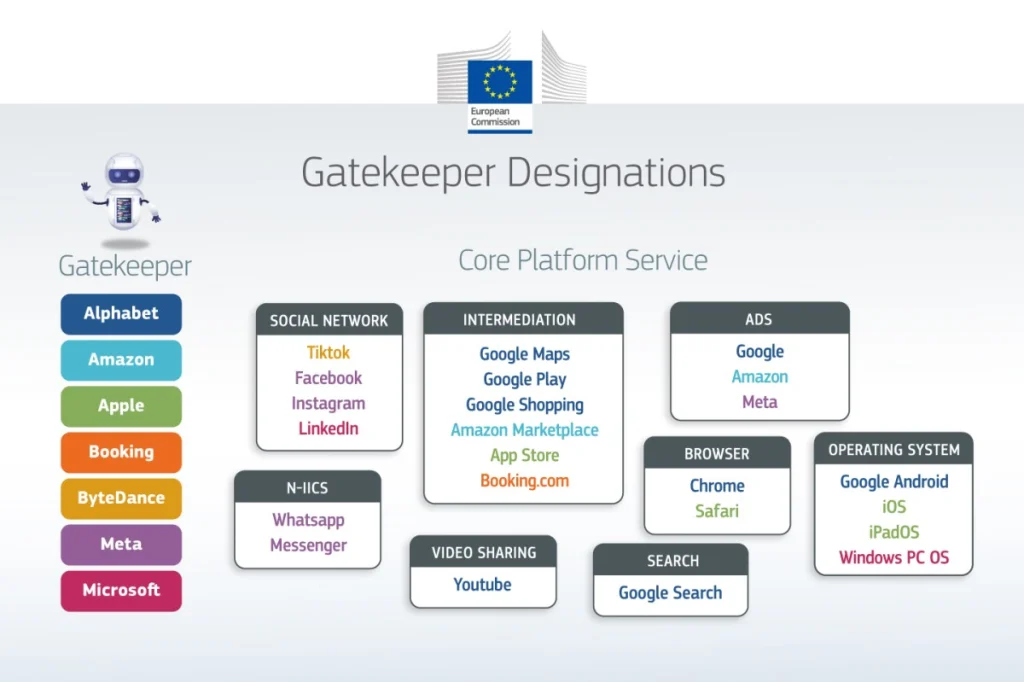
Rather than responding to competition issues after they emerge, the DMA imposes obligations on companies designated as “gatekeepers.” These businesses are considered to occupy strategic positions between consumers and commercial users, giving them significant influence over digital markets.
The legislation aims to encourage competition by preventing large technology firms from using their market positions to disadvantage rivals or limit consumer choice.
Apple, alongside several other global technology companies, has been among the firms designated as a gatekeeper under the law.
The designation requires compliance with a range of obligations, including greater interoperability, restrictions on self-preferencing and broader opportunities for competing services to operate within Apple’s ecosystem.
Key Details From the Court Decision
The judgment addressed two major issues raised by Apple.
Court Rejects Separate App Store Argument
Apple maintained that each device platform should be assessed independently because the app stores serve different hardware categories.
The court rejected that reasoning, concluding that their common purpose outweighs the differences between individual Apple devices.
As a result, regulators may continue treating Apple’s app stores as one Core Platform Service under the Digital Markets Act.
iMessage Challenge Also Fails
Apple also challenged the European Commission’s classification of iMessage as a number-independent interpersonal communications service (NIICS).
The court ruled that the designation itself does not immediately alter Apple’s legal obligations.
Because the classification alone does not create binding legal effects, judges dismissed Apple’s attempt to overturn it.
Although iMessage is not currently designated as a DMA gatekeeper service, the ruling removes one avenue Apple sought to use to limit potential future regulatory action.
Further Appeal Remains Possible
The General Court is the European Union’s second-highest judicial body.
Apple retains the option of appealing the judgment before the Court of Justice of the European Union, which serves as the bloc’s highest court.
Separately, Apple continues to challenge European Commission decisions concerning interoperability requirements under the Digital Markets Act.
Impact on Apple, Developers and Consumers
The decision reinforces Apple’s legal obligations under the Digital Markets Act without introducing new requirements beyond those already established.
For Apple, compliance efforts surrounding App Store interoperability and competition rules will continue while legal appeals remain ongoing.
Application developers may benefit from regulatory measures intended to create fairer access to Apple’s platform, particularly regarding software distribution and interaction with users.
Consumers could ultimately see increased competition among app developers and digital service providers if the DMA’s objectives are fully implemented.
However, the practical effects will continue to depend on future regulatory guidance, enforcement decisions and the outcome of ongoing litigation.
Digital Regulation Continues to Expand
The latest judgment forms part of a broader effort by European regulators to increase oversight of major digital platforms.
The Digital Markets Act works alongside the Digital Services Act and other competition measures intended to address concerns surrounding market concentration, platform access and consumer choice.
Large technology companies, including Apple, continue adapting products and services to comply with evolving European requirements while simultaneously challenging aspects of the regulatory framework through the courts.
These legal disputes are expected to shape the future relationship between regulators and global technology firms for years to come.
What Comes Next
Apple’s immediate options remain limited.
The company may seek a final appeal before the Court of Justice of the European Union.
Meanwhile, it must continue complying with gatekeeper obligations under the Digital Markets Act unless future legal proceedings alter that position.
Attention will also remain on Apple’s ongoing appeal against interoperability requirements as well as its challenge to the European Commission’s €500 million fine relating to App Store anti-steering practices.
Regulators could also examine iMessage further in the future following the court’s decision regarding its communications service classification.
Expert Analysis
The judgment strengthens the European Commission’s interpretation of digital ecosystems rather than individual products.
Instead of assessing each Apple device separately, the court focused on the overall role Apple’s app distribution system plays in connecting developers and users.
That broader approach may influence future DMA enforcement involving other technology companies with interconnected platforms and services.
For investors, the ruling does not introduce immediate financial consequences beyond existing compliance obligations. However, it reinforces regulatory pressure that could affect Apple’s platform strategy, software distribution policies and future service development within Europe.
For developers, the decision provides greater certainty that the DMA’s interoperability requirements will remain central to the European digital marketplace while legal appeals continue.
Frequently Asked Questions
What did the EU court decide?
The General Court upheld Apple’s designation as a gatekeeper under the Digital Markets Act and ruled that its app stores should be treated as a single Core Platform Service.
Why did Apple challenge the decision?
Apple argued that it operates separate app stores for different devices and that only the iPhone App Store should fall within the DMA’s gatekeeper rules.
Is iMessage now regulated under the DMA?
No. iMessage has not been designated as a gatekeeper service under the Digital Markets Act. However, the court rejected Apple’s attempt to challenge its communications service classification.
Can Apple still appeal?
Yes. Apple can appeal the General Court’s judgment before the Court of Justice of the European Union.
What does this mean for developers?
Developers are likely to continue benefiting from DMA measures intended to increase competition and interoperability across Apple’s App Store ecosystem.
Does the ruling affect Apple’s €500 million fine?
No. Apple’s separate appeal against the €500 million penalty concerning App Store anti-steering policies remains pending.
Conclusion
The European Union’s latest court ruling represents another significant milestone in the implementation of the Digital Markets Act. By confirming Apple’s gatekeeper designation and treating its App Store ecosystem as a single Core Platform Service, the court has reinforced the regulatory framework governing one of the world’s largest technology companies.
Although Apple still has an opportunity to pursue a final appeal, the decision strengthens the European Commission’s authority to enforce competition rules aimed at increasing interoperability and market fairness. With additional legal challenges still underway, the relationship between Apple and European regulators is set to remain a defining issue for the global technology industry.
Read Also: Social Media Image Sizes 2026 Guide