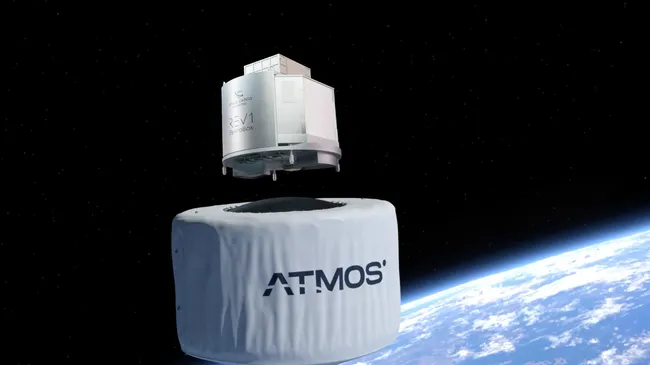
Germany-based Atmos Space Cargo is set to revolutionize space transportation with the launch of its first Phoenix reentry capsule, a system designed to safely return cargo from orbit to Earth. The debut mission will take place aboard SpaceX’s Bandwagon 3 rideshare flight, launching on a Falcon 9 rocket no earlier than April 2024. This marks a critical milestone in Europe’s commercial space sector, positioning the company as a key player in space logistics and cargo return technology.
A New Era for Space Cargo Return
The Phoenix capsule is designed to bring materials back to Earth safely, enabling the return of high-value products manufactured in space. Atmos Space Cargo sees a growing demand for cargo-return services, particularly in the biomedical sector, where microgravity can enhance research in:
✅ Monoclonal antibodies
✅ Stem cells
✅ Organoids
✅ Protein crystallization
“Our first test flight is what the team at Atmos has been working towards relentlessly,” said Sebastian Klaus, CEO and Co-founder of Atmos. “Our space industry needs disruptive innovation to compete on a global scale.”
Overcoming Space Cargo Return Challenges
While launching experiments into orbit has become cheaper and more accessible, returning them to Earth remains a challenge due to:
🚀 High costs
🚀 Long lead times
🚀 Issues with repeatability and reliability
Atmos aims to solve this problem by offering an affordable, reliable, and frequent cargo-return service. The Phoenix capsule is expected to fill this gap, transporting critical materials back to Earth faster and more efficiently than existing methods.
Phoenix’s Innovative Reentry Technology
Unlike traditional return capsules, Phoenix utilizes an inflatable atmospheric decelerator (IAD)—a technology developed by Atmos that serves as both a heat shield and a parachute. This system allows for:
✔ Safe and controlled descent back to Earth
✔ Reduced mass and increased payload efficiency
✔ Scalability for larger payloads
The first-generation Phoenix capsule will carry up to 220 pounds (100 kilograms) of cargo, but future iterations will be capable of returning several tons of material—potentially even rocket upper stages.
First Test Flight: What to Expect
Phoenix’s maiden flight will focus on:
📡 Collecting in-orbit data from the capsule and its subsystems
🛰 Testing onboard customer payloads, including:
- A radiation detector from the German Aerospace Center (DLR)
- A bioreactor from Frontier Space (UK)
🌍 Deploying and stabilizing the IAD during reentry
Despite the expected loss of Phoenix at the end of the mission, Atmos will use the gathered data to improve future designs.
Competition and Industry Impact
Atmos is not the only company working on cargo-return technology. Varda Space, a California-based company, successfully conducted an in-space manufacturing mission, landing its W-1 capsule in Utah with crystals of the antiviral drug Ritonavir.
However, Atmos claims that Phoenix will offer unmatched efficiency, delivering more cargo per unit capsule mass than its competitors. The company’s entry into the spaceflight sector is expected to accelerate technological advancements in space logistics.
“Driving advancements for reusable, affordable, and reliable downmass is critical to the success of orbital space development,” said former NASA Deputy Administrator Lori Garver, a member of Atmos’ advisory board.
“Having the ability to return life sciences research, rocket upper stages, military spacecraft, and manufactured resources could be the next breakthrough in space transportation.”
A Step Toward the Future of Space Transportation
The Phoenix capsule represents a new era of space cargo logistics, enabling faster, more cost-effective return missions from orbit. If successful, Atmos Space Cargo could become a key provider of downmass services, helping drive innovation in orbital manufacturing, biomedical research, and deep-space exploration.
With SpaceX’s Bandwagon 3 launch set for this spring, Phoenix’s first test flight will mark a major milestone for Europe’s commercial space industry and set the stage for the next generation of cargo-return technologies. 🚀