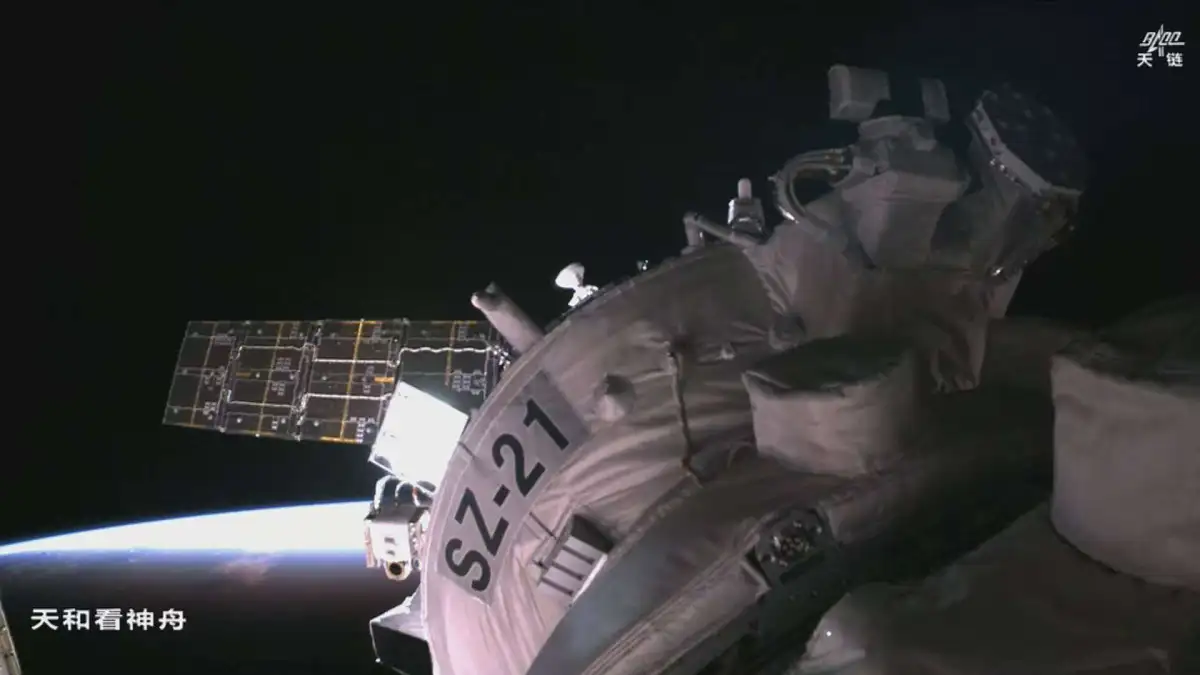
China is preparing to launch an uncrewed Shenzhou spacecraft to the Tiangong space station, marking a critical move to provide a lifeboat for the Shenzhou-21 astronauts. The launch, scheduled for November 25, comes after space debris damaged the Shenzhou-20 spacecraft, prompting the need for a backup vehicle for safe return.
Shenzhou-22 Lifeboat Mission
The Shenzhou-22 spacecraft, launched aboard a Long March 2F rocket, is now positioned as a backup for astronauts aboard Tiangong. Originally planned for a crewed mission in 2026, it will now serve as an emergency lifeboat, allowing the Shenzhou-21 crew, who launched on October 31, to safely return in the event of a catastrophic emergency.
A report from China’s human spaceflight agency, the China Manned Space Engineering Office (CMSEO), confirmed that the spacecraft will carry essential supplies and equipment to support the crew on the space station. Despite being uncrewed, Shenzhou-22 is expected to provide a critical safety measure for astronauts on Tiangong.
Challenges from Shenzhou-20’s Damage
The need for the Shenzhou-22 lifeboat arose after a space debris impact damaged Shenzhou-20’s viewport, which raised safety concerns for the crew. Preliminary investigations confirmed a minor crack in the heat-resistant glass of the spacecraft’s window, caused by an external impact. This damage made the spacecraft unsafe for crewed return due to the risk of decompression during reentry.
As a result, CMSEO decided to keep Shenzhou-20 in orbit for further experiments, while the astronauts who had been aboard, including commander Chen Dong, were able to safely return to Earth on November 14.
Expedited Launch for Lifeboat Preparedness
The Shenzhou-22 launch will take place 20 days after the damage to Shenzhou-20 was discovered, reflecting China’s swift action to ensure the safety of astronauts on the Tiangong space station. The decision to prepare Shenzhou-22 for an expedited launch was based on the readiness of the spacecraft and the need to align the launch timing with orbital mechanics and other technical factors.
CMSEO officials emphasized that the Long March 2F rocket and Shenzhou spacecraft could be readied in as little as 8.5 days, if required, to respond to emergency situations at Tiangong.
Long-Term Impact and Future Missions
While the Shenzhou-22 mission is crucial for the immediate safety of astronauts, it also underscores the ongoing challenges faced in human space exploration. As China’s space program continues to grow, maintaining backup systems like Shenzhou-22 is vital for ensuring crew safety on long-duration missions.
The decision to launch Shenzhou-22 also aligns with China’s broader goals for its space station program, including expanding capabilities for human exploration and research. CMSEO continues to work on improving spacecraft and station systems to prevent such incidents in the future.
Conclusion: China’s Space Strategy in Action
The Shenzhou-22 spacecraft’s mission highlights the adaptability of China’s space program in responding to unforeseen challenges. By launching this backup vehicle, China ensures the safety of its astronauts while maintaining the integrity of its space exploration ambitions. The move also reinforces China’s growing capabilities in space technology and international space cooperation.