ColorOS merger claims are raising new questions about the future of Oppo, OnePlus and Realme as separate Android brands.
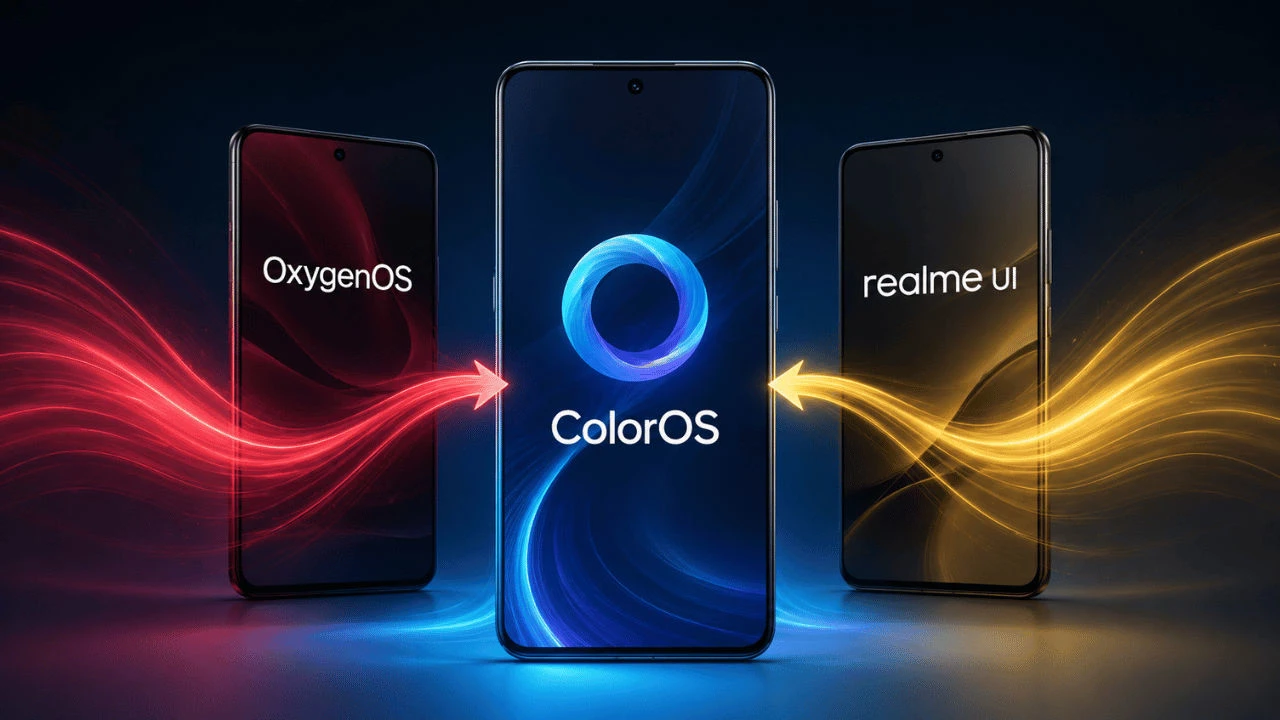
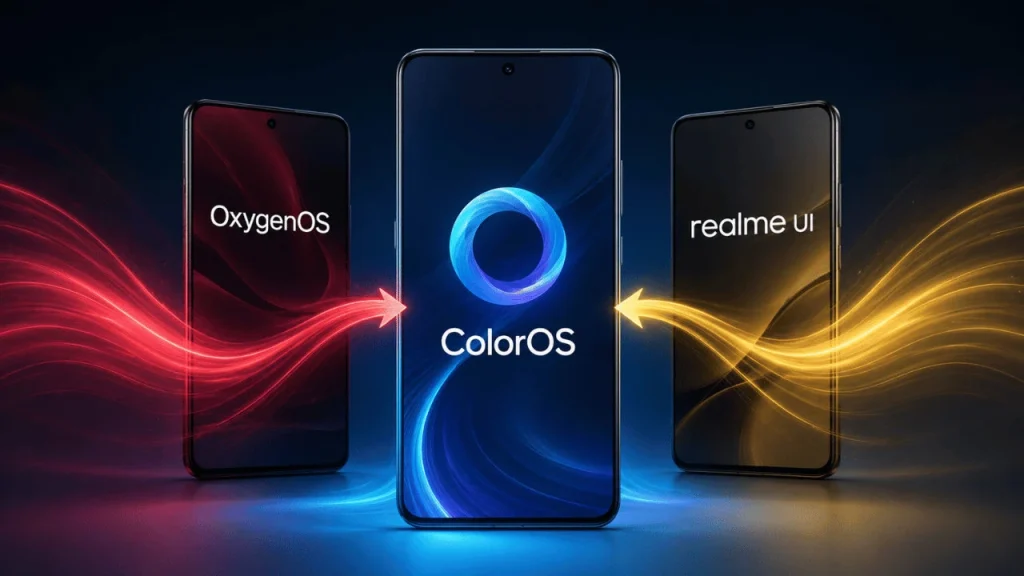
A knowledgeable insider has claimed that OxygenOS and Realme UI may be folded into ColorOS, creating one shared software platform across three closely linked smartphone brands. The reported move would extend a strategy first signaled in 2021, when OnePlus co-founder Pete Lau revealed that OxygenOS and ColorOS would merge.
The claim has not been formally confirmed by Oppo, OnePlus or Realme in the source material. However, the report suggests that software consolidation could be part of a broader effort to reduce research and development costs and simplify operations across the group’s smartphone businesses.
ColorOS Merger Would Extend Earlier OnePlus-Oppo Strategy
The reported ColorOS merger would bring OxygenOS, Realme UI and ColorOS under a single software identity.
That would represent a major shift for users who have long associated OnePlus with OxygenOS, a software experience that helped define the brand’s early appeal. Realme UI has also served as a separate identity for Realme devices, even though the brands have shared corporate roots and overlapping technology foundations.
According to the insider claim, the three brands would use ColorOS as the common platform. The business logic is straightforward: maintaining separate Android skins requires engineering teams, testing, update pipelines and device-specific software support. A unified system could reduce those costs.
Still, the effect on users remains unclear. The report does not specify whether the change would alter software features, update schedules, interface design or regional branding. It also does not say when such a merger could happen.
OnePlus May Narrow Its Global Focus
The software claim comes alongside a broader reported restructuring of OnePlus’s market strategy.
According to the insider, OnePlus may focus exclusively on India and China. The source points to signs in Europe, including OnePlus Germany directing users toward Oppo devices and OnePlus UK showing nearly all products as out of stock.
If accurate, that would mark a meaningful retreat for a brand that once built its reputation on global online sales and enthusiast-driven launches. OnePlus grew by positioning itself as a performance-focused alternative to higher-priced flagship phones, but its role has changed as the Android market has matured.
The report suggests that OnePlus branches outside India and China may be winding down. However, the source material does not confirm whether the company has made a final decision on specific countries, timelines or future support commitments.
Oppo’s Role Appears to Be Expanding
The reported changes would make OnePlus more closely tied to Oppo, especially in markets where both brands already overlap.
In India, after-sales support for OnePlus users is already being handled by Oppo, according to the report. That points to operational integration beyond software. Customer service, repairs and logistics can be expensive to run separately, especially when two related brands operate in the same country.
A tighter Oppo-OnePlus structure could help reduce duplication. It could also make inventory, service and software management easier across devices.
However, such consolidation carries brand risk. OnePlus users have often valued the brand’s distinct identity. If OnePlus becomes too closely associated with Oppo, the company may need to explain what still makes OnePlus different.
Realme Could Shift Away From China
The insider also claims Realme will leave China and focus on overseas markets.
That would create a cleaner division of labor between the brands. OnePlus would reportedly focus on India and China, while Realme would target international markets outside China. According to the report, India may become the only major market where OnePlus and Realme continue to overlap.
This would fit the broader consolidation theme described in the source. Rather than having multiple related brands compete in the same regions, the group could assign clearer geographic roles.
Reports have suggested that OnePlus and Realme are merging, according to the source. But based on the insider’s account, the practical impact may vary by market. In regions where only one of the brands remains active, a formal merger may make little visible difference to consumers.
U.S. Market Outlook Remains Unclear
The biggest unanswered question concerns the United States.
The U.S. smartphone market already has limited mainstream variety outside Apple, Samsung and Motorola. OnePlus has had a presence in the country, but the report says the brand never rose above 1% market share there.
If OnePlus reduces its global footprint, it is unclear whether Oppo would try to replace it with Oppo-branded devices in the U.S. The report does not provide a firm answer. It also does not say whether Oppo intends to abandon the market entirely.
That uncertainty matters because Oppo’s name is not widely recognized among U.S. phone buyers today. The brand once had visibility in the U.S. through DVD and Blu-ray players, but that consumer association has faded.
A push into the U.S. under the Oppo name would require marketing investment, carrier relationships and a clear value proposition. The source material does not indicate whether Oppo plans such a move.
Software Consolidation Could Cut Costs but Blur Brands
The reported ColorOS merger highlights a central tension in the smartphone business.
On one hand, unified software can reduce costs and improve efficiency. It can also make it easier to deliver updates across related product lines. For companies operating in a highly competitive Android market, that kind of simplification can be attractive.
On the other hand, software identity matters. OxygenOS helped OnePlus stand apart. Realme UI gave Realme a separate consumer-facing identity. If all three brands use ColorOS, the companies may need to rely more heavily on hardware design, pricing and regional strategy to differentiate their products.
That challenge becomes sharper if the brands are also being reorganized geographically. A company can cut overlap and reduce costs, but it must avoid confusing customers about which brand they should buy and why.
What to Watch Next
For now, the report remains based on an insider claim, and the companies have not confirmed the full plan in the source material.
The next key development will be whether Oppo, OnePlus or Realme publicly addresses the future of OxygenOS and Realme UI. Consumers will also watch for changes in product availability, software branding, update policies and customer support in Europe, India, China and the U.S.
If the ColorOS merger moves forward, it could signal more than a software change. It may mark a wider restructuring of how Oppo, OnePlus and Realme compete, spend and position themselves in the global smartphone market.
Read Also: Anthropic AI Chips May Be Built by Samsung