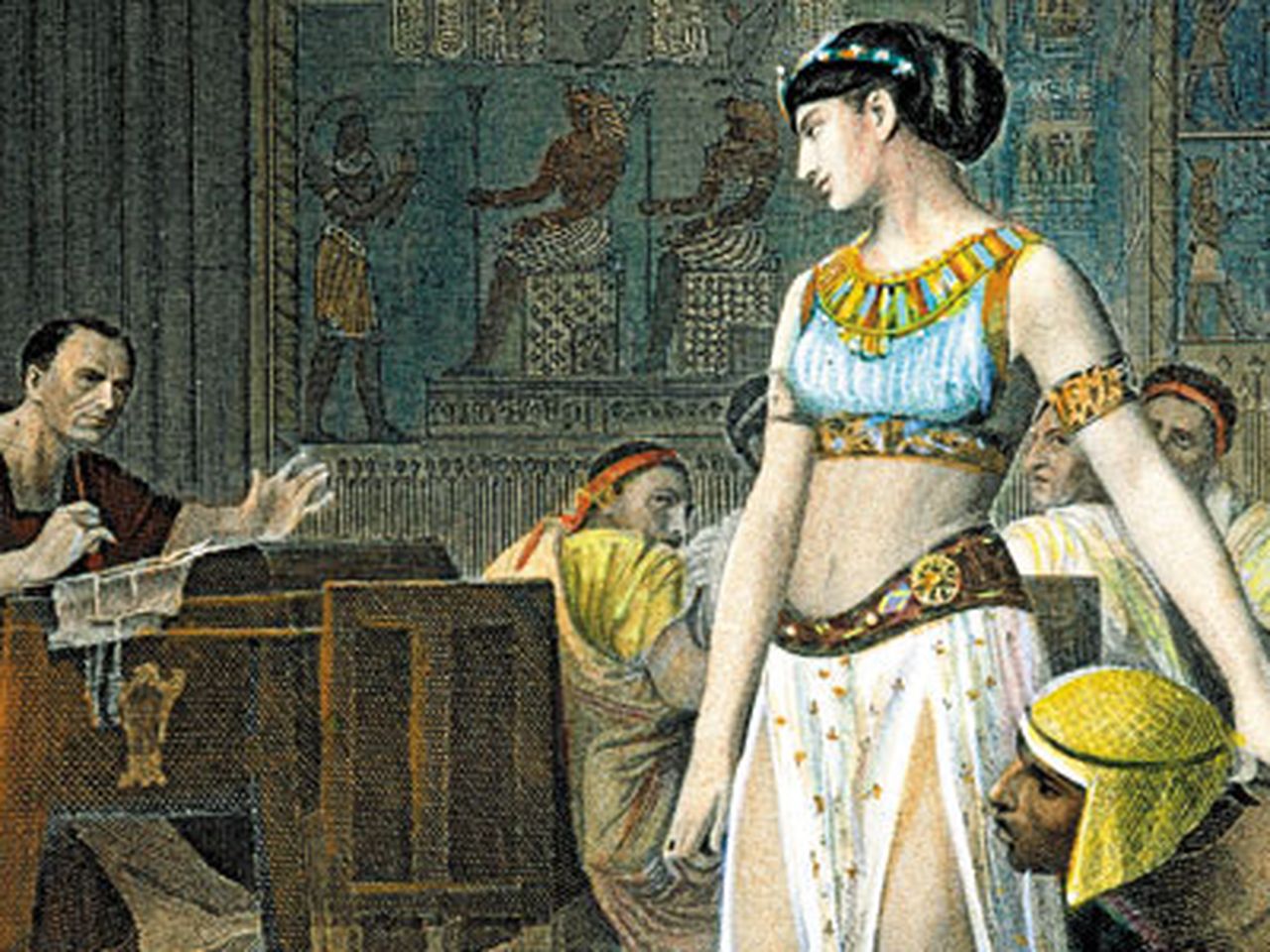
Cleopatra VII Thea Philopator (Greek: Κλεοπάτρα Θεά Φιλοπάτωρ; 69 BC – 10 or 12 August 30 BC) was the last active ruler of the Ptolemaic Kingdom of Egypt. A descendant of Ptolemy I Soter, one of Alexander the Great’s generals, she belonged to the Macedonian Greek dynasty that had ruled Egypt since 305 BC. Renowned for her political acumen, linguistic ability, and charisma, Cleopatra remains one of the most famous women in history.
After her death, Egypt became a province of the Roman Empire, marking the end of the Hellenistic era in the Mediterranean.
Early Life and Background
Cleopatra was born in Alexandria, the daughter of Ptolemy XII Auletes. Her mother is thought to have been Cleopatra V Tryphaena. Unlike her predecessors, Cleopatra learned Egyptian in addition to her native Greek, and was said by ancient sources to speak several other languages, including Hebrew, Syriac, Median, and possibly Latin.
The Ptolemies ruled as Greek monarchs from Alexandria, relying heavily on Roman protection and influence by the 1st century BC. When Ptolemy XII died in 51 BC, Cleopatra assumed the throne as co-regent with her younger brother Ptolemy XIII.
Reign
Cleopatra’s reign was marked by constant struggles to maintain Egypt’s independence while balancing relations with Rome. A civil war with her brother erupted, coinciding with the arrival of Pompey, fleeing Julius Caesar. After Pompey was assassinated in Egypt, Caesar backed Cleopatra against her brother, leading to her restoration as queen.
Cleopatra became Caesar’s lover, and they had a son, Ptolemy XV Philopator Philometor Caesar, better known as Caesarion. She later aligned with Mark Antony, producing three more children: Alexander Helios, Cleopatra Selene II, and Ptolemy Philadelphus.
Her alliances through romance and politics allowed her to regain territories once lost by Egypt, but also embroiled her in Roman civil wars.
Relationship with Rome
Cleopatra visited Rome with Caesar in 46 and 44 BC, staying at his villa until his assassination. Afterward, she returned to Egypt, ruling jointly with Caesarion. In 41 BC, she met Mark Antony in Tarsos, beginning both a political and romantic partnership.
Together, Antony and Cleopatra presented themselves as divine rulers and distributed eastern territories to their children in the Donations of Alexandria (34 BC). This angered Octavian, Caesar’s heir, who used the act as propaganda against Antony.
Battle of Actium and Death
In 31 BC, Octavian’s forces defeated Antony and Cleopatra at the Battle of Actium. The following year, Octavian invaded Egypt. Facing defeat and capture, Antony committed suicide. Cleopatra followed soon after, reportedly by suicide—traditionally believed to have been the bite of an asp, though other accounts suggest poison.
She died in August 30 BC, at age 39, and was buried alongside Antony. Octavian executed Caesarion shortly afterward, ending the Ptolemaic dynasty and beginning direct Roman rule of Egypt.
Legacy
Cleopatra has remained a cultural icon for centuries. Ancient Roman writers often vilified her as manipulative and dangerous, but Renaissance and modern portrayals have emphasized her intelligence, charisma, and tragic romance.
She has been depicted in countless works of art, literature, theater, and film, from Shakespeare’s Antony and Cleopatra to the 1963 Hollywood epic Cleopatra starring Elizabeth Taylor. Her image continues to shape global perceptions of ancient Egypt.