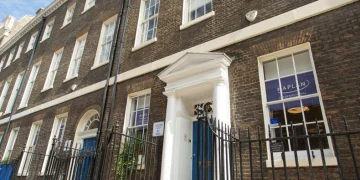
Bridge College Kenya has grown from a small language school into a diversified tertiary institution in Nairobi. Since its registration under the Ministry of Education, Bridge College Kenya has expanded into business, ICT, hospitality and social sciences. That evolution reflects Kenya’s shifting labor market demands.
When the institution began in 1992, it focused on English and French instruction. However, as Kenya’s economy diversified, the college introduced professional diplomas and technical courses. Today, students enroll not only for language training but also for business and industry-focused qualifications.
Bridge College Kenya Courses Across Schools
Bridge College Kenya structures its programmes under several academic schools. These include Business Management, Hospitality, Social Sciences, Computer Studies, Engineering and Languages.
Within the School of Business Management, students can pursue diplomas and certificates in Sales and Marketing, Human Resource Management, Accounting and Finance and Entrepreneurship. These programmes respond to Kenya’s strong SME-driven economy.
Meanwhile, the School of Hospitality Management offers diplomas in Hotel and Catering, Travel and Air Ticketing and Bakery Technology. Because tourism remains a key economic pillar, hospitality training retains steady demand.
Bridge College Kenya Language and International Programs
Bridge College Kenya maintains its language heritage through the School of English and Other Languages. Courses include IELTS, TOEFL and multi-level English training.
Additionally, students can study Chinese, German, Spanish, French and Arabic. In a region increasingly engaged in global trade, foreign language skills offer a competitive advantage.
The college also offers IGCSE Cambridge programmes at O and A level. This addition broadens access for students pursuing international academic pathways.
ICT and Engineering
In the School of Computer Studies, Bridge College Kenya provides diplomas in ICT, Information Technology and Computer Engineering. Short courses such as Web Design, Graphics Design and Networking certifications support Kenya’s expanding digital economy.
The School of Engineering offers Electrical and Electronics Engineering at certificate and diploma levels. NITA Grade Tests further enhance technical credentialing for artisans and technicians.
Bridge College Kenya Admission Requirements
Bridge College Kenya admission requirements vary by course level. Generally, applicants must submit academic certificates and identification documents.
Diploma programmes may require KCSE completion, while certificate and bridging courses often maintain flexible entry criteria. Because intakes occur annually, prospective students should confirm specific dates with campus offices.
Application forms are available at the Nairobi Town Campus and Ongata Rongai Campus.
Bridge College Kenya Fees Structure
The Bridge College Kenya fee structure depends on the selected programme. Diploma courses typically require higher tuition than short certificate courses.
ICT and engineering programmes may involve additional laboratory or equipment costs. Conversely, language and bridging courses usually carry moderate fees.
Prospective students should request updated fee schedules directly from the college to ensure accuracy.
Campuses and Contacts
Bridge College Kenya operates two main campuses.
The Nairobi Town Campus is located at Princley House on Moi Avenue. The Ongata Rongai Campus operates along Magadi Road at J&S House.
These locations provide access to students in Nairobi CBD and surrounding areas.
Bridge College Kenya and Kenya’s Skills Economy
Kenya’s workforce increasingly requires practical diplomas rather than purely academic degrees. Technical and vocational education institutions therefore play a strategic role in employment readiness.
Bridge College Kenya contributes by offering flexible study schedules and market-relevant courses. In particular, business, ICT and hospitality programmes align closely with urban job markets.
Historically, language schools helped Kenyan professionals secure international opportunities. Today, combining language proficiency with technical training enhances mobility even further.
Why This Matters
Unregulated colleges have occasionally left students with unrecognized certificates. Therefore, choosing a registered institution such as Bridge College Kenya reduces risk.
Strong institutional registration and diversified programmes increase credibility and graduate confidence. For families investing in education, that assurance carries significant value.
What Happens Next
As Kenya’s economy digitizes and regional trade expands, demand for ICT and foreign language training may rise. Bridge College Kenya may continue expanding short professional courses aligned with these trends.
At the same time, competition among private colleges will intensify. Institutions that maintain quality assurance and industry partnerships will remain competitive.