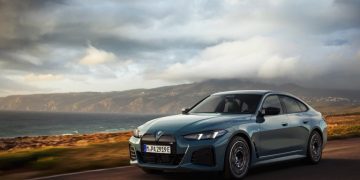
BMW has demonstrated the impressive efficiency potential of its latest electric SUV with a long-distance experiment across Central Europe. The BMW iX3 range test covered more than 1,000km on public roads without recharging, traveling from the Debrecen production facility in Hungary to BMW’s headquarters in Munich. The company organized the attempt to highlight what the new model can achieve under ideal conditions, even though it required a driving strategy far different from what customers normally experience.
The journey was carried out by six BMW employees who followed a carefully optimized route designed to maximize efficiency. The shortest path between the two cities measures just over 900km, but that route would drain the battery far sooner due to higher-speed travel and less predictable traffic. Instead, BMW planned a 1,007km route passing through Budapest, Vienna, St. Poelten, Steyr, and Landshut. Each location has significance for BMW’s EV development, making the drive both symbolic and technically important.
To reach the 1,000km milestone, the team avoided stop-and-go traffic, intersections with frequent lights, and heavy highway segments. They maintained steady momentum through roundabouts and selected calm road sections where energy loss could be minimized. Several comfort features remained unused during the trip. Air conditioning, radio, and even headlights were kept off whenever possible. These choices helped extend the battery’s range but also highlight how different the experiment was from realistic daily driving.
The vehicle used in the BMW iX3 range test ended the trip with around 20km of remaining battery capacity. BMW acknowledged that the conditions were unrealistic for typical owners and emphasized that real-world results will vary based on temperature, traffic, speed, and terrain. Still, the experiment shows the high efficiency potential of its next-generation EV technology. BMW plans to conduct more standardized evaluations once media outlets and independent testers have access to the production model early next year.
While the 1,000km achievement demonstrates what is technically possible, it also illustrates the gap between controlled efficiency runs and normal driving habits. The results highlight how far an EV can go when optimized for every detail, but they also show why such tests cannot replace real-world range expectations. BMW’s upcoming evaluations will offer a more balanced picture of how the iX3 performs in everyday scenarios.