The ability to Stock Trading has become more accessible than ever as digital investing platforms continue transforming global finance. In 2026, investors now expect more than basic trade execution. Modern trading platforms offer advanced research tools, AI-driven insights, educational resources, retirement planning integration, and seamless mobile experiences designed to support every type of investor.
The rise of digital investing has transformed financial markets, making stock ownership more accessible than at any point in history. Investors no longer need to call brokers or visit financial institutions to buy shares. Instead, sophisticated online platforms now allow users to research companies, execute trades, monitor portfolios, and access professional-grade market insights from a smartphone or laptop.
As competition among brokerages intensifies, modern stock trading platforms offer far more than basic trade execution. Today’s investors expect commission-free trading, real-time market data, AI-powered analysis, educational resources, retirement planning tools, and seamless mobile experiences.
Whether you are buying your first stock or actively managing a diversified portfolio, selecting the right platform can significantly influence your investment experience and long-term financial outcomes.
Whether you are a beginner buying your first shares or an experienced trader managing a diversified portfolio, choosing the right brokerage platform can significantly impact your investing journey. Many leading platforms now provide commission-free stock and ETF trading, real-time market data, customizable watchlists, and integrated financial planning tools.
Read Also: How to Start Investing on the Nairobi Securities Exchange
The best services combine affordability, usability, and powerful analytics to help investors make smarter financial decisions.
What Is a Stock Trading Platform?
A stock trading platform is a digital brokerage service that enables investors to buy and sell securities such as:
- Stocks
- Exchange-Traded Funds (ETFs)
- Mutual Funds
- Options
- Bonds
- Cryptocurrencies (on supported platforms)
These platforms connect investors to financial markets while providing tools to research investments, manage risk, and track portfolio performance.
Modern platforms have evolved into comprehensive financial ecosystems that often include banking services, retirement accounts, financial planning, and automated investing features.
How Stock Ownership Works
Stocks represent ownership in a company. When investors purchase shares, they acquire a fractional ownership stake in that business.
Shareholders may benefit through:
- Capital appreciation when stock prices rise
- Dividend payments from company profits
- Voting rights on certain corporate matters
- Participation in long-term business growth
However, stock ownership also involves risk because share prices can decline due to economic, corporate, or market-related factors.
Why Choosing the Right Stock Trading Platform Matters
Not all brokerages serve the same type of investor.
Some platforms are designed for:
- Long-term investors
- Active traders
- Options traders
- Retirement savers
- Beginners
- Professional investors
Selecting the wrong platform can lead to higher costs, limited tools, or a frustrating user experience.
The best platform aligns with your:
- Financial goals
- Investment strategy
- Risk tolerance
- Trading frequency
- Experience level
Below is a detailed look at the top platforms to trade stocks online in 2026.
1. Fidelity Investments

Best For: Long-Term Investors and Retirement Planning
Fidelity Investments remains one of the strongest brokerage platforms for long-term investors seeking a balance between simplicity and professional-grade investing tools.
The company offers commission-free stock and ETF trading alongside powerful retirement planning features, making it particularly attractive for users focused on building long-term wealth.
Key Features
- $0 commission stock and ETF trades
- Strong retirement account integration
- Comprehensive market research tools
- Advanced portfolio analysis
- Excellent customer support
- Fractional share investing
Why Fidelity Stands Out
Fidelity combines a beginner-friendly interface with sophisticated investing resources typically reserved for institutional-level investors.
Its retirement planning ecosystem, including IRAs and managed portfolios, makes it especially useful for users preparing for long-term financial goals.
The platform also offers detailed educational content that helps investors improve their market knowledge over time.
2. Charles Schwab
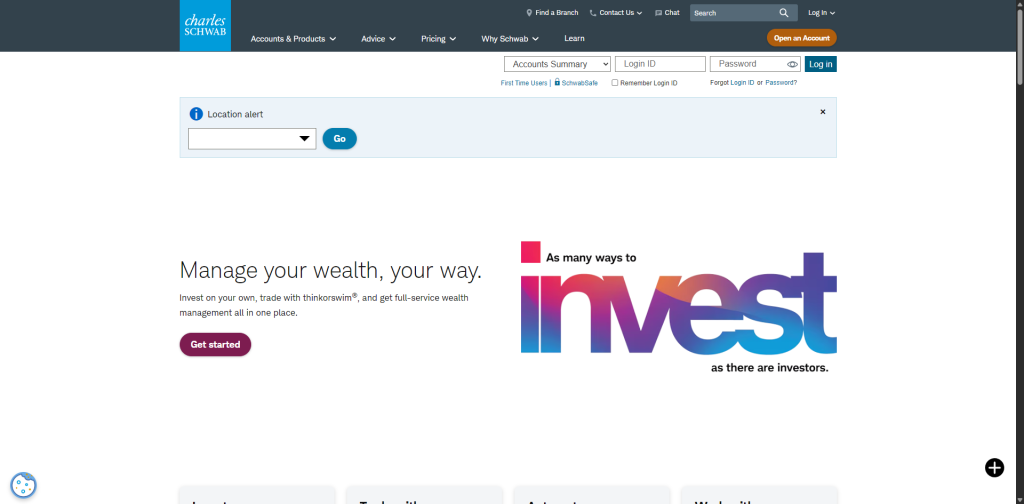
Best For: All-in-One Brokerage Services
Charles Schwab continues to rank among the most trusted online brokerages in the world.
The platform appeals to both beginner and advanced investors thanks to its broad service offerings, including investment management, retirement planning, banking, and personalized advisory services.
Key Features
- Commission-free stock and ETF trading
- Robust educational resources
- Advanced mobile app
- Access to financial advisors
- Wide range of investment products
- Retirement account support
Why Charles Schwab Stands Out
Charles Schwab delivers one of the most complete investing ecosystems available in 2026.
Its strong customer service reputation and integrated financial planning services make it an excellent choice for investors seeking long-term financial management beyond simple stock trading.
3. TD Ameritrade (Thinkorswim)

Best For: Active Traders and Options Investors
TD Ameritrade’s Thinkorswim platform remains highly respected among active traders who rely on advanced charting and technical analysis tools.
Although Schwab acquired TD Ameritrade, the Thinkorswim platform continues operating as one of the most powerful trading systems available.
Key Features
- Advanced charting capabilities
- Real-time market data
- Technical analysis indicators
- Options trading tools
- Paper trading simulator
- Extensive customization features
Why Thinkorswim Stands Out
For serious traders, Thinkorswim offers institutional-quality tools within a retail investing platform.
The system supports complex trading strategies while providing educational resources that help intermediate traders develop advanced skills.
Its paper trading environment is especially valuable for practicing strategies without risking real capital.
Read Also: US Stocks Rally as Trump Softens Tone on Greenland, Backs Off Tariff Threat
4. Robinhood

Best For: Beginners and Mobile-First Investing
Robinhood helped popularize commission-free trading and continues attracting younger investors in 2026 through its clean, mobile-focused experience.
The platform emphasizes simplicity, making it easy for beginners to start investing with minimal complexity.
Key Features
- Commission-free stock trading
- Cryptocurrency support
- Fractional share investing
- Simple mobile interface
- Instant deposits
- Real-time price tracking
Why Robinhood Stands Out
Robinhood’s biggest advantage remains accessibility.
New investors can quickly open accounts and begin trading without navigating overly technical interfaces. The app’s streamlined design reduces barriers for users unfamiliar with traditional investing platforms.
However, advanced traders may find the research tools and analytics less comprehensive compared to more professional brokerages.
5. Webull
Best For: Intermediate Traders
Webull positions itself between beginner-focused simplicity and advanced trading sophistication.
The platform offers more analytical depth than Robinhood while remaining approachable for newer investors.
Key Features
- Commission-free trading
- Advanced charting tools
- Extended-hours trading
- Technical indicators
- Real-time market data
- Paper trading functionality
Why Webull Stands Out
Webull appeals strongly to investors who want enhanced technical analysis tools without transitioning into fully professional trading systems.
Its extended-hours trading capabilities also attract users seeking greater flexibility around market hours.
The platform’s interface balances usability with advanced functionality effectively.
6. E*TRADE

Best For: Balanced Investors and Retirement Accounts
E*TRADE remains a respected brokerage platform offering strong research tools and investment flexibility.
The platform supports a wide range of investing styles, from casual investing to more active portfolio management.
Key Features
- Commission-free stock and ETF trading
- Retirement account support
- Research and analysis tools
- Mobile investing app
- Managed portfolios
- Educational investing resources
Why E*TRADE Stands Out
E*TRADE provides an excellent balance between simplicity and functionality.
Its retirement planning capabilities make it attractive for long-term investors, while active traders still benefit from strong market research and trading tools.
The platform also supports various account types tailored to different financial goals.
Read Also: How to Buy Global Stocks from Africa: A Complete Guide to International Investing
7. SoFi Invest
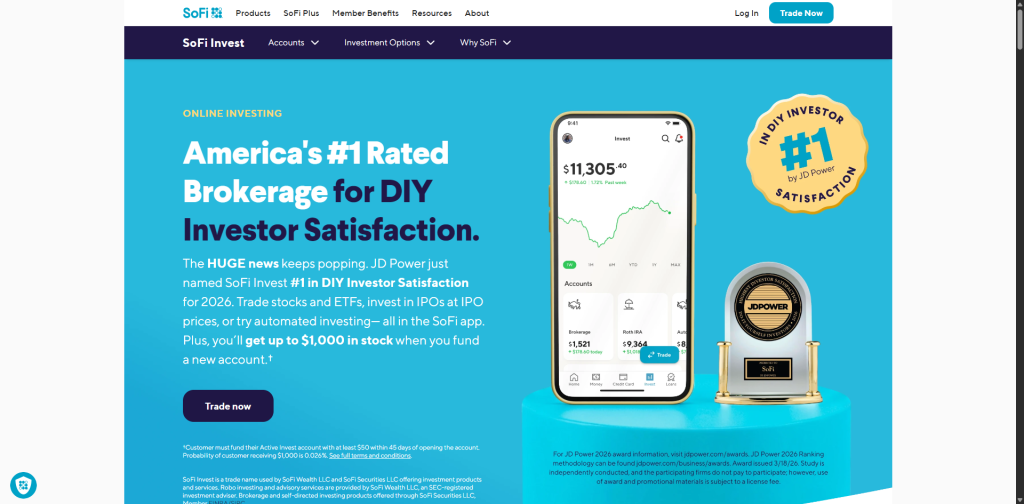
Best For: Beginners Seeking Financial Guidance
SoFi Invest combines investing with broader personal finance management.
The platform targets newer investors by integrating stock trading, budgeting tools, financial planning, and educational resources into a single ecosystem.
Key Features
- Commission-free investing
- Fractional shares
- Free financial planning
- Automated investing options
- Personal finance tracking
- User-friendly mobile experience
Why SoFi Invest Stands Out
SoFi appeals to users who want investing integrated into broader financial wellness planning.
Its combination of investing and financial education helps beginners gain confidence while learning wealth-building strategies.
The platform’s automated investing options also simplify portfolio management for hands-off investors.
Comparison of Leading Stock Trading Platforms
| Platform | Best For | Beginner Friendly | Advanced Tools | Retirement Planning |
|---|---|---|---|---|
| Fidelity | Long-term investors | Excellent | Strong | Excellent |
| Charles Schwab | Full-service investing | Excellent | Strong | Excellent |
| Thinkorswim | Active traders | Moderate | Exceptional | Good |
| Robinhood | Beginners | Excellent | Limited | Basic |
| Webull | Intermediate traders | Good | Strong | Moderate |
| E*TRADE | Balanced investing | Good | Strong | Excellent |
| SoFi Invest | Financial wellness | Excellent | Moderate | Good |
What to Look For When Choosing a Platform to Trade Stocks Online
Choosing the best brokerage depends heavily on your investing goals, trading frequency, and experience level.
Several important factors should guide your decision.
Fees and Commissions
Most leading brokerages now offer commission-free stock and ETF trading.
However, investors should still evaluate:
- Options trading fees
- Margin rates
- Withdrawal fees
- Account maintenance charges
- International trading costs
Low fees help preserve investment returns over time.
User Experience
A platform’s interface significantly affects usability.
Beginners often prefer simple, intuitive designs, while advanced traders may prioritize customization and data visibility.
The best platforms balance accessibility with functionality.
Research and Analysis Tools
Strong research capabilities help investors make informed decisions.
Useful tools include:
- Stock screeners
- Earnings reports
- Analyst ratings
- Technical indicators
- Real-time news feeds
- Portfolio analytics
Advanced research tools become increasingly important for active traders.
Mobile Trading Experience
Modern investors expect seamless mobile functionality.
A strong mobile app should provide:
- Fast order execution
- Real-time alerts
- Portfolio tracking
- Watchlists
- Research access
- Secure authentication
Mobile accessibility has become essential rather than optional in modern investing.
Read Also: Best Platforms to Trade Stocks Online in 2026
Account Types
Different investors require different account structures.
Leading brokerages typically offer:
- Individual brokerage accounts
- Joint accounts
- IRAs
- Roth IRAs
- Custodial accounts
- Margin accounts
- Managed portfolios
Selecting the correct account type supports both tax efficiency and long-term financial planning.
AI and Automation in Modern Investing
Artificial intelligence continues reshaping online investing in 2026.
Many platforms now use AI-powered systems for:
- Portfolio recommendations
- Market alerts
- Risk analysis
- Automated investing
- Fraud detection
- Personalized financial insights
These technologies help investors identify opportunities and manage portfolios more efficiently.
However, experts caution that AI tools should support — not replace — independent research and disciplined investing strategies.
Risks of Online Stock Trading
Although modern platforms make investing easier, stock trading still involves risk.
Market volatility, economic downturns, inflation, interest rate changes, and geopolitical events can all affect portfolio performance.
New investors should avoid making decisions based solely on hype, social media trends, or emotional reactions.
Diversification, research, and long-term planning remain essential principles for responsible investing.
Key Takeaways
- Modern stock trading platforms offer far more than trade execution.
- Fidelity and Charles Schwab remain leaders for long-term investors.
- Thinkorswim excels for active traders.
- Robinhood and SoFi appeal strongly to beginners.
- Webull provides a balance between simplicity and advanced tools.
- Research capabilities, fees, and account options should guide platform selection.
- AI tools can enhance investing but should not replace sound judgment.
Final Thoughts
The best platforms to Stock Trading in 2026 combine low costs, strong research tools, mobile convenience, and flexible account options.
Platforms like Fidelity Investments and Charles Schwab excel in long-term investing and retirement planning, while services like Robinhood and Webull appeal to newer and more active mobile-focused traders.
Ultimately, the right platform depends on your investing style, financial goals, and preferred level of market involvement.
Taking time to evaluate tools, fees, educational resources, and account features can help investors build stronger portfolios and navigate financial markets with greater confidence in 2026.
Read Also: List Of Kenyan Companies, Stocks To Invest In This Year
Frequently Asked Questions
What is the best stock trading platform for beginners?
Robinhood, SoFi Invest, and Fidelity are often considered among the best choices for beginners because of their user-friendly interfaces and educational resources.
Which platform is best for active traders?
Thinkorswim is widely regarded as one of the strongest platforms for active traders and options investors.
Are commission-free brokers truly free?
Many brokers offer commission-free stock trades, but investors should still review fees related to options, margin borrowing, currency conversion, and account services.
Can international investors use these platforms?
Availability varies by country. Investors should confirm eligibility directly with each brokerage.
What is fractional share investing?
Fractional shares allow investors to purchase a portion of a stock rather than a full share, making expensive stocks more accessible.
Is online stock trading safe?
Reputable brokers use encryption, multi-factor authentication, and regulatory oversight to protect investors. However, market risk remains unavoidable.
Read Also: How to Buy Global Stocks from Africa: A Complete Guide to International Investing