Forex Brokers in the United States operate in one of the world’s most tightly regulated retail trading markets. Unlike many offshore jurisdictions where brokers can offer extreme leverage, bonuses, and loose account rules, U.S. forex brokers must follow strict oversight from the Commodity Futures Trading Commission and the National Futures Association. This makes the American forex market smaller, more regulated, and more compliance-heavy than many international markets.
Forex trading involves buying and selling currency pairs such as EUR/USD, GBP/USD, USD/JPY, AUD/USD, and USD/CAD. Traders speculate on whether one currency will rise or fall against another. The market is large, liquid, and open 24 hours a day during the trading week, but it is also risky. Leverage can magnify losses, spreads and financing costs can reduce returns, and many retail traders lose money.
For U.S. residents, choosing a forex broker is not only about spreads, platforms, or mobile apps. Regulation is the first issue. A broker that accepts U.S. retail clients should be properly registered and supervised. Traders should avoid offshore brokers that target Americans while bypassing U.S. rules, especially those promising high leverage, guaranteed profits, bonuses, or easy withdrawals.
This guide profiles some of the best Forex Brokers in the United States and explains how the U.S. forex brokerage market works. It covers regulation, account features, trading platforms, costs, risk controls, buyer questions, red flags, and frequently asked questions. The article is educational only and should not be treated as personal financial advice.
Industry Overview: Forex Brokers in the United States
The U.S. forex brokerage market is smaller than the global forex market because regulation is stricter. Retail forex brokers that serve U.S. customers must meet serious compliance, capital, reporting, disclosure, and supervisory obligations. This has reduced the number of firms legally serving U.S. retail forex traders.
The main regulators are the Commodity Futures Trading Commission and the National Futures Association. The CFTC oversees derivatives markets, including retail off-exchange forex. The NFA supervises registered firms and provides the BASIC database, where traders can check registration status and disciplinary history.
U.S. rules are designed to protect retail traders from abusive practices, undercapitalized brokers, misleading promotions, and excessive leverage. However, regulation does not remove trading risk. A regulated broker can reduce counterparty and fraud risk, but it cannot make forex trading safe or profitable.
The U.S. market is shaped by several factors. First, leverage is limited compared with many offshore brokers. Second, marketing rules are stricter. Third, broker options are fewer. Fourth, traders must pay close attention to spreads, commissions, rollover costs, execution quality, platform stability, and customer support. Fifth, many brokers provide education and demo accounts because retail forex is complex.
The future of U.S. forex brokerage will likely be shaped by tighter compliance, better mobile platforms, more transparent pricing, algorithmic risk tools, improved trader education, and stronger integration with multi-asset trading platforms.
Ranking Methodology
This directory evaluates U.S. forex brokers based on regulatory status, reputation, platform quality, pricing transparency, trading tools, educational resources, customer support, account accessibility, execution features, product range, and suitability for different trader types.
The ranking gives high priority to whether a broker is legally appropriate for U.S. retail forex traders. Offshore brokers may advertise higher leverage or bonuses, but that does not make them safer or better for U.S. residents.
The companies below were selected because they are widely recognized in the U.S. forex trading market or provide forex access through regulated channels. Traders should still verify current registration status, account terms, fees, and eligibility before opening an account.
Best Forex Brokers in the United States
FOREX.com
Overview
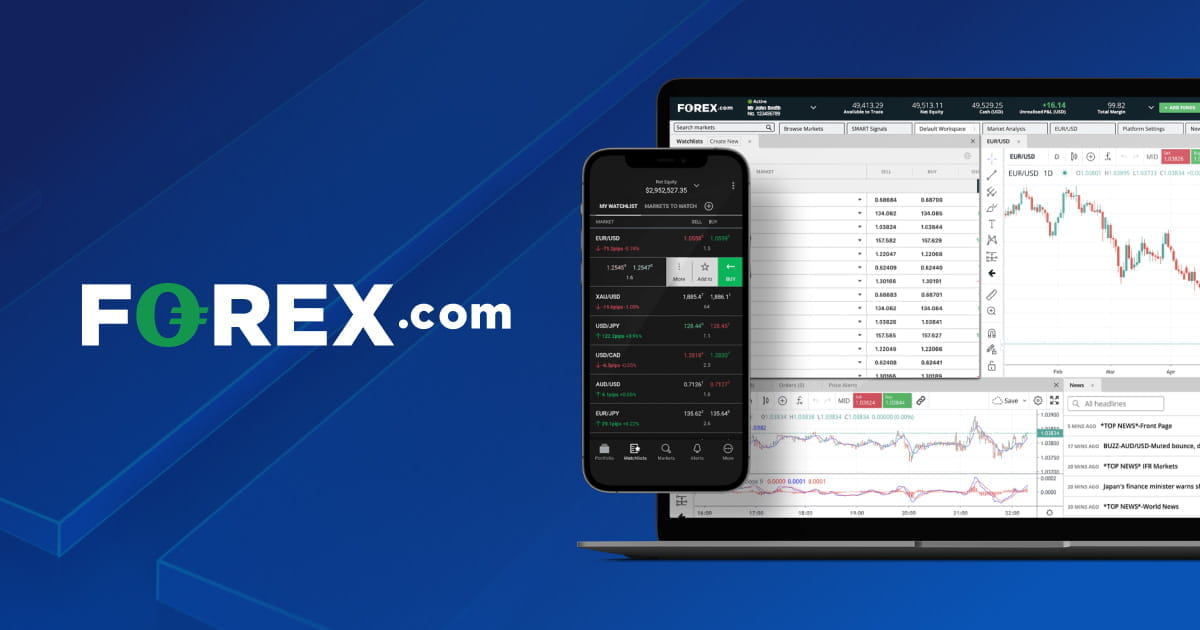
FOREX.com is one of the most recognized forex brokers serving U.S. retail traders. It is part of StoneX Group and has a long presence in the online forex market. The broker is commonly known for dedicated forex trading, a wide range of currency pairs, multiple platforms, educational content, and market analysis.
FOREX.com is often considered a strong option for traders who want a forex-focused platform rather than a general investing app. It supports active traders, chart-focused traders, and users who want access to research and trading tools. Its platform options usually include web, desktop, and mobile access.
Services Offered
FOREX.com offers forex trading, charting tools, market analysis, trading education, demo accounts, mobile trading, desktop trading, and account management tools.
Industries Served
The broker serves U.S. retail forex traders, active traders, currency market participants, and self-directed investors.
Notable Features
FOREX.com is known for its forex-focused platform, research tools, mobile access, and broad currency pair coverage.
Competitive Advantages
Its main advantage is specialization. Unlike some multi-asset brokers where forex is only one product among many, FOREX.com is strongly identified with currency trading.
Headquarters
U.S. operations are connected to StoneX Group, which is headquartered in New York.
Website
forex.com
Why It Stands Out
FOREX.com stands out for traders who want a dedicated forex broker with established brand recognition, platform depth, and currency-market education.
OANDA
Overview
OANDA is another well-known forex broker serving U.S. traders. The company has a long history in currency data, forex trading, and online financial technology. Many traders recognize OANDA for its pricing tools, currency research, and accessible trading platform.
OANDA can be attractive to traders who want flexible account access, educational resources, and a broker with a long-standing currency-market identity. It is also known internationally, though U.S. clients must use the U.S.-regulated offering rather than offshore versions.
Services Offered
OANDA offers forex trading, charting tools, market analysis, currency data, demo accounts, mobile trading, web platforms, and educational resources.
Industries Served
The company serves retail forex traders, currency market users, self-directed traders, and clients seeking online forex access.
Notable Features
OANDA is known for currency-market tools, forex education, platform accessibility, and a long history in online FX services.
Competitive Advantages
Its strength is credibility in currency markets. OANDA has built recognition not only as a broker, but also as a provider of currency data and FX-related tools.
Headquarters
U.S. operations serve American clients through the regulated U.S. entity.
Website
oanda.com
Why It Stands Out
OANDA stands out for traders who want a well-known forex brand with currency tools, educational support, and accessible online trading.
tastyfx
Overview
tastyfx is the U.S. forex brand associated with IG’s U.S. forex business. It offers online forex trading to U.S. clients through a platform designed for active currency traders. The broker is known for competitive platform design, forex education, mobile trading, and access to major and minor currency pairs.
tastyfx may appeal to traders who want a modern interface, forex-focused tools, and a broker connected to a globally known trading group. As with all brokers, traders should verify account terms, spreads, fees, and regulatory details before signing up.
Services Offered
tastyfx offers forex trading, web trading, mobile trading, demo accounts, educational resources, pricing information, and currency market tools.
Industries Served
The broker serves U.S. retail forex traders, active traders, mobile traders, and self-directed currency market participants.
Notable Features
tastyfx is known for a modern trading platform, forex-focused account options, and educational resources.
Competitive Advantages
Its competitive advantage is platform experience. Traders who care about interface quality, mobile usability, and trading workflow may find it attractive.
Headquarters
U.S. operations are tied to IG’s U.S. forex business.
Website
tastyfx.com
Why It Stands Out
tastyfx stands out for traders looking for a modern U.S.-regulated forex platform with strong usability and a forex-first trading experience.
Trading.com
Overview
Trading.com is a U.S.-available forex broker that has gained attention because the number of legal retail forex options in the United States is limited. It offers access to forex markets through an online trading platform and is usually discussed among the small group of brokers available to U.S. retail clients.
The broker may suit traders looking for a streamlined forex trading experience, but buyers should carefully review its platforms, spreads, fees, product range, and support before choosing it over more established names.
Services Offered
Trading.com offers forex trading, online platforms, account tools, charting, educational resources, and demo account access.
Industries Served
The broker serves retail forex traders and self-directed currency traders.
Notable Features
Trading.com is notable because it appears among the limited number of brokers serving U.S. retail forex traders.
Competitive Advantages
Its advantage is market access in a restricted U.S. brokerage environment.
Headquarters
Buyers should verify current U.S. entity details and registration status before opening an account.
Website
trading.com
Why It Stands Out
Trading.com stands out because it gives U.S. retail traders another regulated forex broker option in a market with few available choices.
Interactive Brokers
Overview
Interactive Brokers is a major global brokerage known for professional-grade trading tools, broad market access, low-cost execution, and institutional-quality technology. It is not a simple beginner forex broker, but it is highly relevant for advanced traders, institutions, and sophisticated investors who want access to global markets.
Interactive Brokers offers currency trading capabilities, but its forex access and eligibility can differ depending on account type, jurisdiction, and client classification. Traders should confirm whether the specific forex product they want is available to them as U.S. clients.
Services Offered
Interactive Brokers provides brokerage services, global market access, currency trading, stocks, options, futures, bonds, ETFs, margin tools, trading APIs, and professional trading platforms.
Industries Served
The firm serves active traders, professional traders, institutions, advisers, hedge funds, and sophisticated individual investors.
Notable Features
Interactive Brokers is known for Trader Workstation, global market access, advanced order types, and professional execution tools.
Competitive Advantages
Its strength is breadth. It is not only a forex broker; it is a multi-asset platform for serious market participants.
Headquarters
Greenwich, Connecticut.
Website
interactivebrokers.com
Why It Stands Out
Interactive Brokers stands out for advanced traders who need professional tools, global market access, and multi-asset trading capabilities.
Charles Schwab
Overview
Charles Schwab is one of America’s largest brokerage firms and became even more important after acquiring TD Ameritrade. While Schwab is not usually viewed as a dedicated retail spot forex broker in the same way as FOREX.com or OANDA, it is relevant because of its trading platforms, futures access, and broader investment services.
For U.S. traders, Schwab may be more appropriate for multi-asset investing, futures, options, stocks, ETFs, and retirement accounts than for simple retail spot forex. Traders interested in currency exposure should carefully review available products and account eligibility.
Services Offered
Charles Schwab offers brokerage accounts, futures access, stocks, ETFs, options, mutual funds, retirement accounts, trading platforms, research, education, and advisory services.
Industries Served
The company serves retail investors, active traders, retirement savers, advisers, and institutions.
Notable Features
Schwab is known for thinkorswim, broad brokerage services, investor education, and a large U.S. client base.
Competitive Advantages
Its main advantage is platform breadth and brand trust. It can serve investors who want more than forex trading.
Headquarters
Westlake, Texas.
Website
schwab.com
Why It Stands Out
Charles Schwab stands out for traders and investors who want a large U.S. brokerage platform with research, education, and multi-asset capabilities.
Industry Trends Shaping Forex Brokers in the United States
Strict U.S. Regulation
The most important trend in the U.S. forex market is regulation. U.S. retail forex brokers must comply with strict rules, registration requirements, capital requirements, reporting standards, and customer protections. This keeps the number of legal brokers limited.
Lower Leverage Than Offshore Brokers
U.S. leverage limits are lower than what many offshore brokers advertise. This can frustrate some traders, but it is designed to reduce excessive risk. Higher leverage can magnify losses quickly.
Mobile-First Trading
Forex traders increasingly expect high-quality mobile apps, real-time charts, alerts, news, watchlists, account management, and fast order entry. Brokers with weak mobile platforms are less competitive.
Better Education and Risk Warnings
Because many retail forex traders lose money, brokers are under pressure to provide clearer education, better risk disclosures, and more transparent pricing.
Platform Differentiation
Brokers now compete through charting, execution tools, order types, market analysis, news, economic calendars, demo accounts, and platform reliability.
Offshore Broker Risk
Many offshore brokers target U.S. traders with high leverage, bonuses, and relaxed rules. These offers can be risky because they may not provide the same regulatory protections available through U.S.-regulated firms.
Buyer’s Guide: How to Choose a Forex Broker in the United States
Verify Regulation First
Before comparing spreads or platforms, verify that the broker is properly registered and legally allowed to serve U.S. retail forex traders. Use official regulatory databases rather than relying only on marketing claims.
Compare Spreads and Commissions
Forex trading costs include spreads, commissions, rollover charges, financing costs, and possible account fees. A broker advertising low spreads may still charge commissions or have other costs.
Test the Platform
Use a demo account before depositing real money. Test charting, order entry, stop-loss tools, mobile usability, execution speed, and account reports.
Review Available Currency Pairs
Some brokers offer more currency pairs than others. Beginners usually focus on major pairs, while advanced traders may want minors and exotics.
Understand Leverage
Leverage can increase exposure but also increases risk. Traders should understand margin requirements and what happens if the market moves against them.
Check Customer Support
Forex markets move quickly. Good support matters when account access, withdrawals, deposits, platform errors, or trade issues occur.
Read Risk Disclosures
Do not skip risk disclosures. They explain important information about losses, execution, fees, leverage, margin, and broker obligations.
Why Forex Brokers Matter in the United States
Forex brokers matter because they provide access to currency markets for traders, hedgers, and market participants. They supply platforms, pricing, execution, margin systems, reporting, education, and account services.
In the United States, regulated brokers also play an important gatekeeping role. They must comply with rules intended to reduce fraud, improve transparency, and protect retail traders from some of the worst abuses seen in unregulated markets.
However, forex brokers cannot remove market risk. Currency prices can move quickly because of interest rates, inflation, central bank policy, employment data, geopolitical events, trade flows, and market sentiment. Choosing a regulated broker is only one part of risk management.
Conclusion
The best Forex Brokers in the United States include FOREX.com, OANDA, tastyfx, Trading.com, Interactive Brokers, and Charles Schwab, depending on the trader’s needs and account eligibility. FOREX.com and OANDA are strong dedicated forex names. tastyfx offers a modern forex-focused platform. Trading.com adds another U.S. retail option. Interactive Brokers is better suited to advanced and professional users. Charles Schwab is strongest for traders who want a broader U.S. brokerage platform.
The most important takeaway is that U.S. forex traders should prioritize regulation, transparency, platform quality, pricing, and risk controls. Avoid offshore brokers promising extreme leverage, guaranteed profits, or unrealistic bonuses. Forex trading is risky, and a good broker should help traders understand that risk rather than hide it.
Frequently Asked Questions
What are the best forex brokers in the United States?
Some of the best-known forex brokers and forex-access platforms in the United States include FOREX.com, OANDA, tastyfx, Trading.com, Interactive Brokers, and Charles Schwab. The best choice depends on whether a trader wants a dedicated forex broker, advanced multi-asset platform, mobile-first experience, research tools, or broader brokerage services. U.S. traders should verify current regulatory status before opening an account.
Are forex brokers legal in the United States?
Yes, forex brokers can legally serve U.S. retail traders if they are properly registered and comply with U.S. regulations. The U.S. market is stricter than many offshore jurisdictions, so only a small number of firms serve U.S. retail forex clients. Traders should avoid offshore brokers that accept U.S. clients without proper authorization.
Which U.S. forex broker is best for beginners?
Beginners often look for clear education, simple platforms, demo accounts, strong support, transparent pricing, and strong regulation. FOREX.com, OANDA, and tastyfx are commonly considered accessible options for U.S. retail forex traders. However, beginners should learn risk management first and should not trade with money they cannot afford to lose.
Which forex broker has the lowest spreads in the United States?
Spreads vary by account type, currency pair, liquidity, market conditions, and whether commissions are charged separately. A broker with very low advertised spreads may charge commissions or require larger deposits. Traders should compare total trading cost, not only the headline spread.
Why are there fewer forex brokers in the United States?
There are fewer forex brokers in the United States because regulation is stricter. Brokers must meet registration, capital, reporting, disclosure, and compliance requirements. These rules make the market safer in some ways but also reduce the number of firms willing or able to serve U.S. retail clients.
Can U.S. traders use offshore forex brokers?
U.S. traders should be extremely cautious with offshore forex brokers. Many offshore firms are not legally authorized to serve U.S. retail clients and may not provide the same protections as U.S.-regulated brokers. High leverage, bonuses, and easy signup offers can hide serious risks, including withdrawal problems and weak oversight.
Is forex trading safe?
Forex trading is risky. Regulation can reduce fraud and broker-related risks, but it cannot prevent trading losses. Currency markets can move quickly, and leverage can magnify losses. Traders should use risk controls, understand margin, avoid overtrading, and never assume that a broker or strategy can guarantee profits.
What should I check before opening a forex account?
Check regulatory registration, fees, spreads, commissions, rollover costs, platform quality, available currency pairs, customer support, funding methods, withdrawal rules, margin requirements, and risk disclosures. Traders should also test the demo account before depositing money.
What is the difference between a forex broker and a stock broker?
A forex broker provides access to currency pairs, usually through leveraged trading. A stock broker provides access to shares, ETFs, options, mutual funds, and other securities. Some firms offer both, but the products, risks, rules, and pricing structures differ. Forex trading is often more leverage-driven than ordinary stock investing.
Do forex brokers guarantee profits?
No legitimate forex broker should guarantee profits. Currency trading involves risk, and most retail traders lose money. Be cautious of any broker, signal seller, robot, or educator promising guaranteed returns, risk-free profits, or unusually high success rates. These are common warning signs of scams.