


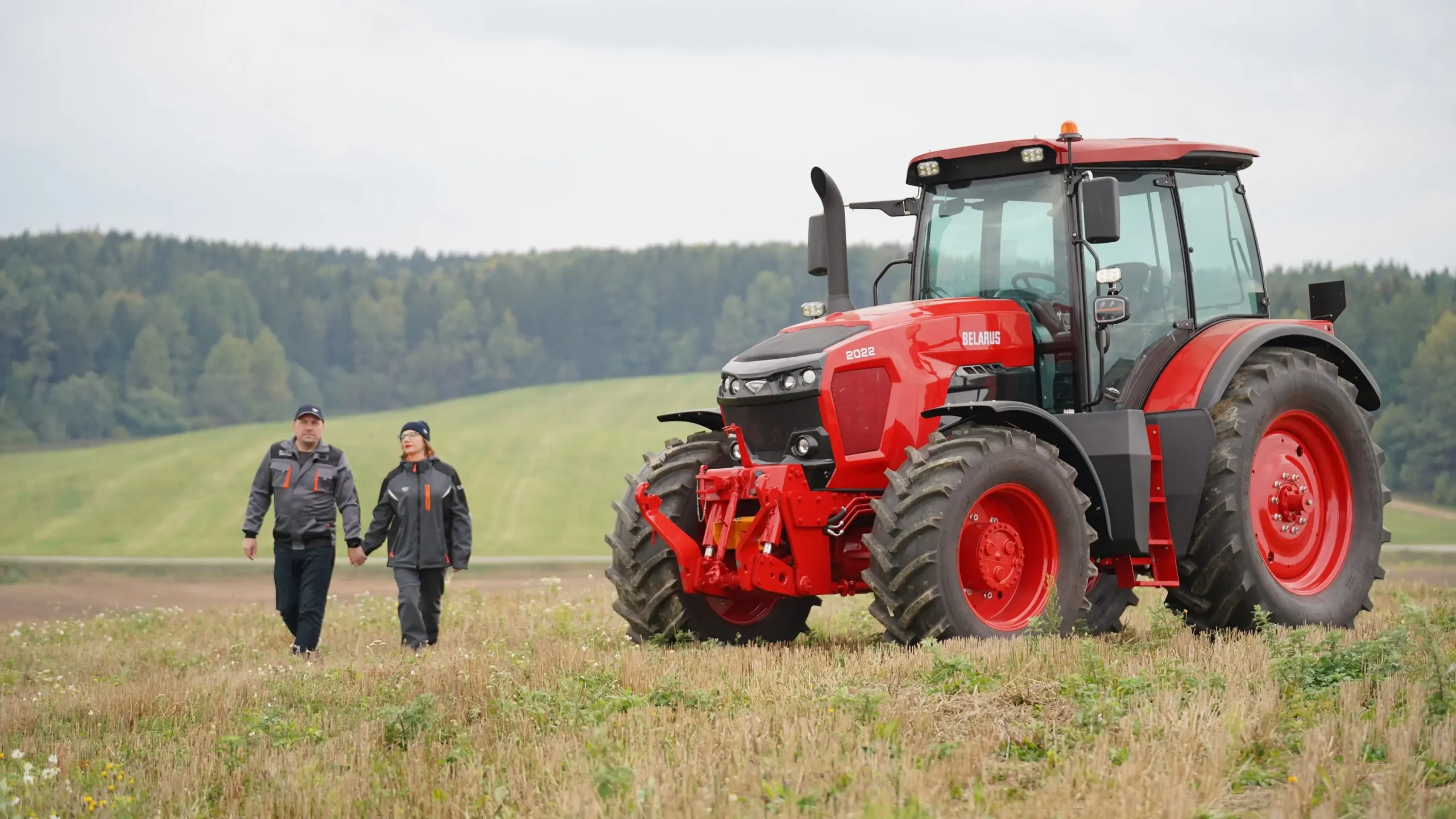
Belarus farm tractors are known worldwide for their durability, simplicity, and affordability. Built by the Minsk Tractor Works (MTZ), these machines trace their origins to 1946, part of the Soviet Union’s massive post-war industrialization. MTZ grew into the world’s largest tractor factory, and its tractors became a staple in both Eastern Europe and developing nations.
Offering models from small 18 hp compact tractors to 300+ hp field monsters, Belarus tractors continue to serve in over 100 countries. Their rugged construction, ease of repair, and straightforward diesel engineering have made them popular with farmers looking for practical machines that last.
Belarus Tractor Model Highlights
Here is a snapshot of key Belarus farm tractor models across decades:
| Model | Horsepower | Production Years |
|---|---|---|
| 180 | 18 hp | 1998–1999 |
| 250AS | 31 hp | 1979–1987 |
| 510 | 62 hp | 1998–1999 |
| 805 | 81 hp | 1983–1996 |
| 920 | 100 hp | 1986–1996 |
| 1025 MIG | 115 hp | 2004–2014 |
| 1221 | 130 hp | 1986–1996 |
| 1770 | 185 hp | 1985–1997 |
| 7100M | 300 hp | 1990–1996 |
The MTZ-50 and MTZ-80 series were especially popular in the 1970s and 1980s, cementing Belarus as a dominant tractor brand in socialist bloc countries and beyond. Recent MIG-series models offer improved ergonomics and emission standards, while preserving affordability.
Built for Tough Conditions
Belarus tractors are engineered for rugged performance and ease of maintenance:
- Powerful diesel engines
- Simple mechanical transmissions
- Robust 4WD and hydrostatic options
- High ground clearance and fuel efficiency
They are ideal for row cropping, hauling, forestry, and even urban municipal work. The brand’s focus on mechanical reliability over luxury makes it particularly attractive to farmers in Africa, Asia, and Eastern Europe.
Final Thoughts
From Soviet roots to global recognition, Belarus farm tractors have evolved into one of the most enduring names in agricultural machinery. They remain a go-to choice for cost-effective, heavy-duty farming needs—especially in regions where affordability and ease of maintenance are top priorities.


