


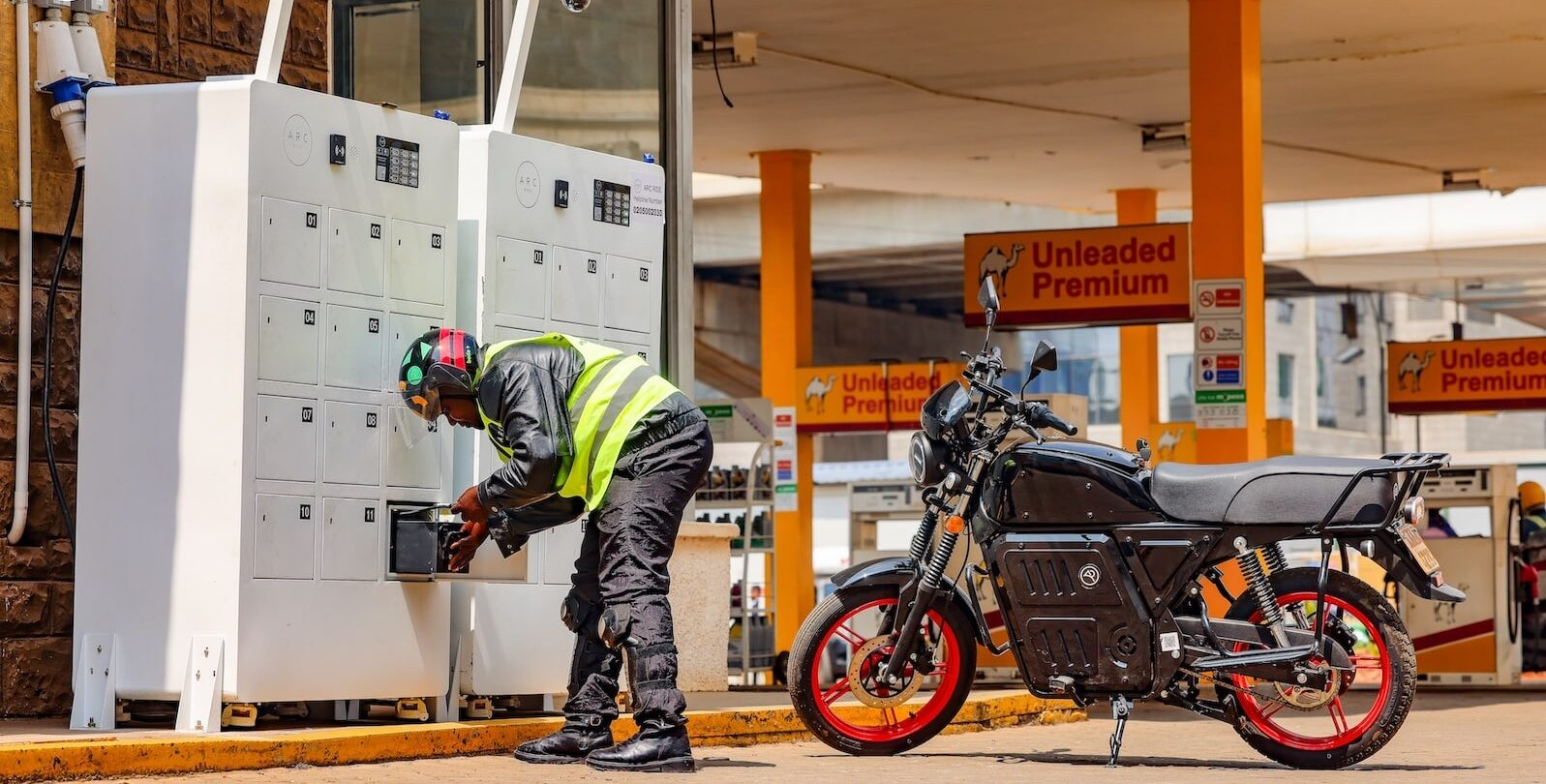
ARC Ride funding reflects the rising investor interest in Africa’s electric mobility and battery-swapping infrastructure market. Founded in 2020 and based in Nairobi, ARC Ride describes itself as Africa’s leading e-mobility battery-as-a-service provider.
The company operates across transportation, logistics, supply chain, storage, e-mobility, battery infrastructure and electric motorcycles. Its model is built around one of the biggest barriers to electric vehicle adoption in African cities: the battery.
Batteries are expensive. They increase the upfront cost of an electric motorcycle. They also create charging downtime for riders whose income depends on staying on the road. ARC Ride’s battery-as-a-service model addresses both problems by separating the battery from the vehicle and giving riders access to a network of swapping stations.
The company’s supplied funding record lists Novastar Ventures as a Series A investor in April 2026. Public reports also show recent institutional interest in ARC Ride’s model, including a proposed IFC equity commitment and earlier financing linked to battery-swapping expansion.
ARC Ride funding matters because it supports a business model that could make electric motorcycles more practical for boda boda riders, delivery operators, logistics companies and urban commuters. Instead of waiting for batteries to charge, riders can swap depleted batteries for charged ones and continue working.
What Is ARC Ride?
ARC Ride is a Kenyan e-mobility company focused on battery-as-a-service for electric two-wheelers and related clean transport use cases. The company provides electric mobility infrastructure designed to support riders, logistics operators and urban transport networks.
Its core product is a battery-swapping system. Riders use electric motorcycles that work with ARC Ride’s battery network. When a battery is depleted, the rider visits a swap station and exchanges it for a fully charged battery.
This model is especially relevant in African motorcycle markets. Motorcycles are widely used for passenger transport, delivery, informal work and last-mile logistics. For many riders, the vehicle is not just transport; it is an income-generating asset.
ARC Ride’s model sits across several sectors:
| Sector | Why It Matters to ARC Ride |
|---|---|
| Transportation | Electric motorcycles support urban mobility and rider income. |
| Logistics | Delivery and last-mile operators need reliable, low-cost transport. |
| Supply Chain | Battery availability and charging operations require careful network management. |
| Storage | Battery cabinets and charging systems are central to the model. |
| E-Mobility | ARC Ride supports the shift from petrol motorcycles to electric alternatives. |
| Battery-as-a-Service | The company separates battery ownership from vehicle use to lower upfront costs. |
| Clean Transport | Electric motorcycles can reduce tailpipe emissions in cities. |
ARC Ride’s business is therefore not only about selling electric motorcycles. It is about building an operating system for electric two-wheeler adoption.
Why ARC Ride Funding Matters
ARC Ride funding matters because electric mobility in Africa is infrastructure-heavy. A rider cannot adopt an electric motorcycle confidently unless charging or swapping is reliable. A logistics company cannot electrify its fleet unless uptime is predictable. A city cannot reduce motorcycle emissions at scale without a network that makes electric transport convenient.
Battery swapping addresses several adoption barriers.
First, it reduces downtime. Riders do not have to wait hours for a battery to charge. A fast swap can keep them earning.
Second, it can reduce upfront costs. If the rider does not need to buy the battery outright, the motorcycle can become more affordable.
Third, it creates recurring revenue infrastructure. Battery usage, swapping and energy services can become an ongoing business rather than a one-time vehicle sale.
Fourth, it supports fleet operators. Delivery companies need predictable energy access and maintenance systems to manage vehicles at scale.
Funding helps ARC Ride build this infrastructure. The company needs batteries, swap cabinets, charging systems, software, service teams, partnerships, customer support, fleet relationships and maintenance operations. These are capital-intensive requirements.
Full List of ARC Ride Funding and Investor Activity
ARC Ride’s supplied investor profile lists Novastar Ventures as a Series A investor in April 2026. Public reporting also shows additional financing activity linked to IFC and Mirova.
| Investor / Funding Partner | Announced Date | Amount | Main Category | Strategic Value |
| Novastar Ventures | Apr 2026 | Undisclosed | Series A | Supports ARC Ride’s e-mobility, battery-as-a-service and clean transport growth. |
| International Finance Corporation | Feb 2026 | Proposed $5M equity commitment | Series A / Development Finance | Supports battery-swapping expansion, electric motorcycles and regional growth. |
| Mirova | Oct 2025 | Up to $10M loan | Debt / Climate Finance | Supports expansion of battery exchange stations for electric motorcycles. |
| Musashi partnership | May 2025 | Undisclosed | Strategic Battery Asset Partnership | Supports battery-as-a-service operations and battery swap station deployment. |
The available record shows that ARC Ride’s funding strategy includes venture capital, development finance, climate debt and strategic partnerships. That mix fits a company building physical infrastructure and recurring mobility services.
ARC Ride Funding Timeline
2020: Founded in Nairobi
ARC Ride was founded in 2020 in Nairobi. The timing was important. Kenya’s electric mobility sector was still emerging, but motorcycle transport was already a massive market.
Boda boda riders and delivery workers were facing high fuel costs and maintenance expenses. Electric motorcycles offered a possible alternative, but charging remained a major problem. ARC Ride entered the market with a battery-swapping model designed to solve that challenge.
2021–2024: Building the Battery-as-a-Service Model
In its early years, ARC Ride focused on developing its electric motorcycle and battery-swapping ecosystem. The company had to prove that riders would accept electric motorcycles, that batteries could be managed safely and that swap stations could operate reliably.
This stage was critical because battery-as-a-service depends on network trust. Riders must believe that batteries will be available when they need them.
2025: Strategic Battery Asset Partnership
In May 2025, ARC Ride entered a partnership with Musashi to launch a battery asset model in Kenya. Under the arrangement, ARC Ride would manage battery-as-a-service operations for Musashi-financed assets, while users would swap batteries at stations across the city.
This partnership matters because it separates asset ownership, operations and rider access. That can help lower upfront costs and improve network scaling.
2025: Mirova Loan Support for Swap Station Expansion
In October 2025, public reports said Mirova was providing up to $10 million through a loan to support ARC Ride’s battery exchange station expansion. The financing was linked to the rollout of hundreds of battery exchange stations for electric motorcycles.
This funding was important because battery-swapping infrastructure requires upfront capital. A company cannot build network density without financing stations, batteries and energy systems first.
2026: IFC Proposed Equity Commitment
In February 2026, public reports said IFC proposed a $5 million equity commitment to support ARC Ride’s upcoming Series A. The investment was expected to support expansion of its battery-as-a-service model and electric motorcycle infrastructure in Kenya, with potential regional expansion.
IFC’s involvement is strategically important because development finance institutions often support businesses that combine commercial potential with climate impact and inclusion.
2026: Novastar Ventures Series A Participation
In April 2026, ARC Ride’s supplied funding profile lists Novastar Ventures as a Series A investor. Novastar’s involvement fits the company’s position in climate technology, mobility and inclusive growth.
This Series A stage is important because ARC Ride is moving from early infrastructure buildout toward broader scale. At this point, the company’s challenge is not only product validation. It is network expansion, utilization, service quality and long-term unit economics.
Biggest ARC Ride Funding Rounds by Deal Value
ARC Ride’s disclosed funding amounts are limited, but public reporting gives enough context to rank the largest known capital events.
| Rank | Funding Event | Announced Date | Deal Value | Strategic Area |
| 1 | Mirova loan facility | Oct 2025 | Up to $10M | Battery exchange station rollout and infrastructure expansion |
| 2 | IFC proposed equity commitment | Feb 2026 | $5M | Series A support, battery-as-a-service and regional expansion |
| 3 | Novastar Ventures Series A investment | Apr 2026 | Undisclosed | E-mobility platform growth and clean transport scale-up |
| 4 | Musashi battery asset partnership | May 2025 | Undisclosed | Battery asset financing and operations partnership |
The Mirova loan is the largest disclosed facility linked to ARC Ride’s infrastructure expansion. The IFC commitment and Novastar Series A participation show that ARC Ride is attracting both development finance and venture capital attention.
Most Common Funding Categories
ARC Ride’s funding profile reflects the needs of an asset-heavy mobility infrastructure company.
| Funding Category | Examples | Strategic Role |
| Series A Venture Capital | Novastar Ventures | Supports platform growth, scaling and market expansion. |
| Development Finance Equity | IFC | Supports clean mobility, battery infrastructure and inclusive transport. |
| Climate Debt | Mirova | Supports battery station rollout and infrastructure assets. |
| Strategic Asset Partnerships | Musashi | Supports battery asset financing and operational expansion. |
| Infrastructure Finance | Debt and equity providers | Funds batteries, swap cabinets, charging systems and service networks. |
This mix shows why ARC Ride is different from a pure software startup. The company needs capital for physical assets and infrastructure before it can fully scale revenue.
Strategic Lessons From ARC Ride Funding
Battery Ownership Is the Core Barrier
ARC Ride funding shows that the battery is the central economic challenge in electric motorcycle adoption. Batteries are expensive, and riders may not want to own them outright.
By offering battery-as-a-service, ARC Ride can lower the cost of acquiring an electric motorcycle and turn energy access into a recurring service.
Speed Matters for Riders
Motorcycle taxi and delivery riders earn by staying active. Waiting for a battery to charge can reduce income. Battery swapping solves this by keeping downtime low.
A fast, reliable swap experience can make electric motorcycles more attractive than petrol alternatives.
Network Density Creates Value
Battery swapping works best when stations are close to riders’ routes. More stations make the system more useful. More riders increase station utilization.
This creates a network effect. Funding helps ARC Ride build density before the full revenue base matures.
Strategic Partnerships Can Reduce Asset Pressure
Partnerships with equipment and battery asset providers can reduce capital strain. ARC Ride does not need to own every asset alone if partners finance batteries, stations or vehicles.
That structure can make scaling more practical.
How ARC Ride Funding Fits Its Business Model
ARC Ride’s business model depends on electric motorcycles, battery-swapping infrastructure, rider access, energy management and service operations.
Funding supports this model in several ways.
First, it finances batteries. Batteries are the most expensive component in many electric two-wheelers.
Second, it supports swap stations. Battery cabinets, charging systems, installation and maintenance require capital.
Third, it funds software and operations. ARC Ride needs systems to track batteries, manage charging, monitor usage, process payments and support riders.
Fourth, it supports customer growth. Riders need onboarding, training, financing options and service support.
Fifth, capital helps the company expand geographically. Entering new markets requires partnerships, regulatory understanding, station placement and supply chains.
ARC Ride funding therefore fits an infrastructure-led growth model. The company must invest in network capacity before riders can fully depend on the service.
Financial and Ownership Context
ARC Ride is a private company, so full financial statements are not publicly available. However, its funding profile shows a company moving through the growth stages of an e-mobility infrastructure startup.
The supplied profile lists Novastar Ventures as a Series A investor in April 2026. Public reports show IFC proposed a $5 million equity commitment around the Series A process, while Mirova was linked to up to $10 million in loan support for swap station expansion.
This capital structure is important. Equity can support growth, hiring, market development and platform expansion. Debt can support infrastructure assets such as batteries and swap stations. Strategic partnerships can reduce capital pressure by sharing asset ownership or financing.
For analysts, the central financial question is whether ARC Ride can achieve strong station utilization, reliable battery performance and attractive rider economics. Those three factors will determine whether the model can scale sustainably.
Competitive Impact of ARC Ride Funding
ARC Ride funding improves the company’s competitive position in several ways.
First, it supports network expansion. A wider swap network can make ARC Ride more useful to riders and logistics customers.
Second, funding strengthens battery availability. Riders need confidence that charged batteries will be ready when needed.
Third, investor backing improves credibility with riders, fleet operators, regulators and partners.
Fourth, ARC Ride can compete more effectively with other e-mobility companies, petrol motorcycle financing providers and battery-swapping platforms.
Fifth, climate and development finance support can help the company access partnerships that purely commercial operators may find harder to secure.
However, competition in African e-mobility is growing. Companies such as Spiro, Roam, GOGO Electric and other regional players are building electric motorcycle or battery infrastructure models. ARC Ride must differentiate through reliability, station density, pricing, service quality and rider economics.
Advantages of the Funding Strategy
Lower Upfront Cost for Riders
Battery-as-a-service can reduce the cost of acquiring an electric motorcycle because the rider does not need to buy the battery outright.
Reduced Charging Downtime
Fast battery swapping helps riders stay on the road, which is essential for income-generating motorcycle use.
Strong Climate Impact Potential
Electric motorcycles can reduce tailpipe emissions and support cleaner urban transport.
Infrastructure-Led Competitive Advantage
A dense battery-swapping network can become a strong moat if riders rely on it daily.
Investor Alignment With Climate Mobility
Backers such as Novastar, IFC and Mirova fit ARC Ride’s climate and infrastructure profile.
Disadvantages of the Funding Strategy
High Capital Requirements
Battery swapping requires batteries, cabinets, charging systems, software, power access and field maintenance.
Utilization Risk
Swap stations must be used often enough to justify their cost. Low rider adoption can weaken economics.
Battery Degradation Risk
Batteries lose capacity over time. ARC Ride must manage lifecycle, safety, replacement and recycling.
Operational Complexity
The company must manage charging, logistics, station uptime, payment systems, rider support and maintenance.
Competitive Pressure
Other e-mobility companies may build rival networks or use different battery standards, creating fragmentation.
Case Studies of Major ARC Ride Funding Events
Novastar Ventures Series A Investment
Novastar Ventures’ Series A participation is an important milestone for ARC Ride. It signals investor confidence in the company’s battery-as-a-service model and clean mobility strategy.
Novastar’s Africa-focused climate and inclusive growth lens fits ARC Ride’s market. The company is solving a practical transport problem while targeting emissions reduction and rider operating costs.
IFC Proposed $5 Million Equity Commitment
IFC’s proposed $5 million equity commitment is significant because it links ARC Ride to development finance interest in climate-focused mobility. The commitment was expected to support battery-swapping expansion and regional growth.
For ARC Ride, IFC involvement can strengthen credibility with regulators, financiers and commercial partners.
Mirova Loan for Battery Swap Stations
Mirova’s reported loan facility of up to $10 million was linked to the rollout of battery exchange stations. This is a strong example of matching debt capital to physical infrastructure.
Battery stations can generate recurring usage revenue if rider adoption grows, making them a logical target for infrastructure-style finance.
Musashi Battery Asset Partnership
The Musashi partnership shows how ARC Ride can expand through asset partnerships. Under the model, ARC Ride manages battery-as-a-service operations while batteries and related assets may be financed through a partner structure.
This can reduce the pressure on ARC Ride’s balance sheet and make scaling more efficient.
Common Mistakes When Analyzing ARC Ride Funding
Treating ARC Ride as Only an Electric Motorcycle Company
ARC Ride is better understood as a battery infrastructure and mobility services company. The battery network is central to the business.
Ignoring Utilization
The economics of battery swapping depend on station usage. More stations are only valuable if riders use them frequently.
Looking Only at Vehicle Sales
ARC Ride’s recurring opportunity lies in battery swaps, energy services and rider operations, not just selling motorcycles.
Underestimating Battery Lifecycle Costs
Battery replacement, safety, degradation and recycling are major cost factors.
Assuming Funding Guarantees Market Leadership
Capital helps, but execution decides the outcome. ARC Ride must deliver uptime, affordability and trust every day.
Lessons for Business Owners and Investors
ARC Ride offers several lessons.
First, infrastructure can unlock product adoption. Electric motorcycles need battery access before riders can trust them.
Second, affordability is central in emerging-market mobility. Lower upfront costs can accelerate adoption.
Third, recurring revenue models can be built around physical assets. Battery swaps can create ongoing income if network utilization is strong.
Fourth, partnerships are important in asset-heavy markets. Strategic financiers and equipment partners can help reduce capital strain.
Finally, climate mobility businesses must solve customer economics first. Riders will adopt electric motorcycles when the daily cost, uptime and reliability are better than petrol alternatives.
Key Takeaways
- ARC Ride is a Nairobi-based e-mobility company founded in 2020.
- The company describes itself as Africa’s leading e-mobility battery-as-a-service provider.
- ARC Ride operates across transportation, logistics, supply chain, storage and clean mobility.
- Its core model uses battery swapping to support electric motorcycle adoption.
- Novastar Ventures is listed as a Series A investor in April 2026.
- IFC reportedly proposed a $5 million equity commitment to support ARC Ride’s Series A and expansion.
- Mirova reportedly provided up to $10 million in loan support for battery exchange station rollout.
- ARC Ride has also entered a strategic battery asset partnership with Musashi.
- Battery-as-a-service can lower upfront vehicle costs and reduce rider downtime.
- ARC Ride’s growth depends on station density, battery availability, rider adoption and operational reliability.
- Main risks include capital intensity, utilization, battery degradation, competition and regulatory complexity.
- ARC Ride funding shows how African e-mobility is becoming an infrastructure-led investment market.
Frequently Asked Questions
What is ARC Ride?
ARC Ride is a Kenyan e-mobility company that provides battery-as-a-service infrastructure for electric motorcycles and other clean transport use cases.
When was ARC Ride founded?
ARC Ride was founded in 2020.
Where is ARC Ride based?
ARC Ride is based in Nairobi, Kenya.
What does ARC Ride do?
ARC Ride operates battery-swapping infrastructure that allows riders to exchange depleted electric motorcycle batteries for charged ones.
What is ARC Ride funding?
ARC Ride funding refers to the capital raised by the company to expand battery-swapping infrastructure, electric mobility services and clean transport operations.
Who invested in ARC Ride’s Series A?
Novastar Ventures is listed as a Series A investor in ARC Ride in April 2026.
How much funding did IFC propose for ARC Ride?
Public reports show IFC proposed a $5 million equity commitment to support ARC Ride’s Series A and battery-as-a-service expansion.
What was Mirova’s role in ARC Ride funding?
Public reports say Mirova provided up to $10 million in loan support to help ARC Ride expand battery exchange stations for electric motorcycles.
How does ARC Ride’s battery-as-a-service model work?
Riders use electric motorcycles and swap depleted batteries for charged batteries at ARC Ride stations, reducing charging downtime and lowering the need to own the battery outright.
Why is ARC Ride important for African mobility?
ARC Ride is important because battery swapping can make electric motorcycles more affordable and practical for riders, delivery operators and logistics companies.
What are ARC Ride’s main risks?
The main risks include high infrastructure costs, low station utilization, battery degradation, operational complexity, regulation and competition from other e-mobility providers.
Is ARC Ride only a motorcycle company?
No. ARC Ride is best understood as a battery-as-a-service and e-mobility infrastructure company, not only an electric motorcycle provider.
Conclusion
ARC Ride funding shows how African e-mobility is becoming an infrastructure business. Founded in Nairobi in 2020, ARC Ride is building a battery-as-a-service platform that aims to make electric motorcycles more affordable, practical and reliable for riders and logistics operators.
The company’s Series A backing from Novastar Ventures, proposed IFC equity support and reported Mirova loan facility all point to the same market opportunity: battery swapping can help solve the cost and charging barriers that slow electric motorcycle adoption. By separating the battery from the vehicle and building swap stations across the city, ARC Ride can reduce rider downtime and support cleaner urban transport.
The opportunity is strong. Motorcycles are central to mobility and logistics in African cities, and electric two-wheelers can reduce fuel costs and emissions. But the business is demanding. ARC Ride must build station density, manage battery lifecycle costs, keep uptime high and prove that riders save money in daily use.
For business owners, investors and mobility analysts, ARC Ride funding offers a clear lesson. The winners in African electric mobility will not only sell vehicles. They will build the battery, energy and service infrastructure that keeps riders moving every day.
Disclaimer: This article is for informational and educational purposes only. It is not investment advice, financial advice, or a recommendation to buy or sell any security. Always conduct your own research and consider speaking with a qualified financial adviser before making investment decisions.
Read Also: Dhamana Funding: How Dhamana Built Its Debt Capital Markets Platform


