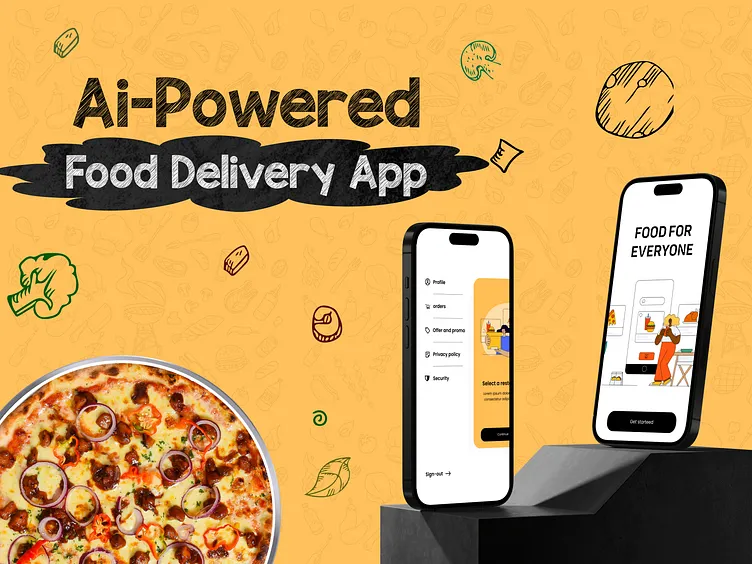
In 2025, the race to deliver hot meals within 20 minutes is being won by AI in food delivery. With real-time route optimization, smart dispatch systems, and demand prediction, food delivery platforms are using artificial intelligence to transform how we order, transport, and receive food.
This shift isn’t just making deliveries faster—it’s slashing operational costs, reducing carbon footprints, and enhancing customer experience at scale.
📦 How AI Is Reshaping Food Delivery Logistics
Food delivery has always relied on speed and accuracy. However, rising customer expectations, fluctuating order volumes, and traffic unpredictability have made it harder to meet delivery promises.
AI logistics engines solve this by:
- Analyzing real-time traffic and weather data
- Predicting peak ordering hours
- Assigning the right driver to the right route
- Optimizing the sequence of multiple deliveries
This creates hyper-efficient last-mile delivery systems that operate smarter, not just faster.
🚴♂️ Key AI Innovations in Food Delivery Apps
1. Smart Dispatch and Driver Assignment
AI models consider:
- Order volume
- Kitchen prep times
- Driver location and performance
- Customer distance
Based on these inputs, the system selects the optimal driver and delivery order, maximizing fleet productivity and minimizing wait times.
2. Dynamic Route Optimization
AI-driven routing engines calculate the fastest and safest paths for delivery in real time. These systems adapt to:
- Sudden traffic congestion
- Road closures
- Weather disruptions
- Customer delivery windows
The result is reliable ETAs, even during peak hours or bad weather.
3. Demand Prediction and Load Balancing
Using historical data, holidays, and social event trends, AI predicts:
- Which restaurants will get flooded
- Which neighborhoods will see spikes
- How many drivers are needed in each zone
This enables load balancing across delivery areas and reduces downtime for both couriers and kitchens.
4. Food Preparation Synchronization
Some platforms now connect AI systems with restaurant kitchens, enabling:
- Automated order pacing
- Ingredient stock prediction
- Accurate cooking time estimation
Drivers arrive just as the meal is ready, eliminating wait times and preserving food quality.
🏆 Notable AI-Powered Food Delivery Platforms
- Apps using machine learning dispatching systems to reduce average delivery time
- Startups developing AI fleet optimization tools for small restaurant chains
- Platforms offering real-time courier heat maps to monitor and redeploy riders
- Delivery networks using computer vision for automated quality control at pickup
These players are leveraging AI logistics to scale efficiently while improving customer experience.
📊 Traditional vs AI-Optimized Food Delivery
| Function | Traditional System | AI-Powered System |
|---|---|---|
| Order Dispatch | Manual or basic algorithm | Real-time smart dispatch with context |
| Route Planning | Static GPS-based | Adaptive AI routing with predictive updates |
| Delivery Timing | Based on estimates | Continuously optimized ETA |
| Resource Allocation | Fixed fleet distribution | Dynamic load balancing by region |
| Customer Experience | Reactive updates | Proactive alerts and precision tracking |
🌍 Benefits of AI in Food Delivery
- Shorter delivery times without hiring more drivers
- Lower fuel usage and operational costs
- Higher delivery completion rates
- Greater customer loyalty from accurate ETAs
- Better driver satisfaction through optimized routing
⚠️ Challenges for AI Logistics in Food Delivery
Despite its benefits, adoption faces challenges such as:
- Data accuracy from restaurants and traffic APIs
- Driver pushback against AI-based task assignments
- High initial development and deployment costs
- Privacy concerns in tracking user and courier behavior
Success depends on ethical data use, driver engagement, and continuous model training.
✅ Conclusion
AI in food delivery is the secret sauce behind the next generation of on-demand platforms. With smarter logistics, faster turnarounds, and predictive efficiency, AI is ensuring that your next meal arrives hot, fast, and right on time.
For startups and established platforms alike, embracing AI logistics is no longer a luxury—it’s the key to thriving in the intensely competitive food delivery space.