


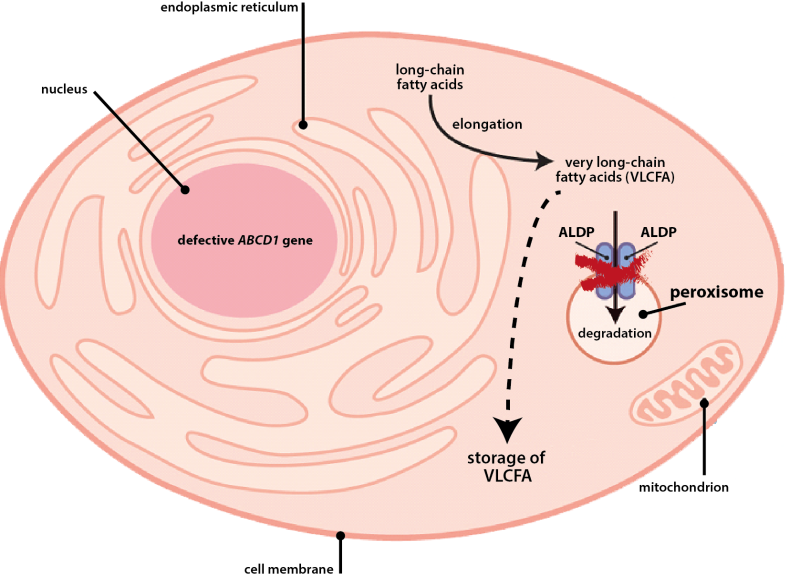
Adrenoleukodystrophy (ALD) is a rare, genetic disorder that affects the nervous system and adrenal glands, with symptoms ranging from mild to severe. It primarily impacts the myelin sheath, a protective covering around nerve cells in the brain, and hinders the breakdown of very long-chain fatty acids (VLCFAs), causing their accumulation in the body.
Key Features of ALD
- Genetic Basis:
- ALD is hereditary, typically passed down through the X chromosome.
- The condition is more severe in males, as they have only one X chromosome. Females, with two X chromosomes, are usually carriers and may experience milder symptoms.
- Impact on the Body:
- The buildup of VLCFAs primarily affects the brain, nervous system, and adrenal glands.
- Damage to the adrenal glands can result in adrenal insufficiency (Addison’s disease).
Types of ALD
1. Childhood-Onset ALD
- Age of Onset: Typically between ages 4 and 10.
- Symptoms:
- Progressive damage to the brain’s white matter (leukodystrophy).
- Cognitive decline, behavioral changes, and loss of motor functions.
- Vision and hearing problems.
- Prognosis:
- Without early diagnosis and treatment, symptoms worsen over time and may lead to death within five to ten years.
2. Addison’s Disease
- Description: A form of ALD where adrenal glands fail to produce sufficient steroid hormones.
- Symptoms:
- Fatigue, muscle weakness, and weight loss.
- Low blood pressure and darkened skin (hyperpigmentation).
- Salt cravings and low blood sugar.
- Complications:
- Untreated adrenal insufficiency can lead to an Addisonian crisis, a life-threatening condition.
3. Adrenomyeloneuropathy (AMN)
- Onset: Typically in adulthood.
- Symptoms:
- Gradual progression of stiffness and weakness in the legs (stiff gait).
- Bladder and bowel dysfunction.
- Milder effects in female carriers, though some may experience symptoms similar to AMN.
- Prognosis: Progression is slower compared to childhood-onset ALD.
Causes and Pathophysiology
- Mutation: ALD is caused by a defect in the ABCD1 gene located on the X chromosome. This gene is responsible for producing a protein that helps transport VLCFAs into peroxisomes for breakdown.
- VLCFA Accumulation: The mutation disrupts this process, leading to a buildup of VLCFAs in the body, which damages:
- Myelin Sheath: Essential for proper nerve function.
- Adrenal Glands: Leading to adrenal insufficiency.
Diagnosis
Early diagnosis of ALD is critical to managing the condition and preventing complications. Common diagnostic methods include:
- Blood Tests:
- Measuring VLCFA levels to detect abnormal accumulation.
- Genetic Testing:
- Identifying mutations in the ABCD1 gene.
- MRI Scans:
- Detecting early signs of white matter damage in the brain.
- Adrenal Function Tests:
- Evaluating hormone production by the adrenal glands.
Treatment Options
There is no universal cure for ALD, but treatment focuses on managing symptoms, slowing progression, and improving quality of life.
1. For Childhood-Onset ALD:
- Lorenzo’s Oil: A dietary supplement that reduces VLCFA levels in the blood. Its effectiveness in preventing disease progression varies.
- Hematopoietic Stem Cell Transplantation (HSCT):
- A potential treatment for early-stage disease to slow or halt neurological decline.
- Requires early diagnosis for best outcomes.
2. For Addison’s Disease:
- Hormone Replacement Therapy:
- Corticosteroids like hydrocortisone or prednisone to replace insufficient hormones.
- Lifestyle Adjustments:
- Monitoring stress and illness, which can worsen adrenal insufficiency.
3. For Adrenomyeloneuropathy:
- Physical Therapy:
- To maintain mobility and manage stiffness.
- Medications:
- Symptomatic treatments for bladder, bowel, and neurological issues.
Management and Support
- Multidisciplinary Care: A team of specialists, including neurologists, endocrinologists, and physical therapists, is essential for comprehensive care.
- Regular Monitoring:
- Routine blood tests to monitor VLCFA levels.
- Periodic MRI scans to assess neurological changes.
Living with ALD
- Support for Families:
- Genetic counseling to assess the risk of passing the condition to offspring.
- Support groups and resources for coping with the emotional challenges of a chronic condition.
- Early Intervention:
- Newborn screening programs in some regions allow for early diagnosis and intervention.
Research and Future Directions
Ongoing research into ALD aims to develop advanced therapies, including:
- Gene Therapy: Replacing or repairing the defective ABCD1 gene to restore normal VLCFA metabolism.
- New Medications: Investigating drugs to target and reduce VLCFA buildup.
Conclusion
Adrenoleukodystrophy is a challenging condition that affects patients and families deeply. Early diagnosis and intervention are crucial to managing symptoms and improving outcomes. Continued research and awareness are vital for advancing treatment options and supporting those affected by this rare genetic disorder.


