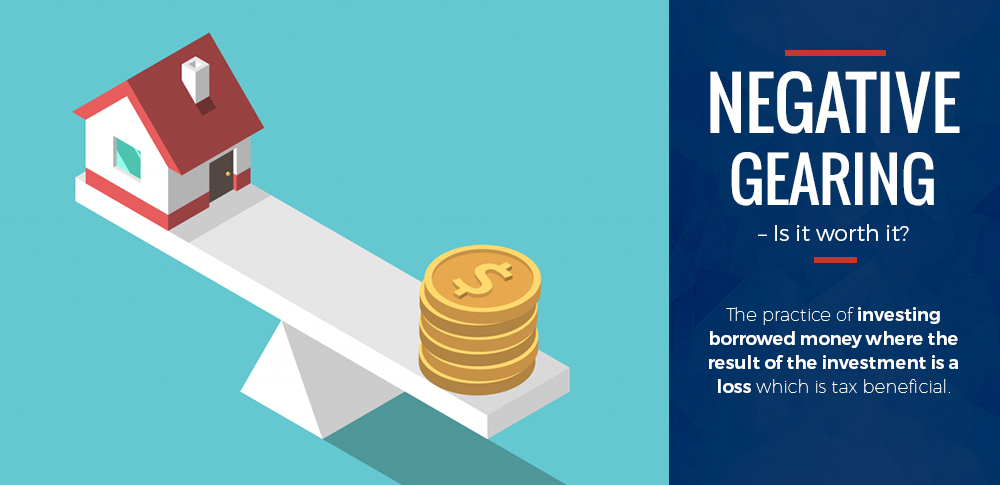
Negative gearing in Australia is one of the most discussed—and often misunderstood—investment strategies. It involves borrowing money to invest in a property that generates less rental income than the cost of owning it (like mortgage interest and maintenance). While this creates a short-term loss, investors use it to offset taxable income, hoping long-term capital gains will make up the difference.
Supporters argue that negative gearing offers valuable tax deductions and can accelerate wealth-building through property. Critics warn it may encourage over-leveraging and inflate housing prices. So is it worth it? The answer depends on your income level, investment timeline, risk tolerance, and whether property prices in your chosen market are likely to grow. Let’s break it down.
How Negative Gearing Works in Australia
Example:
You purchase a property for $700,000 with a $600,000 loan. Your annual rental income is $25,000, but your interest and other costs total $30,000. That $5,000 shortfall is a loss you can deduct from your other taxable income—potentially saving you thousands in tax.
Pros of Negative Gearing
- Tax Benefits: Offsets rental losses against taxable income
- Potential Capital Growth: Long-term gains can outweigh short-term losses
- Leverage: Enables control of a high-value asset with less upfront capital
- Inflation Hedge: Property may rise in value faster than inflation
Risks and Drawbacks
- Ongoing Losses: You’re relying on future price growth to justify short-term losses
- Interest Rate Risk: Higher interest rates can widen losses
- Vacancy Risk: If your property sits empty, you still pay full costs
- Policy Changes: Future governments could alter tax rules around negative gearing
Is Negative Gearing Worth It?
For high-income earners seeking tax efficiency and long-term capital gains, negative gearing in Australia can be beneficial—if the investment is in a growth market and managed prudently. However, it’s not suitable for everyone. If you can’t afford to carry losses or are relying solely on tax perks, you may be exposing yourself to unnecessary risk. A positively geared or neutral cash flow strategy may be more sustainable, especially for first-time investors.