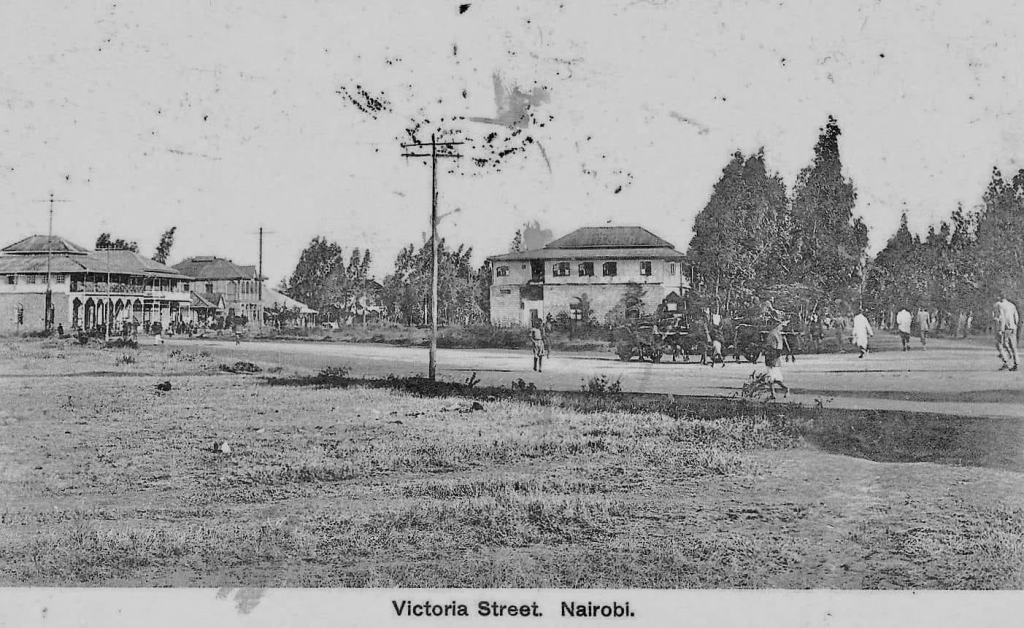
Tom Mboya Street in Nairobi, formerly known as Victoria Street, has a rich history dating back to 1915. Here’s a look at its transformation over the years:
Historical Background of Victoria Street
- Early 1900s: In the early 20th century, Victoria Street was one of the main thoroughfares in Nairobi, the capital city of British East Africa (now Kenya). It was named after Queen Victoria, reflecting the colonial influence of the British Empire at the time.
- 1915: The year 1915 marks an era when Nairobi was rapidly developing as a colonial administrative and commercial center. Victoria Street was a key part of this development, lined with colonial-style buildings and serving as a hub for trade and governance.
- Architectural Style: During this period, the architecture of Victoria Street featured grand colonial buildings with distinctive features such as large verandas, high ceilings, and expansive windows, designed to provide relief from the hot climate.
- Economic Activity: The street was bustling with activity, housing important government offices, shops, and businesses catering to the European settlers and the burgeoning population of Nairobi.
Transformation to Tom Mboya Street
- Post-Independence Era: Following Kenya’s independence from British colonial rule in 1963, many streets in Nairobi were renamed to honor the country’s leaders and heroes. Victoria Street was renamed Tom Mboya Street, in honor of Tom Mboya, a prominent Kenyan politician and trade unionist who played a crucial role in the country’s struggle for independence.
- Tom Mboya’s Legacy: Tom Mboya was a charismatic leader known for his efforts in advocating for the rights of African workers and his involvement in the Mau Mau movement. He was also instrumental in shaping Kenya’s post-independence economic and social policies. His assassination in 1969 was a significant event in Kenyan history, and naming the street after him serves as a tribute to his contributions.
Present-Day Tom Mboya Street
- Modern Landscape: Today, Tom Mboya Street is a vibrant and bustling area that reflects the modernity and diversity of Nairobi. It is a vital commercial hub, home to numerous businesses, shops, banks, and eateries. The street is known for its lively atmosphere, with a constant flow of pedestrians and vehicles.
- Public Transport: The street is a central artery for Nairobi’s public transportation system, with numerous matatus (public minibusses) operating from here, connecting different parts of the city and its suburbs.
- Cultural Significance: Tom Mboya Street is not only an economic center but also a cultural one, with various landmarks and attractions nearby, including the Tom Mboya Monument, erected in his honor.
- Challenges: Like many urban areas, the street faces challenges such as congestion, noise, and the need for infrastructure improvements. However, it remains a vital part of Nairobi’s urban landscape, symbolizing the city’s growth and resilience.
Conclusion
From its origins as Victoria Street during the colonial era to its current status as Tom Mboya Street, this thoroughfare has witnessed significant historical, political, and social changes. It stands as a testament to Nairobi’s transformation over the past century and continues to be a key part of the city’s dynamic life.