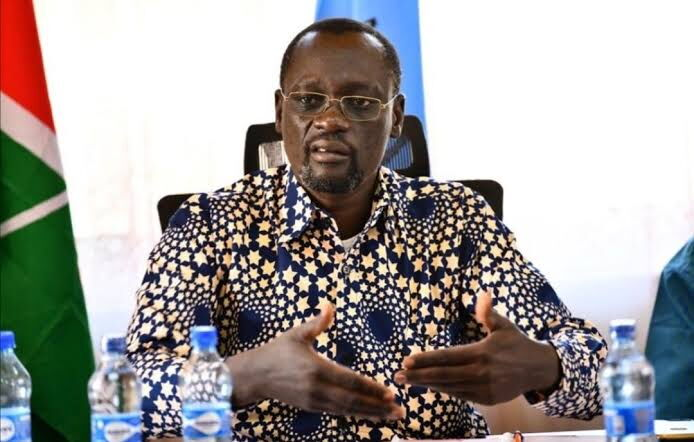
Former Turkana Governor Josphat Nanok, currently serving as a State House aide, publicly responded on Sunday to criticism from Nandi Senator Samson Cherargei. The senator had criticized Nanok’s leadership in Turkana during his tenure, attributing the county’s ongoing problems to his governance.
In a tweet, Nanok dismissed Cherargei’s allegations as “falsehoods, a hate and dirty campaign against my person and performance as Governor of Turkana (2013-2022).” He challenged Cherargei to repeat his claims outside the safety of parliamentary privilege, adding, “By the way, I am not hiding; I commute daily to work from home.”
Senator Cherargei had used his platform in the senate to accuse Nanok of gross mismanagement, alleging that his administration had misappropriated resources and left Turkana facing dire issues, including drought, famine, and water shortages.
“Turkana is a hardship area, yet Ksh110 billion cannot be accounted for over ten years. There is hunger, there is insufficient water, and irrigation projects have collapsed,” Cherargei asserted during the senate proceedings.
Josphat Nanok further detailed alleged financial mismanagement, stating, “Somebody signed Ksh200 million to build a governor’s residence that does not exist. Ksh1.5 billion was built for guest quarters, Ksh82 million was allocated to AC that is not functioning, Ksh6.5 million was made into a generator that does not exist.”
Cherargei’s comments underscore his frustration with the perceived lack of accountability for county funds. He expressed concern that despite the senate’s efforts to secure more funding for counties, tangible benefits for local communities remained elusive. “Just like other senators, we fight here to allocate money to the counties, but we don’t see value for that money,” he lamented.
The senator also criticized the Ethics and Anti-Corruption Commission (EACC) for its inaction regarding the allegations: “The EACC is doing nothing about it, the culprit is working and is in the protected area.”
The clash between Nanok and Cherargei has reignited a broader debate over whether devolution has truly benefited Kenya’s counties. Critics, both inside and outside government, argue that a significant portion of county funds has been lost to corruption and unfulfilled projects.
“We must, as a house, take a position,” Cherargei urged his colleagues, calling for greater accountability and transparency in county governance.
As the debate continues, the controversy highlights ongoing challenges in ensuring effective governance and accountability in Kenya’s devolved system.