


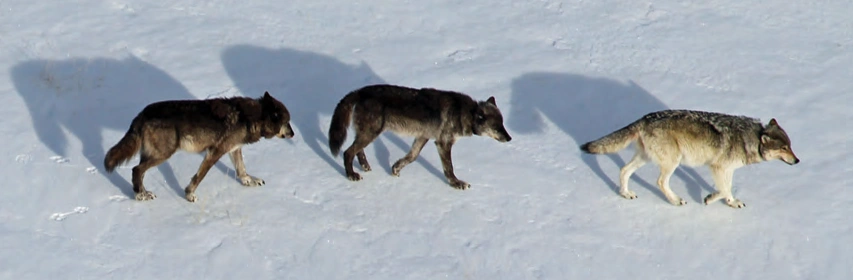
O-Six (2006–2012), also known by her scientific tag 832F or nicknamed “The 06 Female,” was a celebrated gray wolf (Canis lupus) from Yellowstone National Park. As the alpha female of the Lamar Canyon Pack from 2010 to 2012, she became the most photographed and widely recognized wolf in the park’s history. Her visibility and later controversial death outside Yellowstone’s borders ignited worldwide discussions on wolf conservation, hunting policy, and ecosystem management in the American West.
Early Life and Background
O-Six was born in April 2006 in Yellowstone’s Agate Creek Pack, descending from wolves that were part of the 1995 reintroduction project aimed at restoring wolf populations in the park. Her parents were 113M, a male from the Chief Joseph lineage, and 472F, a female from the Druid Peak pack. This made O-Six part of the fourth generation of wolves born after the species’ official reintroduction to Yellowstone.
Leaving her natal pack in 2009, O-Six established her own territory in the Lamar River Valley, one of the most accessible areas for wildlife observation. There she founded the Lamar Canyon Pack and quickly gained fame for her intelligence, hunting prowess, and leadership skills.
Dominant Female of Lamar Canyon Pack
By 2010, O-Six had risen as the dominant breeding female of her pack, leading alongside her mate, 755M, and his brother 754M. Her bold nature and unique hunting style—taking down elk single-handedly—distinguished her from typical wolf behavior, where cooperative pack hunting is the norm.
Her pack thrived under her leadership, producing three litters of pups between 2010 and 2012. Among her offspring was the equally famous 926F (Spitfire), who later led the pack after O-Six’s death. The Lamar Canyon wolves became icons for wildlife enthusiasts and photographers, drawing tourists and researchers from across the world to Yellowstone.
In 2010, O-Six was fitted with a GPS tracking collar, officially designated 832F. This allowed scientists to monitor her movements and document her behavior, contributing greatly to wolf research and public understanding of the species.
Death and Controversy
In December 2012, during Wyoming’s state-approved wolf hunting season, O-Six wandered outside Yellowstone’s protected boundaries into Sunlight Basin, near Crandall, Wyoming. There, she was legally shot by a hunter—the eighth wolf legally harvested that year. Her death was confirmed on December 6, 2012, sparking an international outcry among conservationists, wildlife photographers, and the general public.
News of her death first appeared in The New York Times, quickly becoming a symbol of the tension between federal protection and state hunting rights. Environmental advocates condemned the event, citing her as proof of the fragility of wolf recovery efforts, while supporters of regulated hunting defended the legality under state jurisdiction.
Legacy and Cultural Impact
The story of O-Six became central to the conversation about wildlife protection and human coexistence with predators. Her death led to renewed debate over hunting regulations near Yellowstone National Park, where wolves frequently cross invisible park boundaries.
In 2017, journalist Nate Blakeslee published the book American Wolf: A True Story of Survival and Obsession in the West, chronicling O-Six’s life, leadership, and the policies surrounding wolf management. The book received widespread acclaim and brought her story to global audiences, solidifying her as a symbol of wilderness and resilience.
National Geographic also featured O-Six in a documentary, further cementing her image as the face of modern wolf conservation. The attention inspired educational and policy discussions about maintaining buffer zones around national parks and ensuring the long-term survival of wolf populations in the Greater Yellowstone Ecosystem.
O-Six’s daughter, 926F (Spitfire), continued her lineage until she too was killed by a hunter in Montana in 2018, once again reigniting the controversy over wolf hunting near Yellowstone.
Legacy in Conservation History
Today, O-Six is remembered as one of the most iconic wild wolves in North America. Her story transcends biology—representing the emotional, ethical, and political struggle over wildlife conservation in the modern age.
She is often cited in ecological studies, documentaries, and advocacy campaigns as a turning point in the public perception of wolves, illustrating how individual animals can shape entire conservation movements.
Through her life and tragic death, O-Six became more than a Yellowstone wolf—she became a global emblem of freedom, survival, and the ongoing battle between nature and human boundaries.


