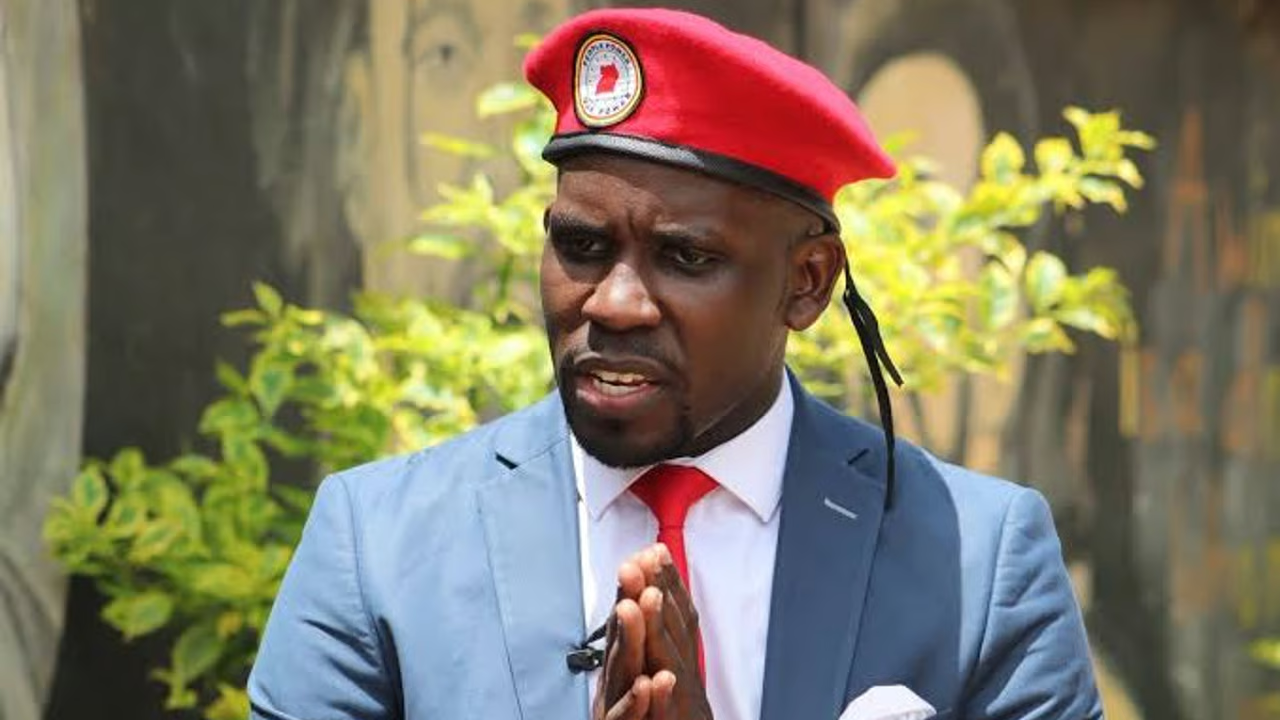
Kampala: The National Unity Platform (NUP) has announced plans to investigate Kampala Capital City Authority (KCCA) councillors accused of collaborating with businessman Hamis Kiggundu to block the Nakivubo Channel for development without following proper procedures. This move follows mounting complaints from displaced vendors who have petitioned the party for intervention, claiming the councillors’ actions betray the public interest.
Allegations and Political Fallout
The controversy surrounding the Nakivubo Channel deepened when Kampala Lord Mayor, Erias Lukwago, accused certain councillors of receiving bribes to support Kiggundu’s development project. He suggested that this alleged bribery may have influenced President Museveni’s approval of the project. Lukwago’s concerns have further fueled political tensions, as he warned that the project was similar to the Lubowa Hospital project, which has faced challenges in terms of oversight and transparency.
NUP’s Response and Investigation Plans
In response to the growing concerns, Joel Ssenyonyi, the Leader of the Opposition in Parliament, denounced the presidential directive approving the Nakivubo Channel project as “illegal.” Ssenyonyi emphasized that NUP would take action against any councillor found guilty of involvement in the alleged corruption. He urged whistleblowers to provide evidence to either the NUP or the police for further investigation and prosecution.
“We are going to talk to our councillors. If anyone is found guilty of connivance, they will face disciplinary action,” said Ssenyonyi, signaling that the party intends to hold its members accountable.
Concerns Over Environmental and Economic Impact
As pressure mounts, there is growing concern over the environmental and economic impact of the Nakivubo Channel project. Vendors who were displaced from the channel have expressed their opposition to the development, fearing that it will worsen Kampala’s flooding crisis. Nakawa East MP Ronald Balimwezo also raised concerns about the implications of obstructing the drainage system, stressing that it could increase flooding and disrupt the city’s infrastructure.
“This all started at Parkyard. Traders have been complaining about him [Kiggundu] for pushing them away everywhere they go,” Balimwezo said, alluding to Kiggundu’s past redevelopment projects that displaced vendors.
Traders’ Resistance and Legal Action
The vendors, who feel sidelined in the redevelopment process, have vowed to resist the project. They are calling for urgent government intervention and have warned of severe environmental and economic consequences if the Nakivubo Channel is closed off. This resistance underscores the growing tension between developmental interests and the livelihoods of local vendors who have long operated in the area.
Conclusion
The controversy surrounding the Nakivubo Channel development highlights a complex intersection of political dynamics, public interest, and environmental concerns. The NUP’s investigation into KCCA councillors is expected to bring clarity to the allegations of corruption, but the ultimate outcome remains uncertain. As the situation unfolds, both NUP and Kampala residents await a resolution that balances development with the city’s pressing flooding crisis and the livelihood of displaced vendors.