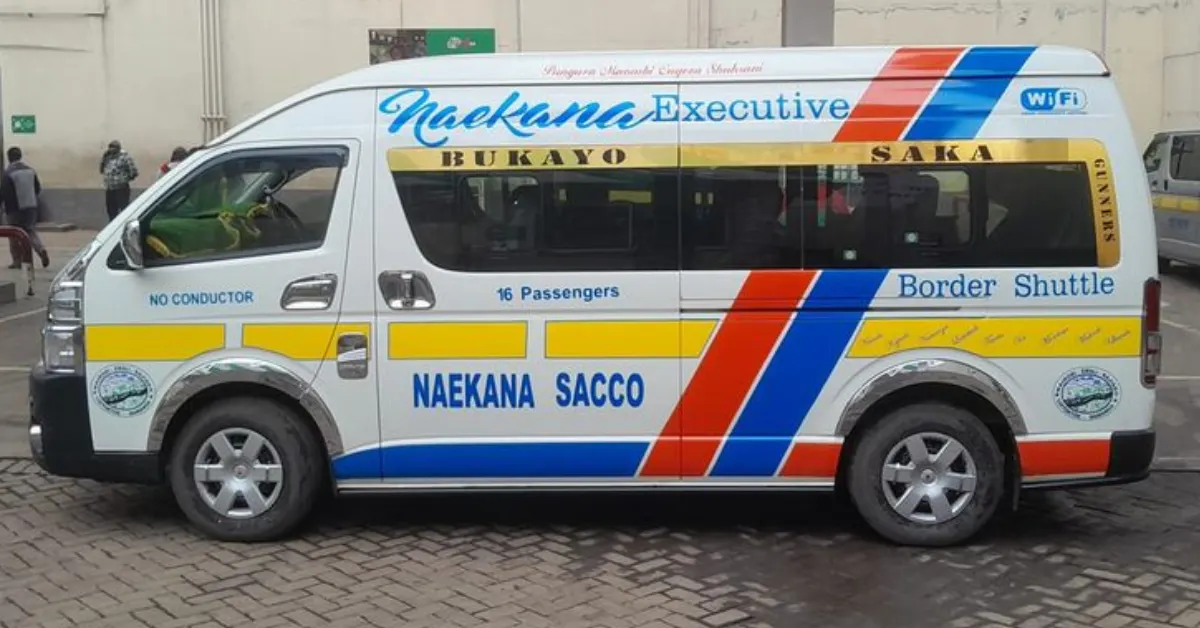
Naekana Sacco has emerged as one of Kenya’s most affordable and community-focused transport operators, connecting Nairobi with towns across Kajiado County, Southern Kenya and coastal regions through its highly popular flat-fare model.
Known for charging a standard fare of Ksh.400 regardless of route distance, Naekana Sacco has become a preferred option for students, traders, workers and cross-county travelers seeking reliable and low-cost transport.
Read Also: Umoinner Sacco founders: from touts to transport firm
The Sacco operates across major transport corridors linking Nairobi to:
- Kajiado
- Kitengela
- Namanga
- Loitoktok
- Taveta
- Voi
- Mombasa
as well as several smaller rural towns often underserved by larger transport operators.
With growing demand for affordable public transport amid rising fuel and living costs, Naekana Sacco continues expanding its presence across Southern Kenya.
Naekana Sacco Overview
Naekana Sacco operates mainly along the Nairobi-Mombasa corridor and Kajiado transport network.
Main Operating Areas
The Sacco serves passengers traveling between:
- Nairobi
- Kajiado County
- Emali
- Mtito Andei
- Taveta
- Coast region towns
Main Passenger Hubs
Naekana Sacco vehicles commonly operate from:
- Nairobi CBD
- Kajiado town
- Kitengela
- Southern corridor stages
Passengers traveling from Nairobi usually board vehicles near the Machakos Country Bus or Railways area, depending on route allocation and daily operations.
Fleet and Vehicles
The Sacco mainly uses:
- High-roof matatus
- Shuttle vans
- Minibuses
Its vehicles are widely recognized along the Nairobi-Namanga and Nairobi-Mombasa highways.
Why Naekana Sacco Is Popular
One of the biggest reasons behind the growth of Naekana Sacco is its simple pricing system.
Unlike many transport operators whose fares fluctuate heavily depending on fuel prices, weather or holiday demand, Naekana Sacco maintains a flat Ksh.400 fare on nearly all routes.
This predictable pricing has made it especially popular among:
- Daily commuters
- Students
- Rural travelers
- Small-scale traders
- Long-distance passengers
The Sacco also serves several remote towns that often receive limited transport coverage from larger bus companies.
Naekana Sacco Routes and Fares
Nairobi Routes
| Route | Fare |
|---|---|
| Nairobi ⇌ Kajiado | Ksh.400 |
| Nairobi ⇌ Namanga | Ksh.400 |
| Nairobi ⇌ Kitengela | Ksh.400 |
| Nairobi ⇌ Mbumbuni | Ksh.400 |
| Nairobi ⇌ Emali | Ksh.400 |
| Nairobi ⇌ Loitoktok | Ksh.400 |
| Nairobi ⇌ Taveta | Ksh.400 |
| Nairobi ⇌ Kimana | Ksh.400 |
| Nairobi ⇌ Mtito Andei | Ksh.400 |
| Nairobi ⇌ Voi | Ksh.400 |
| Nairobi ⇌ Mombasa | Ksh.400 |
Inter-County Routes
| Route | Fare |
|---|---|
| Mombasa ⇌ Taveta | Ksh.400 |
| Machakos ⇌ Kitengela | Ksh.400 |
| Machakos ⇌ Emali | Ksh.400 |
| Kitengela ⇌ Isinya | Ksh.400 |
| Kajiado ⇌ Loitoktok | Ksh.400 |
| Kajiado ⇌ Mashuuru | Ksh.400 |
| Kajiado ⇌ Kitengela | Ksh.400 |
The fixed pricing model remains one of the most unique features of Naekana Sacco.
Nairobi to Loitoktok Travel With Naekana Sacco
One of the most popular services operated by Naekana Sacco is the Nairobi to Loitoktok route.
Loitoktok sits near the Kenya-Tanzania border and serves as a key gateway to Amboseli National Park and surrounding tourism regions.
Travelers use the route for:
- Tourism
- Business
- Family visits
- Cross-border movement
- Agricultural trade
Naekana Sacco provides one of the cheapest direct travel options from Nairobi to Loitoktok at only Ksh.400.
This pricing has significantly improved accessibility for residents and traders traveling between Kajiado County and Nairobi.
Rural Connectivity and Economic Importance
The growth of Naekana Sacco highlights the critical role matatu Saccos continue playing in Kenya’s transport economy.
Large bus operators often prioritize major cities and profitable urban corridors.
Naekana Sacco, however, extends services into smaller and remote communities including:
- Mashuuru
- Kimana
- Mbumbuni
- Loitoktok
- Taveta
This rural access helps support:
- Local trade
- Tourism
- Agricultural transport
- Cross-county employment
- Education mobility
Affordable transportation remains essential for economic activity across Kenya’s semi-arid southern regions.
Travel Experience and Passenger Services
Passengers traveling with Naekana Sacco generally describe the service as affordable, direct and community-oriented.
Common Features Include:
- Frequent departures
- Simple fare structure
- Accessible rural stops
- Experienced drivers
- High-roof matatus for long-distance comfort
Although the Sacco operates within Kenya’s highly competitive matatu sector, its consistency in pricing has helped build customer loyalty.
Travel Tips for Naekana Sacco Passengers
Arrive Early
Most vehicles operate on a first-come, first-served basis. Early arrival improves chances of securing preferred seating.
Carry Cash
Although mobile payments are increasingly common in Kenya, some routes or stages may still require cash payments.
Confirm Departure Stage
In larger towns like Nairobi, several stages may serve similar destinations. Passengers should confirm the exact Naekana boarding point before travel.
Plan Around Peak Days
Fridays, Sundays and holiday periods often experience high passenger demand.
Travel Light
Passengers usually receive standard luggage allowance for one main bag and one carry-on item. Extra luggage may attract additional charges.
Competition in Kenya’s Transport Sector
Naekana Sacco operates within one of East Africa’s most competitive public transport sectors.
It competes with:
- Long-distance buses
- Shuttle companies
- Regional Saccos
- Private transport operators
However, its flat Ksh.400 pricing gives it a strong market advantage among cost-sensitive travelers.
The Sacco’s route coverage across Kajiado and Southern Kenya also helps it maintain a loyal customer base.
Challenges Facing Naekana Sacco
Like many transport operators in Kenya, Naekana Sacco faces several operational challenges.
These include:
- Fuel price fluctuations
- Road conditions
- Traffic congestion
- Vehicle maintenance costs
- Regulatory compliance
- Seasonal passenger demand
Maintaining the Ksh.400 fare model while covering long-distance routes may also place pressure on profitability during periods of rising operational costs.
Why Naekana Sacco Matters
Naekana Sacco matters because it demonstrates how community-based transport operators continue supporting mobility and economic inclusion in Kenya.
For many passengers traveling to remote towns, affordable transport is not simply a convenience — it directly affects access to:
- Jobs
- Education
- Healthcare
- Trade
- Family support systems
Its flat-rate model also provides pricing predictability in an industry often criticized for fluctuating fares.
Future Growth Potential
As Kenya’s southern transport corridors continue developing, Naekana Sacco may benefit from growing movement along:
- Nairobi-Namanga corridor
- Nairobi-Mombasa highway
- Tourism routes
- Border trade networks
Improved road infrastructure and regional trade growth could further increase passenger demand across the Sacco’s operational areas.
Conclusion
Naekana Sacco has become one of the most recognizable affordable transport operators serving Nairobi, Kajiado and Southern Kenya.
Its Ksh.400 flat-fare strategy, rural connectivity and wide route coverage have made it popular among thousands of passengers traveling daily across the region.
From Nairobi to Loitoktok, Taveta, Namanga or even Mombasa, the Sacco continues offering accessible transport solutions in areas often underserved by larger operators.
For commuters seeking affordability, simplicity and regional access, Naekana Sacco remains one of Kenya’s most practical public transport options.
read Also: Southern Star Sacco Contacts and Loans Guide