


The Motorola Edge 70 review reveals a phone that gets the slim-phone formula unusually right. It is incredibly thin and light, yet it still manages to offer a large OLED display, strong durability, fast charging, good battery life, and a camera system that performs better than you might expect. In a market where thin phones often cut too many corners, the Edge 70 feels far more balanced.
That balance is what makes this phone interesting. The Motorola Edge 70 review is not about a raw-performance monster or a camera king. Instead, it is about smart execution. Motorola has built a stylish and comfortable device that feels premium, practical, and easy to live with every day. It does have limitations, especially in chipset value and speaker depth, but overall it is one of the most appealing thin phones in its class.
Motorola Edge 70 at a glance
| Feature | Motorola Edge 70 |
|---|---|
| Display | 6.7-inch P-OLED, 1220 x 2712, 120Hz, HDR10+ |
| Chipset | Snapdragon 7 Gen 4 |
| RAM and storage | 12GB RAM, 256GB or 512GB UFS 3.1 |
| Rear cameras | 50MP main, 50MP ultrawide |
| Front camera | 50MP |
| Battery | 4800mAh |
| Charging | 68W wired, 15W wireless |
| Software | Android 16, Hello UI |
| Protection | IP68/IP69, MIL-STD-810H |
| Extras | eSIM, Smart Connect, Moto AI, AI key |
Design and build quality
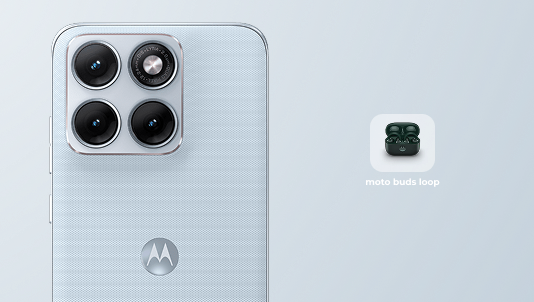
The first thing that stands out is how impressively slim and light the Edge 70 feels. At 6.0mm thick and 159g, it is one of the easiest modern smartphones to hold. More importantly, it does not feel fragile or compromised. Motorola pairs the thin body with Gorilla Glass 7i on the front, an aluminum frame, a textured back, IP68/IP69 water resistance, and MIL-STD-810H compliance. That is a serious amount of protection for such a slim device.
The texture on the back deserves special mention. It gives the phone a grippy, fabric-like feel that resists fingerprints and makes the Edge 70 much easier to hold than many glossy rivals. This is a phone that looks premium, but also feels practical. Motorola clearly paid attention to usability, not just thinness.
Handling and comfort
The Edge 70 may not be the thinnest phone on paper, but it arguably feels like the most natural one to use. The subtle chamfers around the brushed aluminum frame help it sit comfortably in the hand, while the textured rear panel prevents it from feeling slippery. This matters because ultra-thin phones can sometimes feel awkward or sharp. The Edge 70 does not.
That comfort extends to the button layout as well. The volume and power keys are easy to reach, the optical fingerprint scanner is quick and reliable, and there is even a dedicated AI button on the left side. Add in the included MagSafe-compatible case in some markets, and Motorola has made this phone feel thoughtfully packaged rather than stripped down.
Display quality
The 6.7-inch P-OLED display is another strong point. It has a 1220 x 2712 resolution, 120Hz refresh rate, 10-bit color depth, and HDR10+ support. It looks sharp, colorful, and smooth in normal use. Motorola advertises a 4,500-nit peak brightness figure, but in testing the phone reached 1,458 nits in auto mode and 486 nits manually. Those are still very good results for outdoor use, even if the marketing number feels less relevant in daily life.
Minimum brightness is low enough for dark-room use, and overall the panel feels appropriately premium for the price. The only current limitation is streaming support. YouTube recognizes HDR, but Netflix did not serve HDR at the time of testing. That is likely to matter only to a subset of users, but it is worth knowing.
Refresh rate behavior
Motorola offers Smart, Hyper Smooth, and Efficiency First display modes. In practice, Smart often uses 90Hz for many apps, while Hyper Smooth prefers 120Hz wherever possible. Both drop to 60Hz for static content and video playback, which helps preserve battery life. Efficiency First locks the display to 60Hz.
This is a sensible implementation. It may not be as advanced as LTPO panels on pricier phones, but the Edge 70 still feels smooth in everyday use, and the refresh-rate management is predictable rather than confusing.
Battery life
Given how thin the phone is, battery life is better than expected. The 4,800mAh battery helped the Edge 70 achieve an Active Use Score of 13 hours and 36 minutes, which is a solid result for a device this slim. It outperformed some higher-profile thin-phone rivals in web browsing and held up well in video and gaming too.
This is one of the Edge 70’s most impressive achievements. Thin phones usually force battery anxiety on the user. Here, Motorola has done enough optimization to make the phone dependable for a full day of typical use.
Charging speed
Charging is excellent. With Motorola’s 68W charger, the phone reached 48 percent in 15 minutes, 85 percent in 30 minutes, and a full charge in 41 minutes. That is genuinely fast and helps offset the fact that the battery is not huge by modern standards.
Wireless charging is also supported at up to 15W, and the included magnetic case helps make MagSafe-style accessories usable. This is another example of Motorola giving the Edge 70 more convenience than many rivals in the same general price zone.
Speaker quality
The stereo speakers are loud enough, earning a Very Good loudness rating, but sound quality is only average. There is some bass and decent treble, yet vocals and mids feel a little shallow. In daily use they are fine for videos, calls, and casual listening, but they are not a standout multimedia feature.
That makes the speaker setup one of the phone’s more obvious weak points. It is not bad, just less polished than the rest of the package.
Software and AI features
The Edge 70 runs Android 16 with Motorola’s Hello UI, and the software experience remains one of Motorola’s strengths. The interface is clean, fast, and easy to understand. Motorola also promises four years of Android OS upgrades plus six years of security updates, which is respectable, even if the wording is not as precise as some rivals.
Moto AI is a major part of the experience. You can access it with the dedicated AI key, the back-tap gesture, or a floating bubble. Features like Catch me up, Playlist Studio, Pay Attention, and Explore with Perplexity give the software more personality than a typical clean Android skin. Smart Connect is also here, making the phone more useful with PCs, tablets, and accessories. Overall, the software feels modern without becoming cluttered.
Performance
The Snapdragon 7 Gen 4 is a capable upper-midrange chip, but it is still mid-range silicon. In benchmarks, the Edge 70 performs well against similar Snapdragon 7 Gen 4 devices and easily beats some older Motorola models. It is fast enough for daily use, social media, multitasking, media apps, and moderate gaming without feeling slow.
That said, it is not a raw-value champion if performance is your top priority. Some phones at similar prices offer much more powerful chipsets. So the Edge 70 wins on balance and design, not outright speed.
Sustained performance and thermals
Thermal behavior is actually very good. The phone retained 86 percent of CPU performance after an hour of stress testing and 64 percent of GPU performance after 20 minutes. Those are strong results, especially for a phone this thin. The frame gets warm, but never unpleasantly so.
This gives the Edge 70 an important edge over some rivals. It may not have flagship-class benchmark power, but it delivers its performance consistently, and that matters in real-world use.
Main camera performance in daylight
The 50MP main camera is one of the phone’s biggest surprises. In daylight, it captures detailed, natural-looking 12MP photos with accurate white balance, lifelike colors, and wide dynamic range. Processing is mature and avoids the fake, over-sharpened look that many mid-range phones struggle with.
The 2x crop zoom is also quite good. There is a small drop in detail in tricky areas like foliage or faces, but the overall results remain sharp and attractive. That gives the Edge 70 a useful zoom option without needing a dedicated telephoto camera.
Portrait and people shots
The phone is especially good at photographing people. Skin tones look natural, facial details are well preserved, and exposure remains balanced. Even portraits at 2x look strong, though indoor shots in poorer lighting may show extra noise and reduced fine detail.
This is important because many users care more about portraits and people shots than landscapes. Here, Motorola has done better than expected.
Ultrawide and macro camera quality
The 50MP ultrawide is another strong performer. Daylight photos are detailed, sharp, and natural, with good dynamic range and color consistency that matches the main camera well. This is not an afterthought ultrawide. It is genuinely useful.
Autofocus support also enables macro shooting. The camera can focus on subjects as close as 10cm, and the automatic macro mode works smoothly. Close-up results are pleasing, with strong detail, nice color, and excellent dynamic range. This makes the ultrawide more versatile than a standard low-end macro gimmick.
Selfie camera quality
The 50MP selfie camera is excellent. It produces detailed selfies with good facial rendering, natural skin tones, and wide dynamic range. For a slim phone, this is a particularly nice bonus, because front cameras are often one of the first things to be compromised.
Selfie quality is therefore one of the Edge 70’s quiet strengths. People who use the front camera often should be happy here.
Low-light photography
At night, the main camera continues to do well. Low-light images show strong detail, pleasing saturation, low noise, and impressive dynamic range. Motorola’s regular night output looks better than the optional Night mode in many cases, because Night mode brightens scenes too much and reduces contrast.
The 2x zoom is still usable at night, though visibly softer and more washed out than the main 1x shots. The ultrawide also performs respectably, with good sharpness for its type and decent color. Night mode on the ultrawide can improve highlights in some scenes, so it is more useful there than on the main camera. Overall, low-light photography is another area where the Edge 70 overachieves.
Video recording
The video story is good, though not perfect. The main camera records excellent daylight 4K video with good detail, accurate color, and wide dynamic range. Low-light video is also strong, with good color and above-average detail. However, 2x zoom video from the main sensor is noisy and soft.
The ultrawide records good daylight video, but low-light ultrawide clips are noisier and have narrower dynamic range. Stabilization works well overall, though walking footage still shows some wobble and shake. So the Edge 70 is a good video phone for its class, but not flawless.
Competition and value
The Edge 70’s biggest challenge is value perception. It is beautifully made, highly practical, and surprisingly capable, but it launches into a competitive segment where stronger chipsets can be found for similar or even lower prices. Phones like the Galaxy S25 Edge, Realme 15 Pro, and vivo V60 all make compelling cases in different ways.
Still, what those rivals often do not offer is the same blend of ultra-thin comfort, strong battery life, fast charging, good cameras, and a grippy, durable body. That combination gives the Edge 70 a distinct identity.
Final verdict
The Motorola Edge 70 is one of the most convincing thin phones in recent memory. It combines a premium and comfortable design with real durability, a sharp OLED display, fast charging, dependable battery life, and a camera system that performs above expectations.
Its main weakness is not that it does anything badly. It is that some rivals offer more raw chipset power for the money. The speakers are also only average. But if you care about design, comfort, camera consistency, and a clean software experience, the Edge 70 is very easy to like.
The Review
Motorola Edge 70
The Motorola Edge 70 arguably boasts the best design among today's ultra-slim smartphones. Its premium build delivers everything - lupscale design, increased water and drop resistance, and one of the most comfortable grips in a long time. And on top of that, it's impressively thin.We appreciate the large OLED display with its high resolution and fast refresh rate, and the phone's battery life turned out to be excellent, matched by equally impressive charging speeds. We also have to give credit to Motorola for its clean and thoughtful approach to Android.And then there are the cameras, which deliver excellent results both day and night - ultimately becoming the phone’s most unexpected highlight.
PROS
- Very thin, light, and comfortable design
- Excellent grip for an ultra-slim phone
- Strong durability with IP68/IP69 and MIL-STD-810H
- Sharp OLED display with 120Hz refresh rate
- Good battery life for the size
- Very fast charging
- Strong main, ultrawide, and selfie cameras
- Clean Android 16 software with useful AI features
CONS
- Mid-range chipset at a fairly ambitious launch price
- Speakers sound shallow
- Netflix HDR support was missing at test time
- 2x zoom video quality is weak
 Motorola


