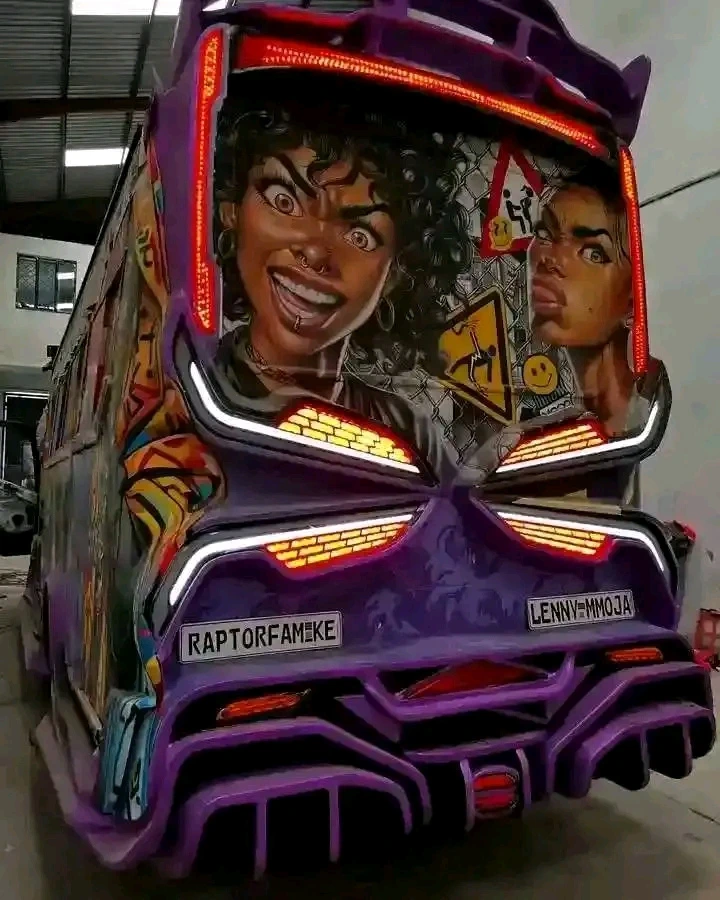
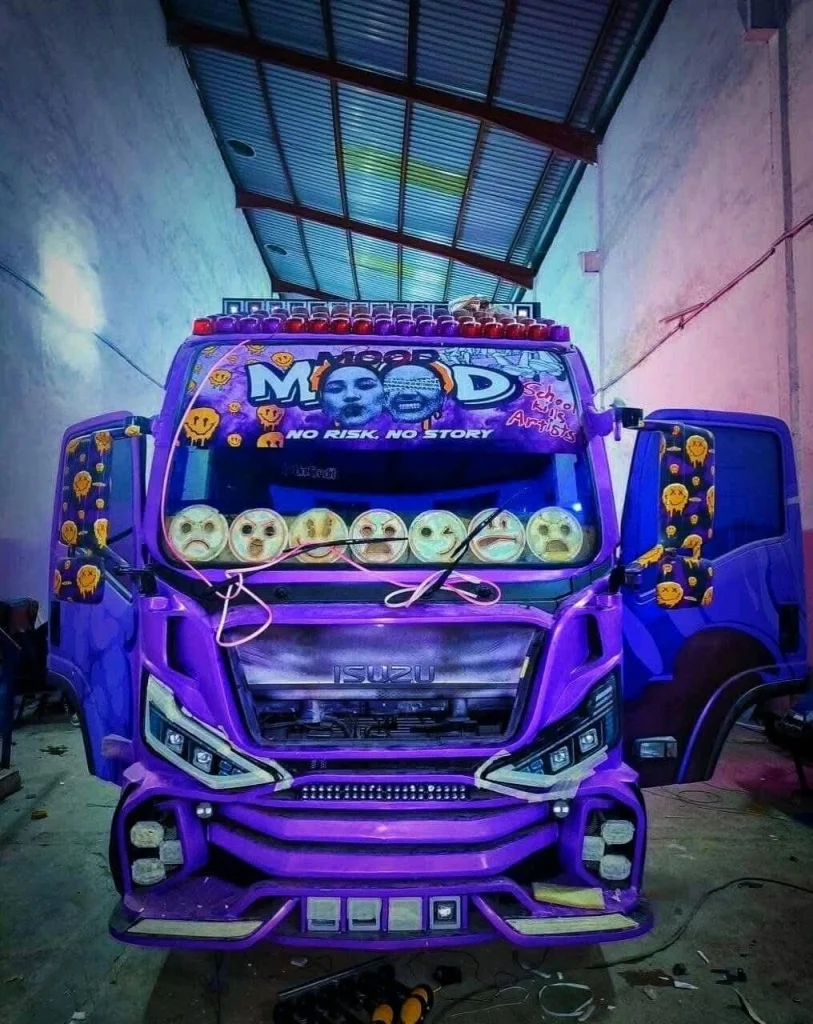
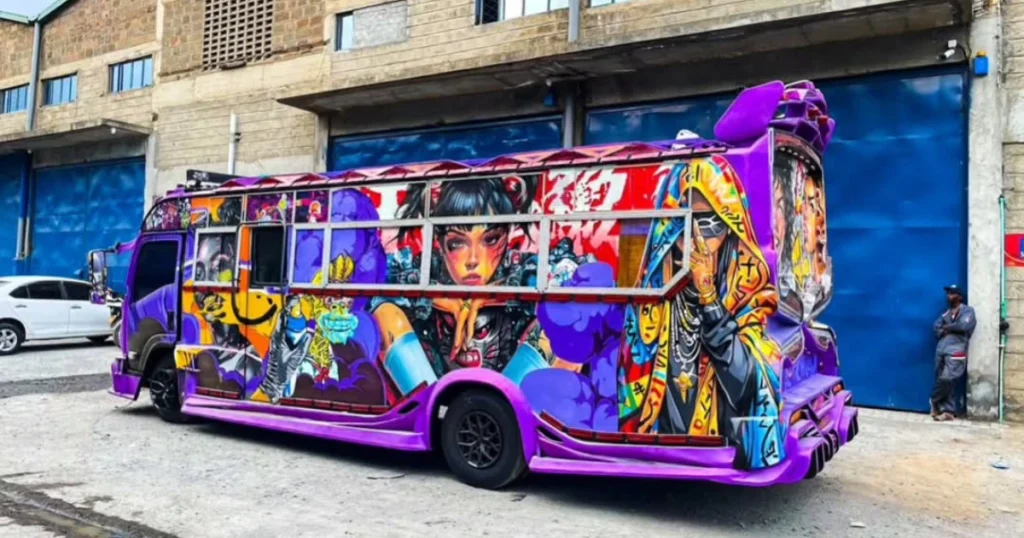
The Mood Matatu by George Ruto is a luxury public service vehicle designed to showcase Kenyan innovation and urban creativity. Officially launched in July 2025, this nganya quickly gained fame for its futuristic design, tech-forward features, and bold artwork. It is widely considered the most expensive matatu in Kenya, costing approximately Ksh 14 million (USD 108,000).

Key Features of Mood Matatu by George Ruto
The Mood Matatu is not just transport—it’s a mobile entertainment experience. Every detail reflects high-end custom design.
- Chassis and body design: Ksh 6.8 million
- LED lighting and solar panels: Ksh 2.5 million
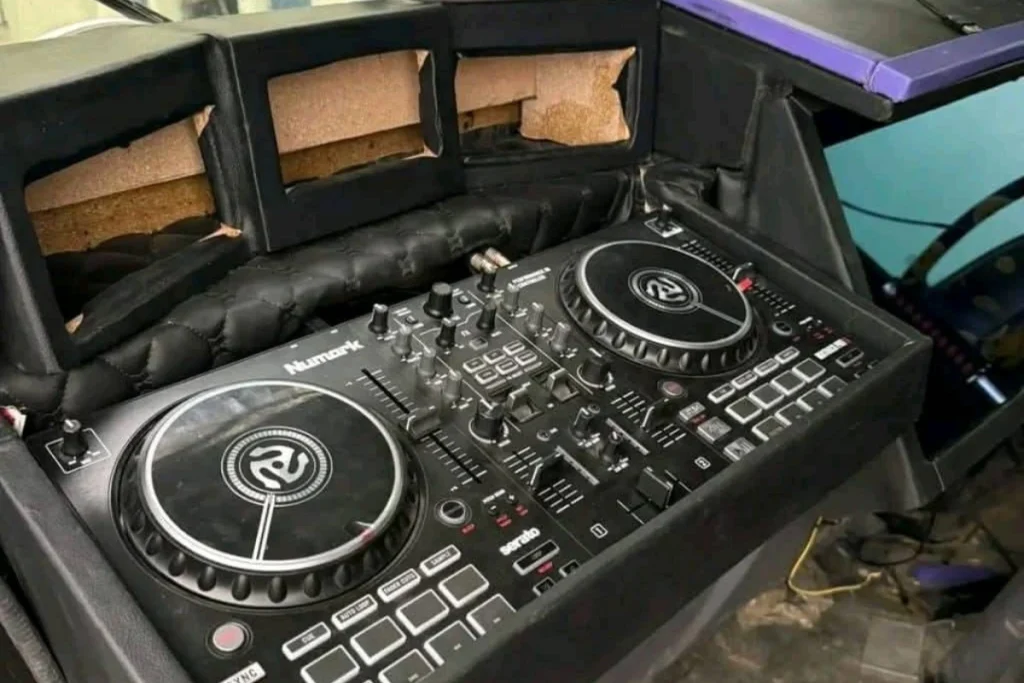
- Surround sound system: Ksh 300,000
- Custom DJ booth and push-start ignition
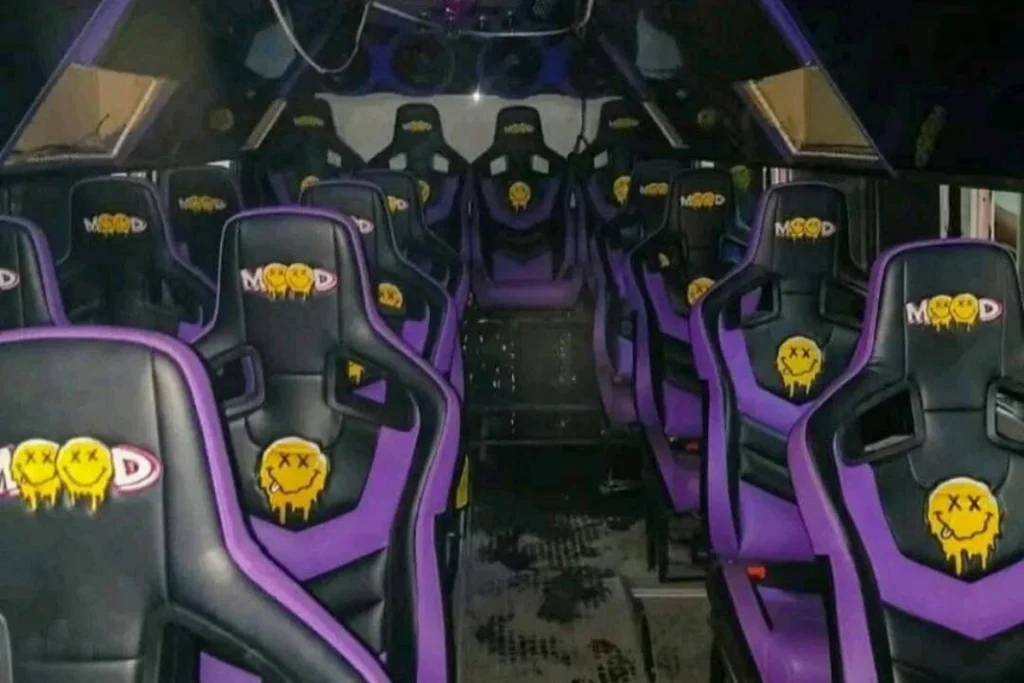
- Air conditioning and ambient interior lighting
- Graffiti artwork with pop culture icons
- Bucket seats with USB charging ports and cup holders
Its purple theme, combined with futuristic front grilles and digital screens, has made it a visual sensation on Nairobi roads.
Launch of Mood Matatu by George Ruto
The Mood Matatu by George Ruto was officially launched at the Kenyatta International Convention Centre (KICC) in Nairobi. The event attracted thousands of fans and matatu lovers, paralyzing sections of the CBD during its unveiling.
Crowds cheered as Mood cruised through downtown Nairobi, blaring music and flashing lights. The launch was accompanied by performances, media coverage, and instant online buzz. It became a cultural statement and a benchmark for the future of matatus in Kenya.
Daily Earnings and Profitability
Mood Matatu is not just for show—it operates actively and generates impressive income. According to the vehicle’s driver, Mood earns up to Ksh 100,000 per day through:
- Regular route fares
- Private event bookings
- Brand activations and advertising
- Wedding and music video rentals
With strong daily earnings, Mood is expected to recover its initial cost in under two years. The nganya combines art and enterprise, proving the profitability of premium matatus.
Cultural Impact of Mood Matatu by George Ruto
The introduction of Mood has revived interest in Kenya’s matatu culture, especially among the youth. It highlights the potential of:
- Local craftsmanship
- Graffiti and urban art
- Digital entrepreneurship
- Creative engineering
Mood is more than a matatu—it is a moving canvas, a sound stage, and a symbol of Nairobi’s innovation energy. Its popularity has sparked a renewed wave of nganya projects in other towns.
Controversies and Criticisms
Despite its acclaim, Mood has also faced criticism:
- Some citizens view the launch as politically motivated due to George Ruto’s association with power.
- Others criticized the safety hazards during its CBD debut, when a tout reportedly died in the crowd.
- Questions have been raised about blending politics and street culture.
Still, these controversies have not slowed Mood’s rise as a national icon.
Conclusion
The Mood Matatu by George Ruto has redefined how Kenyans perceive matatus. It blends technology, art, and commerce into one dazzling vehicle. While it has faced scrutiny, its impact on transport innovation and youth culture is undeniable.
Mood is proof that with creativity and investment, Kenyan matatus can lead the world in design and function.