Maven Capital acquisitions show how a UK private equity firm used targeted investments to back businesses in manufacturing, oil and gas, energy, e-commerce, telecoms, geospatial software, healthcare products, and specialist engineering. From 2000 to 2020, Maven Capital Partners completed 19 acquisitions with a total disclosed deal value of about $238.9 million and an average disclosed deal size of roughly $12.6 million.
The company’s acquisition activity has been concentrated in practical, asset-backed, and technical sectors. Manufacturing accounts for 6 deals, oil and gas for 5, and energy for 3. E-commerce appears in 2 deals, while geospatial software appears in 1.
This pattern reflects Maven’s role as a UK private equity firm supporting buyouts, growth capital, and buy-and-build projects. Its acquisition record is not built around megadeals. Instead, it shows a mid-market and lower mid-market strategy focused on companies with technical capability, sector expertise, and room to grow under private equity ownership.
The most recent listed acquisition is Envitia, a geospatial software and solutions provider acquired in December 2020 for $22.7 million. That deal also shows how Maven’s acquisition strategy evolved beyond traditional manufacturing and energy services into data-led, software-enabled specialist markets.
What Is Maven Capital Partners?
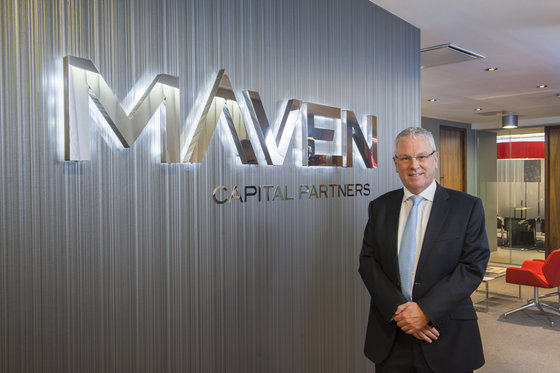
Maven Capital Partners is a UK private equity firm that supports a range of transaction types, including buyouts, growth capital, and buy-and-build projects. Its investment approach focuses on backing companies that can grow with capital, strategic support, management development, and operational improvement.
Unlike a corporate acquirer that buys companies mainly to integrate them into one operating group, Maven acts as a financial investor. It backs businesses that can expand, improve profitability, enter new markets, strengthen teams, or benefit from structured private equity support.
Its acquisition history includes precision engineering, baby products, compact printer and LCD modules, oil and gas instrumentation, energy services, telecom networks, electronic manufacturing, healthcare manufacturing, geospatial software, and stock-aware CRM and e-commerce software.
That range shows Maven’s flexibility. However, the common thread is clear: many of its acquisitions involve specialist businesses serving defined industrial, technical, energy, healthcare, or commercial markets.
Why Maven Capital Acquisitions Matter
Maven Capital acquisitions matter because they show how private equity supports specialist companies that are often too small to attract attention from global buyout firms but important enough to serve critical markets.
Many of the companies in Maven’s acquisition record operate in technical sectors. Examples include ELE Advanced Technologies, EFC Group, Glacier Energy Services, RMEC, Westfield Medical, CB Technology, and Envitia. These businesses may not always be household names, but they serve industries that require engineering skill, quality control, sector knowledge, and customer trust.
The acquisition history also shows how private equity can support companies in cyclical or specialized sectors such as oil and gas. Maven’s investment record includes multiple oil and gas and energy-related companies, including EFC Group, XPD8 Solutions, Glacier Energy Services, Cat Tech, R&M Engineering, and Fathom Systems.
At the same time, the firm has also invested in software, e-commerce, telecoms, consumer goods, and healthcare. That makes Maven’s M&A record a useful case study in diversified private equity investing across specialist UK businesses.
Full List of Maven Capital Partners Acquisitions
The table below summarizes the 19 listed Maven Capital Partners acquisitions, including deal value, announcement date, main category, and strategic value.
| Acquiree | Announced Date | Price | Main Category | Strategic Value |
|---|---|---|---|---|
| Envitia | Dec 14, 2020 | $22.7M | Geospatial / IT | Adds geospatial software and solutions for defence, government, and industry. |
| ProspectSoft | Apr 24, 2017 | $7.7M | CRM / E-Commerce | Adds stock-aware CRM and e-commerce software for distributors, manufacturers, and wholesalers. |
| Healthpoint | Feb 27, 2017 | $8.1M | Consumer Goods | Adds affordable fast-moving consumer goods for multiple retail channels. |
| Indigo Belcom | Jul 14, 2016 | $16.1M | Telecommunications | Adds design, planning, build, supply, management, and maintenance of telecom networks. |
| Westfield Medical | Apr 11, 2016 | $17.1M | Healthcare Manufacturing | Adds sterilisation barrier products for healthcare and industrial sectors. |
| EE Smith Contracts Ltd. | Feb 2, 2016 | $15.9M | Construction / Interiors | Adds specialist interior contracting and joinery manufacturing for prestige projects. |
| CB Technology | Jan 15, 2015 | $6.9M | Electronics Manufacturing | Adds electronic manufacturing services. |
| Fathom Systems | Dec 19, 2014 | $6.7M | Oil and Gas | Adds engineering solutions and products for the commercial diving industry. |
| RMEC Ltd | Apr 8, 2014 | $23.5M | Mechanical Engineering | Adds mechanical and hydraulic engineering capability. |
| SPS(EU) Ltd | Feb 11, 2014 | $11.5M | E-Commerce / Marketing | Adds merchandise supply for independent distributors. |
| R&M Engineering | Dec 17, 2013 | $8.2M | Energy / Oil and Gas | Adds support for offshore and onshore oil and gas alliancing and partnerships. |
| Cat Tech | Apr 4, 2012 | $4.8M | Oil and Gas Services | Adds niche industrial services for oil refineries and petrochemical plants. |
| Vodat International | Mar 29, 2012 | $8.0M | Telecom Solutions | Adds private and managed networks for the UK retail market. |
| Glacier Energy Services | Mar 1, 2011 | $13.1M | Energy / Oil and Gas | Adds specialist engineered solutions for oil and gas and global energy sectors. |
| XPD8 Solutions | Jul 1, 2010 | $9.1M | Oil and Gas Consulting | Adds consulting services for the oil and gas industry. |
| EFC Group | Dec 15, 2009 | $16.3M | Manufacturing / Oil and Gas | Adds handling, control, monitoring, and instrumentation solutions for oil and gas. |
| Martel Instruments | Jan 1, 2007 | $13.6M | Manufacturing | Adds compact printer and LCD module manufacturing capability. |
| Steri-Bottle | Aug 1, 2002 | $21.9M | Retail / Consumer Products | Adds one of the UK’s top-selling baby bottle products. |
| ELE Advanced Technologies | May 1, 2000 | $7.8M | Precision Engineering | Adds precision engineering components for gas turbine, aerospace, defence, and automotive markets. |
Maven Capital Partners Acquisitions Timeline
2000: Precision Engineering Foundations
Maven Capital Partners’ listed acquisition history begins in 2000 with ELE Advanced Technologies, acquired for $7.8 million. ELE manufactures precision engineering components for industrial gas turbine, aerospace, defence, and automotive markets.
This acquisition established an early theme in Maven’s M&A record: specialist manufacturing. Precision engineering businesses can be attractive because they serve demanding customers, require technical know-how, and often operate in markets where quality and reliability matter.
The deal also showed Maven’s willingness to back companies serving industrial and defence-linked markets, where product performance and manufacturing expertise are central to value.
2002: Consumer Retail Exposure Through Steri-Bottle
In 2002, Maven acquired Steri-Bottle for $21.9 million. Steri-Bottle is one of the UK’s top-selling baby bottle products.
This acquisition added consumer retail exposure to Maven’s portfolio. Unlike precision engineering, Steri-Bottle was linked to everyday household and parenting needs. The deal shows that Maven’s strategy was not limited to industrial sectors from the beginning.
However, the acquisition still fits the private equity logic of backing a product business with brand recognition and retail demand.
2007: Manufacturing Capability With Martel Instruments
In 2007, Maven acquired Martel Instruments for $13.6 million. Martel Instruments manufactures compact printer and LCD modules.
This acquisition strengthened the manufacturing theme. Compact printers and LCD modules serve specialized applications where product reliability, technical design, and manufacturing quality matter.
The deal also broadened Maven’s exposure to electronics-related manufacturing.
2009: Oil and Gas Instrumentation With EFC Group
In 2009, Maven acquired EFC Group for $16.3 million. EFC Group manufactures handling, control, monitoring, and instrumentation solutions for the oil and gas sector.
This acquisition marked Maven’s deeper move into oil and gas services. The sector requires specialized equipment and technical products that can operate in demanding conditions.
EFC Group also introduced a recurring theme in Maven’s later acquisitions: businesses that serve offshore, onshore, refinery, petrochemical, and energy customers.
2010: Oil and Gas Consulting With XPD8 Solutions
In 2010, Maven acquired XPD8 Solutions for $9.1 million. XPD8 Solutions provides consulting services to the oil and gas industry.
This deal expanded Maven’s oil and gas exposure from manufacturing and instrumentation into consulting. The acquisition added service capability, showing that Maven was interested not only in product businesses but also in expertise-led companies.
Consulting businesses in energy markets can be valuable when they serve complex operational needs and have deep sector knowledge.
2011: Engineered Solutions Through Glacier Energy Services
In 2011, Maven acquired Glacier Energy Services for $13.1 million. Glacier Energy Services offers specialist engineered solutions to the oil and gas industry and global energy sectors.
This deal continued Maven’s energy services strategy. It added engineered solutions capability and expanded the firm’s exposure to global energy markets.
The acquisition also showed how Maven could support companies serving both traditional oil and gas and wider energy customers.
2012: Refinery Services and Retail Telecom Networks
In 2012, Maven completed two acquisitions: Cat Tech and Vodat International. Cat Tech provides niche industrial services to oil refineries and petrochemical plants. Vodat International supplies telecom solutions and private managed networks to the UK retail market.
These deals show Maven investing in two very different but specialist service categories. Cat Tech reinforced the oil and gas and petrochemical theme. Vodat International added telecommunications infrastructure for retail customers.
Both companies served business markets where technical reliability and customer service were important.
2013: Offshore and Onshore Oil and Gas Partnerships
In 2013, Maven acquired R&M Engineering for $8.2 million. R&M Engineering provides alliancing and partnership arrangements for offshore and onshore oil and gas industries.
This acquisition further deepened Maven’s energy and oil and gas exposure. It also reflected the firm’s interest in service providers that can work closely with energy customers through long-term technical relationships.
2014: Mechanical Engineering, Merchandise Supply, and Diving Technology
The year 2014 was active for Maven. The firm acquired SPS(EU), RMEC, and Fathom Systems.
SPS(EU) supplied merchandise to independent distributors. RMEC was a mechanical and hydraulic engineering company. Fathom Systems provided engineering solutions and products to the commercial diving industry.
RMEC was the largest listed acquisition in Maven’s record at $23.5 million. Fathom Systems added another energy and offshore-linked specialist business, while SPS(EU) added e-commerce and marketing exposure.
This year shows Maven balancing industrial engineering with commercial distribution and e-commerce-related activity.
2015: Electronic Manufacturing Services
In 2015, Maven acquired CB Technology for $6.9 million. CB Technology provides electronic manufacturing services.
This acquisition fit the manufacturing and electronics theme. Electronic manufacturing services businesses can be valuable when they serve specialized customers requiring design, assembly, testing, and production reliability.
The deal also broadened Maven’s exposure to technical manufacturing beyond oil and gas.
2016: Telecoms, Healthcare Manufacturing, and Specialist Interiors
Maven completed three acquisitions in 2016: EE Smith Contracts, Westfield Medical, and Indigo Belcom.
EE Smith Contracts is a specialist interior contractor and joinery manufacturer for prestige commercial and residential projects. Westfield Medical provides sterilisation barrier products to healthcare and industrial sectors. Indigo Belcom specializes in the design, planning, build, supply, management, and maintenance of global telecommunications networks.
This year shows Maven’s diversified private equity approach. The firm backed construction and interiors, healthcare manufacturing, and telecommunications infrastructure. Each business served a specialist market with clear customer demand.
2017: FMCG and Stock-Aware Software
In 2017, Maven acquired Healthpoint and ProspectSoft. Healthpoint supplies affordable fast-moving consumer goods to multiple retail channels. ProspectSoft provides stock-aware CRM and e-commerce software designed for distributors, manufacturers, and wholesalers.
These deals marked a shift toward consumer goods and software-enabled commerce. ProspectSoft is especially notable because it links software, CRM, stock management, and e-commerce for practical business users.
The acquisition expanded Maven’s exposure to digital tools that help traditional businesses improve operations.
2020: Geospatial Software With Envitia
Maven’s most recent listed acquisition is Envitia, acquired in December 2020 for $22.7 million. Envitia provides geospatial software and solutions for defence, government, and industry.
This acquisition is strategically important because it moved Maven into a data-led software category. Geospatial technology supports mapping, location intelligence, defence applications, government systems, and industrial decision-making.
Envitia also shows how Maven’s investment focus evolved over time. While early deals emphasized manufacturing and energy, later acquisitions included more software, data, and technology-enabled businesses.
Biggest Maven Capital Partners Acquisitions by Deal Value
Maven’s largest disclosed acquisitions show a mix of geospatial software, engineering, consumer products, healthcare manufacturing, telecommunications, and oil and gas.
| Rank | Acquiree | Announced Date | Deal Value | Strategic Area |
| 1 | RMEC Ltd | Apr 8, 2014 | $23.5M | Mechanical and hydraulic engineering |
| 2 | Envitia | Dec 14, 2020 | $22.7M | Geospatial software and solutions |
| 3 | Steri-Bottle | Aug 1, 2002 | $21.9M | Baby products and retail |
| 4 | Westfield Medical | Apr 11, 2016 | $17.1M | Sterilisation barrier products |
| 5 | EFC Group | Dec 15, 2009 | $16.3M | Oil and gas instrumentation |
| 6 | Indigo Belcom | Jul 14, 2016 | $16.1M | Telecommunications network services |
| 7 | EE Smith Contracts Ltd. | Feb 2, 2016 | $15.9M | Specialist interiors and joinery |
| 8 | Martel Instruments | Jan 1, 2007 | $13.6M | Compact printer and LCD modules |
| 9 | Glacier Energy Services | Mar 1, 2011 | $13.1M | Oil and gas engineered solutions |
| 10 | SPS(EU) Ltd | Feb 11, 2014 | $11.5M | Merchandise supply and e-commerce |
The ranking shows that Maven’s acquisition strategy was built around relatively small and targeted deals. The largest listed deal, RMEC, was $23.5 million, meaning Maven’s strategy was not dependent on very large transactions.
Most Common Acquisition Categories
Maven Capital acquisitions are concentrated in manufacturing, oil and gas, energy, e-commerce, and geospatial technology.
| Category | Number of Deals | Strategic Meaning |
| Manufacturing | 6 | Supports specialist production, electronics, engineering, and healthcare manufacturing. |
| Oil and Gas | 5 | Adds services, instrumentation, consulting, and engineering for energy markets. |
| Energy | 3 | Builds exposure to engineered solutions and technical services for energy customers. |
| E-Commerce | 2 | Adds software and merchandise supply capabilities linked to digital commerce. |
| Geospatial | 1 | Expands into data-led software for defence, government, and industry. |
This category mix shows a private equity strategy with a strong technical and industrial backbone. Even when Maven invested in software or consumer goods, the firm often targeted businesses serving practical commercial needs.
Strategic Lessons From Maven Capital Acquisitions
Specialist Businesses Can Be Attractive Targets
Maven Capital acquisitions show that private equity value is not limited to large consumer brands or technology unicorns. Many attractive acquisition targets serve niche markets.
Examples include commercial diving engineering, sterilisation barrier products, geospatial software, compact printer modules, and oil refinery services. These companies may serve narrow markets, but they can hold valuable expertise and customer relationships.
Technical Capability Matters
Many of Maven’s targets required technical knowledge. Precision engineering, hydraulic engineering, electronic manufacturing, telecom network design, oil and gas instrumentation, and geospatial software all depend on skilled teams and specialized know-how.
This matters because technical capability can create barriers to entry. Customers in these markets often choose suppliers based on reliability and expertise.
Private Equity Can Support Buy-and-Build Strategies
Maven supports buyouts, growth capital, and buy-and-build projects. Its acquisition record fits that model because many targets were specialist companies that could grow under structured ownership.
Buy-and-build strategies work best when a market is fragmented and companies can be combined, professionalized, or expanded into adjacent services.
How Maven Capital Acquisitions Fit Its Business Model
Maven Capital Partners’ business model is based on supporting businesses through buyouts, growth capital, and buy-and-build projects. Its acquisitions fit this model because many of the companies were established, specialist businesses with potential for development.
The firm’s targets often had defined customer bases. Energy companies, healthcare customers, defence and government organizations, retailers, manufacturers, telecom clients, and industrial users all appear in the acquisition record.
This is important because private equity investors often prefer companies with clear market demand. Maven’s acquisitions suggest a strategy of backing practical businesses rather than speculative concepts.
The acquisition record also shows a willingness to invest across different transaction types and sectors. Maven did not focus only on one industry, but it often selected businesses with specialist capability, technical differentiation, or a route to growth.
Financial and Ownership Context
Maven Capital Partners completed 19 acquisitions from 2000 to 2020. The total disclosed value was about $238.9 million, with an average disclosed deal size of approximately $12.6 million.
This average deal size indicates a lower mid-market private equity strategy. Maven’s listed acquisitions were generally smaller than those of large global buyout firms. That can be an advantage because smaller companies may offer more room for operational improvement, market expansion, and strategic repositioning.
The firm’s biggest disclosed acquisition was RMEC at $23.5 million, followed closely by Envitia at $22.7 million and Steri-Bottle at $21.9 million. This relatively tight range among the top deals suggests a consistent deal-size discipline.
The financial pattern also shows that Maven used acquisitions to support specialized businesses rather than chase scale for its own sake.
Competitive Impact of Maven Capital Acquisitions
Maven Capital acquisitions strengthened the firm’s position as a private equity investor in specialist UK businesses. The record shows experience across technical manufacturing, energy services, software, healthcare products, telecoms, and e-commerce.
This sector breadth can improve Maven’s credibility with business owners. A founder or management team may prefer an investor with experience in similar operational challenges, such as scaling technical teams, professionalizing sales, expanding customer relationships, or supporting succession.
The acquisitions also gave Maven exposure to sectors where expertise matters. Oil and gas services, geospatial software, electronic manufacturing, precision engineering, and healthcare manufacturing are not generic businesses. They require customer trust, product quality, and technical delivery.
However, this strategy also brings complexity. Maven must evaluate and support companies across industries with different cycles, regulations, margins, and customer behavior.
Advantages of the Acquisition Strategy
Access to Specialist Markets
Maven’s acquisitions gave it exposure to niche markets where technical expertise and customer relationships can create defensible positions.
Lower Mid-Market Opportunity
Many acquisitions were modest in size. Smaller companies can offer strong growth potential when supported by capital and strategic guidance.
Diversified Sector Exposure
Maven invested across manufacturing, oil and gas, energy, software, telecoms, healthcare, consumer goods, and e-commerce. This reduces dependence on one sector.
Technical Differentiation
Several targets had engineering, software, manufacturing, or specialist service capabilities. These can create barriers to competition.
Buy-and-Build Potential
Maven’s strategy fits fragmented markets where companies can be expanded, combined, or professionalized over time.
Disadvantages of the Acquisition Strategy
Exposure to Cyclical Energy Markets
Oil and gas and energy services can be cyclical. Customer spending may change with commodity prices, capital expenditure cycles, and market conditions.
Sector Complexity
A diversified acquisition strategy requires expertise across many industries. Manufacturing, software, consumer goods, telecoms, and energy services have different success factors.
Small Company Risk
Lower mid-market companies can be more vulnerable to customer concentration, management gaps, limited systems, and operational disruption.
Integration Challenges
Buy-and-build projects require careful integration. Combining teams, systems, customers, and processes can be difficult.
Limited Scale
Smaller acquisitions may need additional capital and management support before they can compete with larger rivals.
Case Studies of Major Maven Capital Partners Acquisitions
RMEC Ltd
RMEC was Maven’s largest listed acquisition, valued at $23.5 million. The company is a mechanical and hydraulic engineering business.
This acquisition fits Maven’s interest in specialist engineering. Mechanical and hydraulic capabilities are important in industrial sectors where reliability, safety, and technical performance matter.
The deal also illustrates Maven’s approach to lower mid-market companies with defined technical strengths.
Envitia
Envitia was acquired in 2020 for $22.7 million. The company provides geospatial software and solutions to defence, government, and industry.
This acquisition is strategically important because it expanded Maven into geospatial technology. Location intelligence and spatial data are increasingly valuable in defence, public sector planning, infrastructure, and industrial operations.
Envitia also shows Maven’s ability to back software-led businesses with specialist applications.
Steri-Bottle
Steri-Bottle, acquired for $21.9 million, was one of the UK’s top-selling baby bottle products.
This acquisition differs from Maven’s industrial and energy deals, but it shows the firm’s willingness to back consumer products with strong retail positioning. Baby products can benefit from repeat demand, brand trust, and distribution.
Westfield Medical
Westfield Medical was acquired for $17.1 million. The company provides sterilisation barrier products to healthcare and industrial sectors.
This deal fits the specialist manufacturing theme. Healthcare manufacturing requires quality standards, reliability, and regulatory awareness. Westfield Medical gave Maven exposure to a market where product trust is essential.
EFC Group
EFC Group was acquired for $16.3 million. It manufactures handling, control, monitoring, and instrumentation solutions for the oil and gas sector.
This acquisition represents Maven’s energy and industrial manufacturing strategy. Instrumentation and monitoring products are important in oil and gas because they support operational control and safety.
Common Mistakes When Analyzing Maven Capital Acquisitions
Treating Maven Like a Corporate Acquirer
Maven is a private equity firm, not an industrial buyer absorbing companies into one operating business. Its acquisitions should be analyzed through investment strategy, growth potential, and value creation.
Looking Only at Sector Labels
Manufacturing, oil and gas, and energy are broad labels. The real value lies in specific capabilities such as precision engineering, instrumentation, geospatial software, sterilisation products, and telecom network services.
Ignoring Smaller Deals
Because Maven’s average disclosed deal size is about $12.6 million, smaller deals are central to the strategy. They should not be dismissed.
Underestimating Cyclical Risk
Oil and gas exposure can create volatility. Analysts should consider how energy market cycles affect customer demand.
Confusing Funding Platform Tags With Operating Strategy
Maven’s acquirer tags include finance, financial services, and funding platform. That describes its investor role. The acquired companies themselves operate in many different sectors.
Lessons for Business Owners and Investors
Maven Capital Partners’ acquisition history offers several lessons.
First, specialist businesses can attract private equity even when they are relatively small. Technical capability, customer trust, and market position can matter more than headline size.
Second, lower mid-market investing can create opportunities that larger funds overlook. Companies in this segment may need capital, succession support, stronger systems, or help entering new markets.
Third, sector knowledge is critical. Oil and gas, manufacturing, telecoms, software, and healthcare products each require different evaluation methods.
Fourth, private equity growth depends on execution after acquisition. Capital alone is not enough. Companies need leadership, operations, sales discipline, and financial controls.
Finally, diversification can help manage risk, but only when each acquisition has a clear strategic and commercial reason.
Key Takeaways
- Maven Capital Partners completed 19 acquisitions from 2000 to 2020.
- Total disclosed deal value was about $238.9 million.
- The average disclosed deal size was approximately $12.6 million.
- Maven is a UK private equity firm supporting buyouts, growth capital, and buy-and-build projects.
- Manufacturing was the most common acquisition category, with 6 deals.
- Oil and gas accounted for 5 deals.
- Energy accounted for 3 deals.
- The most recent listed acquisition was Envitia in 2020 for $22.7 million.
- The largest listed acquisition was RMEC at $23.5 million.
- Maven’s acquisition strategy includes specialist engineering, software, telecoms, healthcare manufacturing, e-commerce, and energy services.
- The firm’s strategy reflects lower mid-market private equity investing.
- Key risks include cyclical exposure, sector complexity, small company risk, integration challenges, and limited scale.
Frequently Asked Questions
What are Maven Capital acquisitions?
Maven Capital acquisitions are companies acquired or backed by Maven Capital Partners as part of its private equity strategy across buyouts, growth capital, and buy-and-build projects.
How many acquisitions has Maven Capital Partners made?
Maven Capital Partners has made 19 acquisitions from 2000 to 2020.
What is the total value of Maven Capital acquisitions?
The total disclosed value of Maven Capital acquisitions is about $238.9 million.
What is Maven Capital Partners’ average acquisition size?
The average disclosed acquisition size is approximately $12.6 million.
What was Maven Capital Partners’ most recent listed acquisition?
The most recent listed acquisition was Envitia, acquired in December 2020 for $22.7 million.
What is Maven Capital Partners’ biggest listed acquisition?
The largest listed Maven acquisition was RMEC Ltd, acquired in April 2014 for $23.5 million.
Which sectors does Maven Capital Partners focus on?
Maven’s acquisition activity has focused mainly on manufacturing, oil and gas, energy, e-commerce, geospatial technology, telecommunications, healthcare manufacturing, and specialist engineering.
Why are oil and gas deals important in Maven’s acquisition history?
Oil and gas deals are important because they represent 5 acquisitions and show Maven’s interest in specialist engineering, consulting, instrumentation, and industrial services for energy markets.
Why did Maven acquire Envitia?
Maven acquired Envitia to back a geospatial software and solutions provider serving defence, government, and industry.
What are the risks of Maven Capital Partners’ acquisition strategy?
The main risks include exposure to cyclical markets, sector complexity, small company vulnerabilities, integration challenges, and the need to scale specialist businesses effectively.
Conclusion
Maven Capital acquisitions show how a UK private equity firm can build a diversified investment record across specialist lower mid-market companies. From 2000 to 2020, Maven Capital Partners completed 19 acquisitions with total disclosed deal value of about $238.9 million and an average disclosed deal size of approximately $12.6 million.
The acquisition record is strongest in manufacturing, oil and gas, and energy, but it also includes geospatial software, e-commerce, telecommunications, healthcare manufacturing, consumer goods, and specialist interiors. This mix reflects Maven’s broader role as a private equity firm supporting buyouts, growth capital, and buy-and-build projects.
For business owners and investors, Maven Capital acquisitions offer a clear lesson: private equity value creation is not limited to large companies. Specialist businesses with technical capability, customer trust, and growth potential can become attractive acquisition targets even at modest deal sizes. The challenge is turning that potential into durable value through disciplined execution, market expansion, and operational improvement.
Disclaimer: This article is for informational and educational purposes only. It is not investment advice, financial advice, or a recommendation to buy or sell any security. Always conduct your own research and consider speaking with a qualified financial adviser before making investment decisions.
Read Also:Marlowe Plc Acquisitions: How Marlowe Built Its Business Through M&A