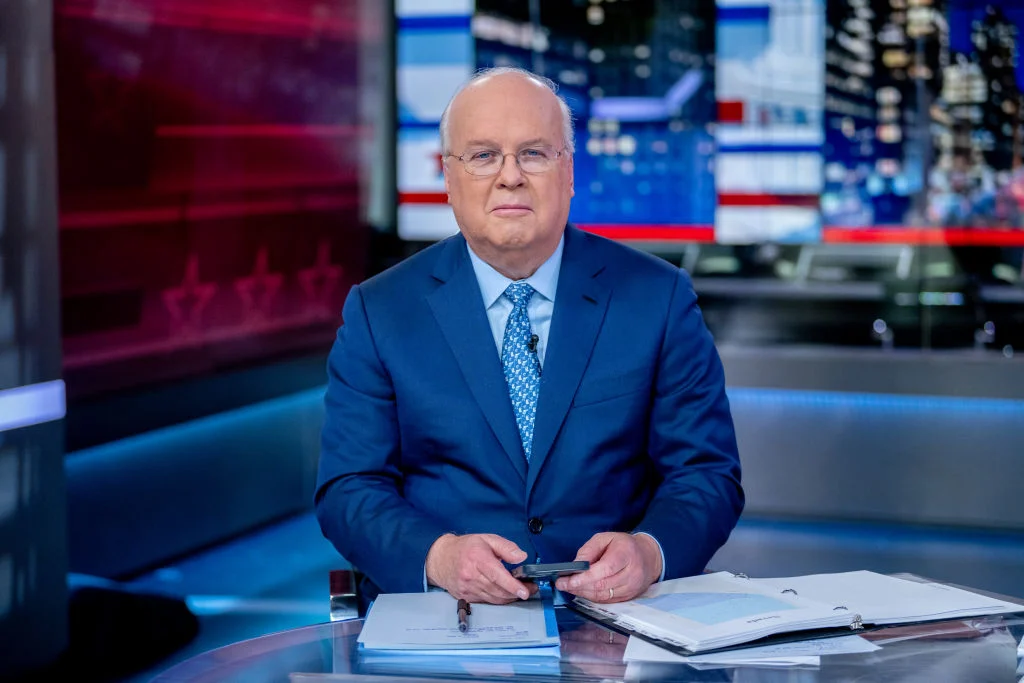
Karl Rove is a prominent American Republican political consultant, policy advisor, and strategist, with an estimated net worth of $8 million. Known as “Bush’s Brain,” Rove played a key role in the campaigns and administration of President George W. Bush, earning recognition for his strategic acumen and significant influence in the political arena. Over his career, Rove has transitioned from political consulting to media commentary, leaving an indelible mark on American politics.
Early Life and Education
Karl Christian Rove was born on December 25, 1950, in Denver, Colorado. He grew up in Sparks, Nevada, as the second of five children. In 1965, his family moved to Salt Lake City, Utah, where Rove attended Olympus High School. A talented debater with an early interest in politics, Rove served as Chairman of the Utah Federation of Teenage Republicans and was elected student council president in both his junior and senior years.
Rove attended the University of Utah as a political science major but later dropped out to focus on political work. He briefly attended the University of Maryland and George Mason University but never completed a degree, dedicating himself instead to grassroots Republican campaigns and consulting.
Early Political Career
Rove’s political journey began in 1968 when he volunteered for Wallace F. Bennett’s Senate re-election campaign. After a series of internships and roles in Republican campaigns, Rove became executive director of the College Republican National Committee in 1971. In this role, he traveled across the country training conservative campus leaders, laying the groundwork for his political consulting career.
In 1976, Rove became Finance Director for the Republican Party of Virginia, where he discovered his passion for direct mail campaigns, a tool that became central to his future strategies.
Texas Politics and the Rise of Karl Rove
In 1977, Rove moved to Texas, where he became a legislative aide to Republican state representative Fred Agnich. That same year, Rove worked on George H.W. Bush’s 1980 presidential campaign, marking the beginning of his long relationship with the Bush family.
Rove’s most significant breakthrough came in 1978 when he orchestrated Bill Clements’ historic win as the first Republican Governor of Texas in over a century. His success led to the founding of Karl Rove & Co., a political consulting firm specializing in direct mail campaigns. The firm managed campaigns for notable clients, including Texas Governor Bill Clements, Senator Phil Gramm, and tobacco giant Philip Morris. Over two decades, Rove’s firm achieved an impressive track record, winning 34 of the 41 races it managed.
In 1994, Rove masterminded George W. Bush’s successful gubernatorial campaign in Texas, followed by his re-election campaign in 1998. These victories solidified Rove’s reputation as a master strategist, paving the way for his role in Bush’s 2000 presidential campaign.
Role in the George W. Bush Administration
When George W. Bush won the 2000 U.S. Presidential election, Rove became a senior advisor in the White House, overseeing the Office of Political Affairs, the Office of Public Liaison, and the Office of Strategic Initiatives. His influence on domestic policy and political strategy earned him the nickname “Bush’s Brain.”
In 2004, Rove directed Bush’s re-election campaign, employing microtargeting techniques to appeal to specific voter demographics. Despite widespread criticism of the Iraq War, Rove’s strategy secured Bush’s victory. He was subsequently promoted to Deputy Chief of Staff in Bush’s second term, expanding his influence to areas such as national security and economic policy.
However, Rove’s tenure in the White House was marred by controversies, including the Valerie Plame CIA leak scandal and the firing of eight U.S. attorneys. Although he was never formally charged, these investigations contributed to his resignation on August 31, 2007.
Post-White House Career
After leaving the White House, Rove transitioned into media and academia:
- He became a contributor for The Wall Street Journal and a political analyst for Fox News.
- He wrote about the 2008 presidential election for Newsweek.
- In 2009, he was inducted into the Scandinavian-American Hall of Fame, followed by the American Association of Political Consultants Hall of Fame in 2012.
- Rove also served as a guest professor at the University of Texas and remains active on the University of Texas Chancellor’s Council Executive Committee.
Personal Life
Rove has been married three times. He married Valerie Wainwright in 1976, but they divorced in 1980. In 1986, he married Darby Tara Hickson, with whom he had a son before divorcing in 2009. In 2012, Rove married for a third time. Despite his high-profile career, Rove has managed to keep much of his personal life private.
Real Estate Investments
Rove has made notable real estate investments over the years:
- In 2001, he purchased a federal-style house in Washington, D.C., for $799,000, selling it for $1.59 million in 2009.
- In 2019, he listed a home in Austin, Texas, for $2.8 million. While the sale price remains undisclosed, this property highlights Rove’s interest in real estate as a wealth-building strategy.
Legacy and Net Worth
With a net worth of $8 million, Karl Rove’s wealth stems from his consulting firm, political career, and media contributions. While he is a polarizing figure, his impact on American politics is undeniable. Rove’s strategic innovations, such as microtargeting, have become standard practices in modern campaigns.
Rove’s career serves as a testament to the power of strategy and determination in shaping political landscapes. From his early days as a teenage Republican to his role as one of the most influential political strategists in modern history, Karl Rove remains a significant figure in the world of politics.