


How Idi Amin Made Martyrs Day a National Holiday in Uganda
June 3rd is one of the most sacred days on Uganda’s national calendar—Martyrs Day, a solemn occasion that commemorates the execution of dozens of young Ugandan converts to Christianity and Islam in the late 19th century. While the story of the martyrs begins in 1885, the day became an official national holiday nearly a century later, under the rule of President Idi Amin Dada.
Though often remembered for his authoritarian rule and human rights abuses, Idi Amin’s declaration of Martyrs Day as a public holiday in Uganda remains one of the most enduring aspects of his complex legacy.
The Origin of Uganda Martyrs Day
The Uganda Martyrs were a group of 45 young men—Catholics, Protestants, and Muslims—who were executed between 1885 and 1887 on the orders of Kabaka Mwanga II of Buganda. Their “crime” was converting to foreign religions and refusing to renounce their new faiths. Many of them were burned alive or beheaded at places such as Namugongo, which has since become a major pilgrimage site.
Their sacrifice inspired generations and helped shape Uganda’s religious identity. Among them, 22 Catholic martyrs were canonized as saints by Pope Paul VI in 1964, raising global recognition of their story. However, despite the spiritual importance, the martyrs were not honored with a public holiday until Idi Amin’s presidency.
Idi Amin’s Role in Declaring June 3rd a National Holiday
In the early 1970s, Idi Amin signed a decree designating June 3rd as a national public holiday—officially recognizing the Uganda Martyrs across religious lines. This historic act occurred during a period when his government was heavily criticized internationally, yet domestically, he sought to unite Ugandans under shared traditions and faith narratives.
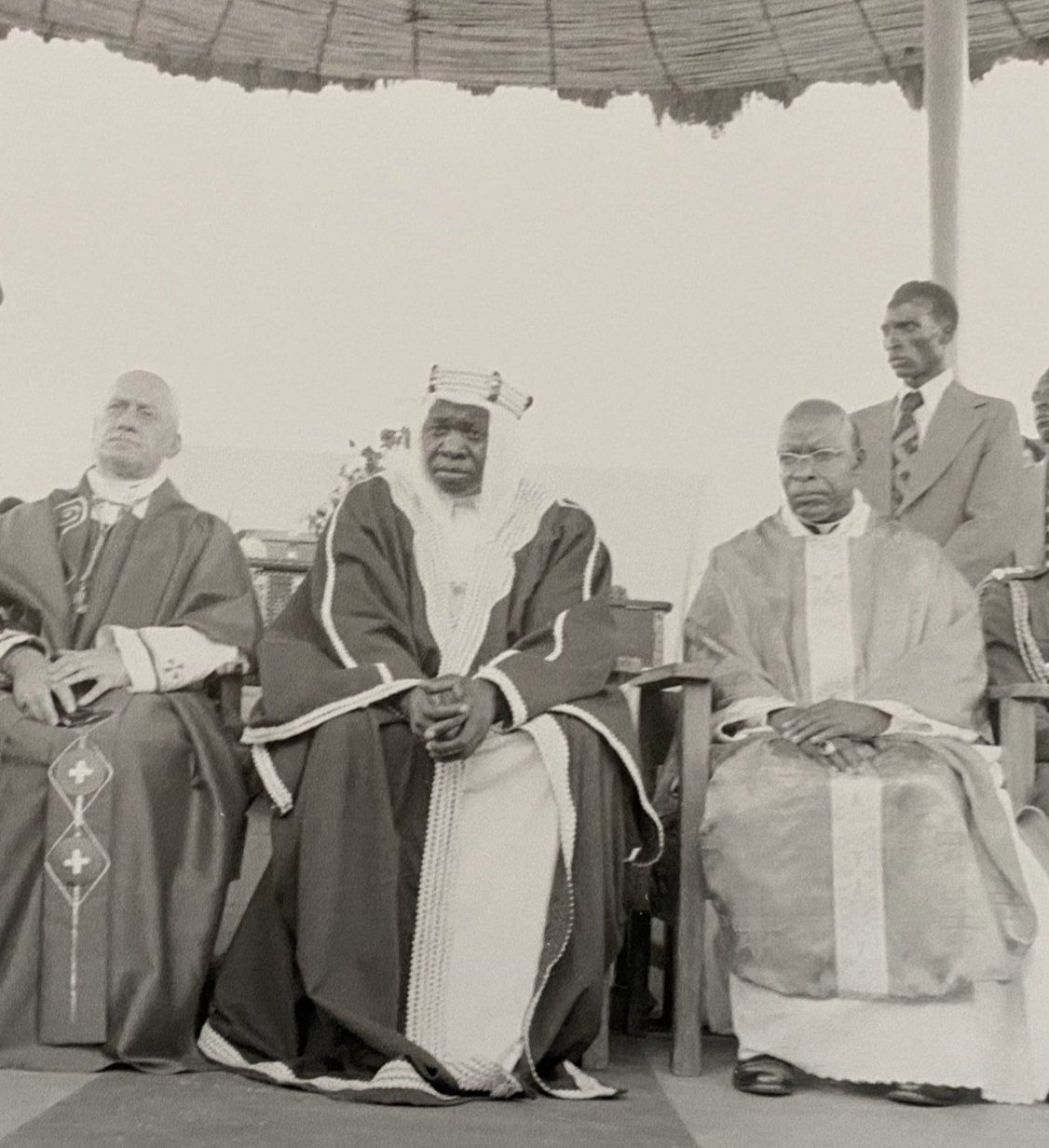
A now-iconic photograph from the inaugural celebration shows President Amin seated alongside Catholic and Anglican clergy, visibly symbolizing interfaith unity. This was the first government-sanctioned Martyrs Day celebration, held in Namugongo, where much of the martyrdom took place.
Amin’s decree did not solely honor Christian martyrs. He also acknowledged the over 100 Muslims who were killed under similar circumstances during the 1880s. His framing of the holiday as a tribute to “all those who died for their faith” was unprecedented at the time and was widely welcomed by religious leaders.
Why It Mattered Then—and Still Matters Now
Amin’s motivations for the decree may be debated—some believe it was a political move to gain favor with religious institutions, while others argue it was a genuine act of national reconciliation. Either way, the result was the establishment of one of Uganda’s most significant days of remembrance.
Today, Martyrs Day is observed by millions of pilgrims from Uganda and beyond. Namugongo becomes a spiritual epicenter, drawing Christians from across East Africa and sometimes even overseas. The holiday continues to serve as a symbol of faith, sacrifice, unity, and national identity.
It is also a day when political and religious leaders come together, and Ugandans reflect on the historical cost of religious freedom. The fact that a controversial figure like Idi Amin helped institutionalize such a revered tradition is a paradox that remains part of Uganda’s nuanced history.
Legacy Beyond the Controversy
Despite his brutal reign, Idi Amin’s decision to honor the martyrs through a national holiday endures as a rare gesture of inclusivity in his rule. It marked the first time a Ugandan president officially recognized religious martyrdom as part of the national heritage. Today, June 3rd is more than just a public holiday—it is a spiritual landmark, etched into the heart of Ugandan identity.
As the country continues to grapple with its past and envision its future, Martyrs Day remains a living reminder of courage, conviction, and the enduring value of freedom of belief—made possible, ironically, by a ruler who was often accused of denying others those very rights.


