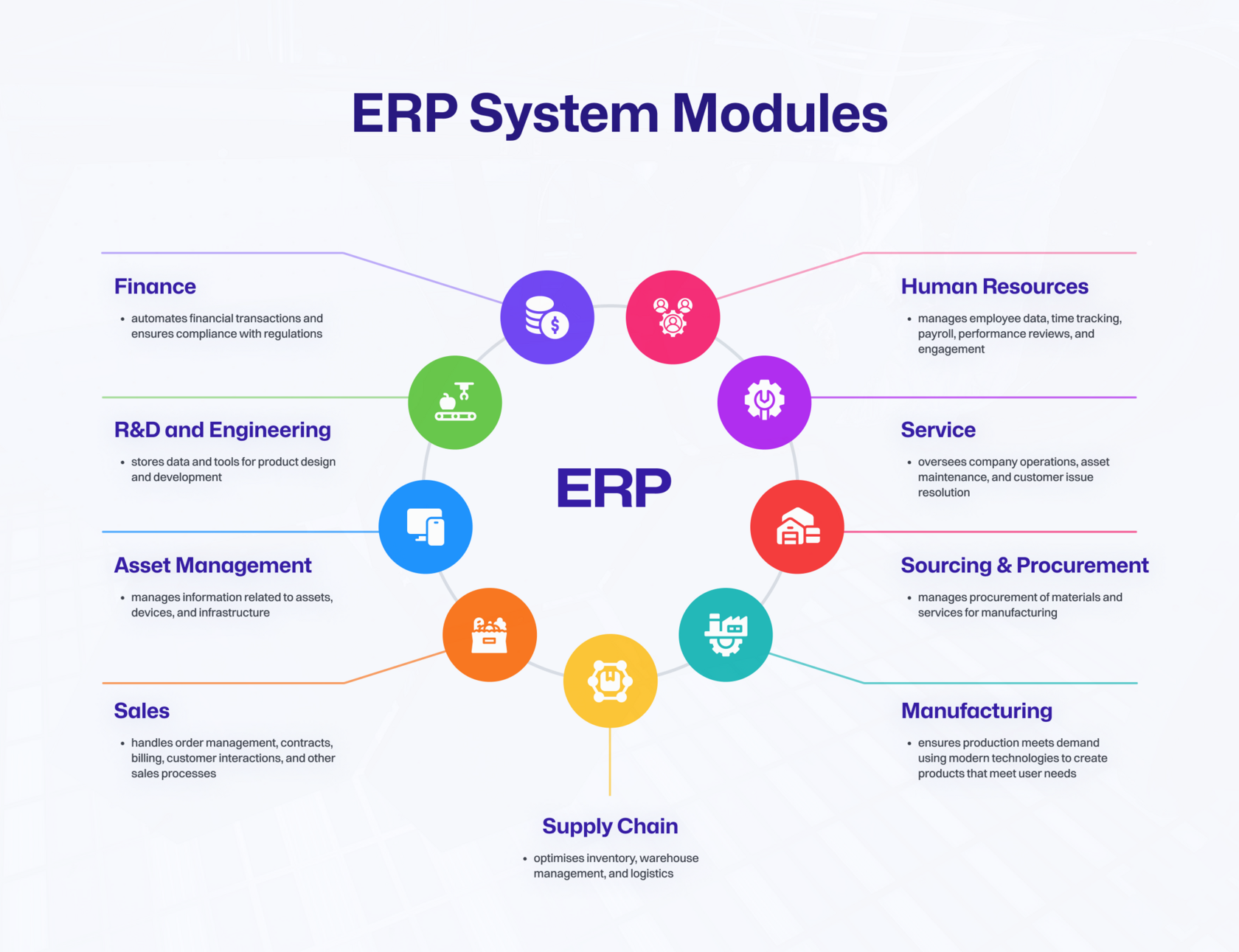
As your company grows, juggling operations across departments becomes more complex. This is where leveraging ERP tools to scale your business can be a game changer. Enterprise Resource Planning (ERP) systems unify your business processes—finance, HR, inventory, sales, and customer service—into a single digital hub, giving you full visibility and control.
Rather than managing fragmented software for different teams, ERP systems allow you to automate tasks, generate real-time insights, and make data-driven decisions at scale. Whether you’re expanding into new markets, increasing your workforce, or boosting production capacity, ERP platforms help maintain efficiency and consistency across the board. This guide explains how ERP tools can accelerate growth and how to implement them effectively.
What Are ERP Tools?
ERP tools are integrated software platforms that help businesses manage core functions in one place. Modules often include:
- Finance and accounting
- Inventory and supply chain
- Human resources
- Customer relationship management (CRM)
- Project management and reporting
Popular ERP systems include SAP Business One, Oracle NetSuite, Odoo, Microsoft Dynamics 365, and Zoho ERP.
Benefits of ERP Tools for Business Scaling
1. Centralized Data Management
ERP systems eliminate silos by consolidating data across departments, leading to better collaboration, fewer errors, and streamlined operations.
2. Automation of Repetitive Tasks
From invoicing to payroll, ERP tools automate time-consuming tasks, freeing up staff to focus on strategy and innovation.
3. Real-Time Reporting and Analytics
Instant access to performance metrics and financial data helps managers make timely decisions and forecast future needs accurately.
4. Improved Customer Experience
Integrated CRM modules within ERP systems ensure consistent service and order fulfillment, helping retain and attract customers.
5. Scalability and Flexibility
Modern ERP platforms are cloud-based and modular, making it easy to add features or scale up as your business grows.
How to Successfully Implement ERP Tools
Step 1: Assess Your Business Needs
Identify bottlenecks and inefficiencies in current workflows. Decide which departments need integration and automation most urgently.
Step 2: Choose the Right ERP Software
Consider factors such as:
- Business size and industry
- Customization and scalability
- User-friendliness and support
- Integration with existing tools
Step 3: Involve Stakeholders
Include leadership and key team members in the decision-making process to ensure the system meets real-world operational needs.
Step 4: Plan and Execute the Rollout
Define timelines, allocate resources, train employees, and set KPIs to track success. A phased implementation often works best for minimizing disruption.
Step 5: Monitor and Optimize
After deployment, continuously monitor usage, gather feedback, and refine workflows. ERP systems should evolve with your business.
Final Thoughts
With structured data and schema explained, it’s clear that using markup effectively helps your website stand out in search results, improves how Google understands your content, and enhances your overall SEO strategy. Remember, it’s also possible for you to utilize data taken from other parts of your business too, including your sales and target market. If you want to capitalise on this too, using a data acquisition system is one of the best ways to move forward.
Using ERP tools to scale your business isn’t just about adding software—it’s about transforming your operations for sustainable, long-term growth. With real-time data, automation, and cross-departmental alignment, ERP systems enable smarter decision-making and greater agility. Whether you’re a startup aiming for expansion or a mid-sized company ready to go global, the right ERP tool can be the backbone of your growth journey.