Learn faster without spending hours reading by changing how you study, not by forcing yourself to consume more pages. Many people think learning means sitting with a book for three hours, highlighting paragraphs and hoping the information stays in memory. That approach can work sometimes, but it is not always the smartest way to learn.
Busy students, professionals, entrepreneurs and lifelong learners often have the same problem. They want to improve, but they do not have enough time to finish every book, course, article or research paper they save for later.
The good news is that learning faster does not mean rushing through information carelessly. It means using better methods. You can learn faster by choosing the right material, listening when reading is not practical, using summaries wisely, testing yourself, spacing your reviews and applying ideas quickly.
This is where modern tools can help. An audio learning app, book summary app, AI learning app or microlearning app can reduce the time it takes to understand important ideas. But tools alone are not enough. The real advantage comes from combining technology with proven learning habits.
This guide explains how to learn faster without spending hours reading, while still understanding and remembering what matters.
Why Reading More Is Not Always the Same as Learning More
Many people confuse reading volume with learning progress. They think finishing more pages automatically means they are becoming smarter. But learning is not only about exposure. It is about understanding, remembering and applying.
Passive Reading Can Feel Productive
Passive reading feels productive because your eyes are moving across the page. You may highlight sentences, nod along and feel like you understand the material.
The problem appears later when you try to explain the idea and realize you cannot remember much. This happens because reading alone does not always force your brain to retrieve, organize or apply information.
Information Overload Slows Learning
The internet gives you access to more books, videos, newsletters, podcasts and courses than ever before. That sounds helpful, but it can also create overload.
When you consume too much content without a system, ideas begin to compete for attention. You may know many interesting facts but struggle to turn them into useful knowledge.
Smart Learning Requires Filtering
Faster learning starts with filtering.
You do not need to read every book fully. You do not need to finish every article. You do not need to watch every lecture from beginning to end.
You need to know what your goal is, identify the best sources and focus on the ideas that are most useful for your situation.
Start With a Clear Learning Goal
The fastest learners do not begin by asking, “What should I read?”
They begin by asking, “What do I need to understand or improve?”
Choose a Specific Outcome
A vague goal like “I want to learn business” is too broad.
A better goal is “I want to understand how to price a service,” “I want to improve public speaking,” “I want to build better study habits,” or “I want to understand personal finance basics.”
The more specific the goal, the easier it becomes to choose the right material.
Avoid Random Learning
Random learning feels exciting because every topic looks useful. But jumping from productivity to history to AI to communication to finance without a plan can make learning shallow.
You may collect ideas but fail to build skill.
Instead, choose one learning theme for a week or month. For example, spend one week on communication, one week on leadership or one week on exam revision.
Use Questions to Guide Learning
Before reading or listening, write three questions.
For example:
What problem does this idea solve?
What are the most important principles?
How can I apply this today?
These questions give your brain a target. You are no longer consuming information passively. You are searching for answers.
Use Summaries as a Filter, Not a Replacement
Book summaries can help you learn faster, but they should be used correctly.
A good book summary app can help you understand the main ideas of a book in minutes. That is useful when you want to decide whether the full book is worth your time.
When Summaries Are Useful
Summaries are useful when you want a quick overview of a topic.
They are also helpful when you are comparing several books before choosing one to read fully.
For example, before spending eight hours on a productivity book, you can read or listen to a short summary. If the ideas are useful, you can later read the full book.
When Summaries Are Not Enough
Summaries are not enough when you need deep understanding.
A summary may give you the main points, but it cannot always capture the author’s full argument, stories, evidence, examples and nuance.
For serious study, professional decisions or academic work, summaries should lead you toward deeper sources, not replace them completely.
The Smart Way to Use Book Summaries
Use summaries in three stages.
First, preview the topic.
Second, identify the best ideas.
Third, decide whether to read, listen, save or skip the full source.
This prevents wasting hours on books that are not relevant to your current goal.
Turn Reading Time Into Listening Time
One of the easiest ways to learn faster is to stop depending only on reading.
Audio learning allows you to learn while doing simple daily activities. This makes it useful for busy people who do not have long blocks of quiet reading time.
Learn While Commuting
Commuting is one of the best times for audio learning.
Instead of scrolling social media, you can listen to a book summary, short lesson, podcast or AI-generated learning session. Even 20 minutes a day can become several hours of learning each month.
Learn While Walking
Walking and learning work well together.
A short walk can become a time to listen to ideas about communication, productivity, leadership, business or personal development. The movement can also make learning feel less tiring.
Learn During Routine Tasks
Simple tasks such as cleaning, cooking or organizing can become learning opportunities.
The goal is not to force learning into every second of the day. The goal is to use low-attention moments wisely.
Use Audio for First Exposure
Audio is especially useful for first exposure to a topic.
You can listen to a summary or short lesson before deciding whether the topic deserves deeper reading. This saves time and helps you avoid starting books blindly.
Try AI Audio Learning for Personalized Lessons
AI audio learning is useful because it can adapt lessons to your interests, time and learning goals.
Instead of listening to a random podcast episode, you can use an AI learning app to explore a specific topic in a shorter, more focused way.
How AI Learning Apps Help
An AI learning app can help by summarizing ideas, creating short lessons, explaining difficult concepts and organizing topics into learning paths.
This is useful when you know what you want to learn but do not know where to begin.
For example, instead of searching for five different books about confidence, you can use a personalized learning app to get a guided explanation of the most important ideas.
Where BeFreed Fits
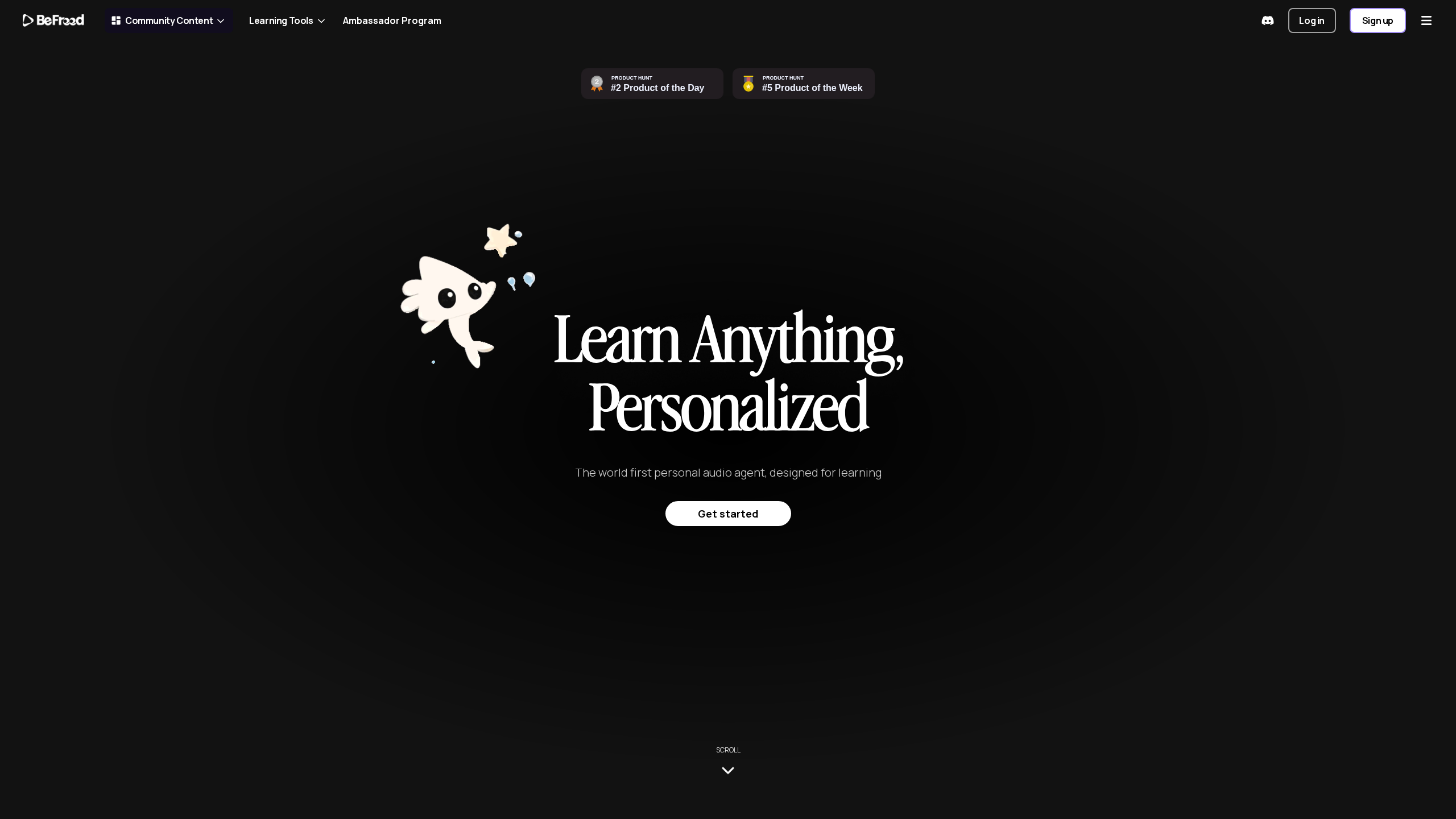
BeFreed is one example of an AI audio learning app built for personalized learning. It focuses on turning books, research papers, expert content and nonfiction ideas into audio lessons tailored to the user’s goals.
Affiliate placement suggestion: Add your BeFreed affiliate link here with wording such as “Try BeFreed for personalized AI audio lessons.”
This type of tool can be useful for learners who want to learn while commuting, walking or taking short breaks.
Use AI as a Guide, Not a Final Authority
AI tools can save time, but they should not replace judgment.
For important topics, verify key information from original sources. Use AI to simplify, summarize and organize learning, but do not treat every AI-generated explanation as automatically perfect.
Learn With Active Recall
Active recall is one of the most powerful ways to learn faster.
Instead of rereading the same material many times, you test yourself. You ask your brain to bring the information back without looking.
Why Active Recall Works
Active recall forces your brain to retrieve information.
That effort strengthens memory. When you only reread, the information may feel familiar, but familiarity is not the same as mastery.
How to Use Active Recall
After reading or listening to a lesson, close the app or book and ask yourself:
What are the three most important ideas?
How would I explain this to a beginner?
What example can I give?
What action should I take from this?
This turns passive learning into active learning.
Use Flashcards
Flashcards are useful when you need to remember definitions, frameworks, formulas, steps or key concepts.
You can use a flashcard app or simple notes. The important thing is to test yourself before looking at the answer.
Teach the Idea
Teaching is another form of active recall.
Explain the idea to a friend, classmate, colleague or even to yourself out loud. If you cannot explain it simply, you have not learned it deeply enough.
Use Spaced Practice Instead of Cramming
Cramming feels fast, but it often leads to quick forgetting.
Spaced practice means reviewing information over time instead of trying to learn everything in one long session.
Why Spacing Works
Your brain remembers better when it meets information more than once across different days.
A 20-minute session today, a 10-minute review tomorrow and another review after a few days can be more effective than one long study session.
Simple Spaced Review Schedule
Use this simple schedule:
Review the same day.
Review the next day.
Review after three days.
Review after one week.
Review after one month.
This works for school subjects, work skills, language learning, book ideas and professional knowledge.
Combine Spacing With Active Recall
Spacing works best when combined with testing.
Do not only reread your notes after a few days. Test yourself. Try to explain the idea without looking. Then check what you missed.
That is how learning becomes stronger.
Replace Highlighting With Better Notes
Highlighting can be useful, but many people overuse it.
A page full of highlights does not mean you understand the material. It may only mean many sentences looked important.
Use Short Notes
After reading or listening, write a short note in your own words.
Do not copy the author’s sentence. Explain the idea as if you were teaching it.
This forces you to process the meaning.
Use the One-Idea Rule
For every lesson, capture one useful idea.
Not five. Not ten. One.
Ask yourself: “What is the one idea I should remember from this?”
This makes learning easier and reduces overload.
Use Action Notes
Turn notes into action.
Instead of writing “Communication is important,” write “Before my next meeting, I will prepare one clear question and one clear point.”
Action notes make learning practical.
Learn in Short Sessions
You do not need three hours to learn something useful.
Short sessions can work very well when they are focused.
Use 15-Minute Learning Blocks
A 15-minute block is enough to listen to a short lesson, read a summary, review flashcards or practice one concept.
This makes learning easier to fit into a busy schedule.
Avoid Marathon Sessions
Long sessions can lead to fatigue.
When your attention drops, the quality of learning drops too. It is often better to study in shorter blocks with breaks.
Build a Daily Learning Habit
A small daily habit is more powerful than an occasional burst of motivation.
Fifteen minutes every day equals more than seven hours of learning in a month. That is enough to understand several books, review a course or build a foundation in a new skill.
Use the 80/20 Rule for Learning
The 80/20 rule says that a small number of inputs often create most of the results.
In learning, this means some ideas matter much more than others.
Find the Core Concepts
Every topic has core concepts.
In personal finance, core concepts may include budgeting, saving, debt, investing and compound growth.
In communication, core concepts may include listening, clarity, confidence, empathy and feedback.
In productivity, core concepts may include focus, prioritization, planning and energy management.
Find the core ideas first. Details can come later.
Do Not Treat Every Page Equally
Some pages are more useful than others.
Some chapters contain the main argument. Others contain examples, stories or repetition. Smart learners learn how to identify what matters most.
Ask What Will Change Your Behavior
The most valuable idea is often the one that changes what you do.
When learning, ask: “What will I do differently because of this?”
If nothing changes, the learning may remain theoretical.
Build a Personal Learning System
Learning faster becomes easier when you have a system.
A system removes the need to decide from scratch every day.
Choose Your Main Input
Pick one main learning input.
This could be a book, course, podcast, newsletter, AI learning app or book summary app.
Do not use too many sources at once. Too many inputs create confusion.
Choose Your Capture Tool
Decide where your notes will go.
This could be a notebook, notes app, Google Docs, Notion, Obsidian or simple flashcards.
The tool matters less than consistency.
Choose Your Review Routine
Set a regular review time.
For example, review your notes every Sunday evening. This helps ideas stay active instead of disappearing after one listening session.
Choose Your Application Method
Learning should lead to action.
After each lesson, choose one small action. Practice it in real life. That is how knowledge becomes skill.
How Students Can Learn Faster Without Reading for Hours
Students often feel pressure to read everything. But faster learning comes from smarter study habits.
Preview Before Reading
Before reading a chapter, scan the headings, summary, questions and key terms.
This gives your brain a map before you enter the details.
Turn Notes Into Questions
Instead of writing only statements, turn notes into questions.
For example, instead of writing “Photosynthesis uses sunlight,” write “How does photosynthesis use sunlight?”
Questions are easier to use for active recall.
Practice Past Questions
For exams, practice questions are often more useful than rereading.
They show you what you know, what you forgot and how the topic is tested.
Use Summaries for Review
A summary can help before or after deep study.
Use it to preview a topic, then read your textbook for details. Or use it after class to refresh the main ideas.
How Professionals Can Learn Faster Without Reading for Hours
Professionals need practical learning that fits into work life.
Learn Around Current Problems
Do not learn randomly.
Choose topics based on problems you are facing now. For example, if you need to lead a team, study leadership. If you need to sell, study persuasion and communication.
Learning becomes faster when it has immediate use.
Use Audio During Commutes
A commute can become a daily learning session.
Use an audio learning app, business book summaries, podcasts or short lessons. This allows career development without adding extra desk time.
Apply One Idea at Work
After learning something, apply it within 24 hours.
Use a communication tip in a meeting. Try a productivity method tomorrow morning. Improve one email using a writing principle.
Fast application strengthens memory.
Keep a Work Learning Journal
Write short notes about what you learn and how it applies to your job.
This helps turn ideas into professional growth.
Common Mistakes That Slow Learning
Many people work hard but use methods that slow them down.
Trying to Learn Everything
Trying to learn everything leads to overload.
Focus on the most useful ideas first.
Only Highlighting
Highlighting is easy, but it does not prove understanding.
Always follow highlighting with recall, explanation or action.
Not Reviewing
Most people forget because they do not review.
A short review after a few days can make a big difference.
Consuming Without Applying
Reading 20 books without applying anything is less useful than applying one strong idea from one book.
Learning becomes valuable when it changes behavior.
Switching Topics Too Often
Jumping between unrelated topics prevents depth.
Stay with one theme long enough to build understanding.
A Simple 7-Day Plan to Learn Faster
Use this plan to start learning faster without spending hours reading.
Day 1: Choose One Learning Goal
Pick one specific skill or topic.
Examples: better communication, faster studying, personal finance, leadership or productivity.
Day 2: Listen to a Summary or Audio Lesson
Use a book summary app, audio learning app or AI learning app to get a quick overview.
Write down the top three ideas.
Day 3: Read One Deeper Source
Choose one article, chapter or guide that explains the topic better.
Do not read everything. Read with your questions in mind.
Day 4: Test Yourself
Close your notes and explain the topic from memory.
Write what you remember. Then check what you missed.
Day 5: Apply One Idea
Use one idea in real life.
Practice a communication skill, study technique, planning method or work habit.
Day 6: Review With Flashcards or Notes
Review your key points using active recall.
Do not only reread. Test yourself.
Day 7: Teach the Idea
Explain what you learned to someone else or write a short explanation.
Teaching reveals gaps and strengthens memory.
Best Tools for Learning Faster
The best tools depend on your learning style.
Audio Learning Apps
Audio learning apps are useful for people who want to learn while commuting, walking or exercising.
They work well for personal development, business, communication, productivity and leadership topics.
Book Summary Apps
Book summary apps are useful for previewing books and discovering key ideas quickly.
They save time and help you decide what deserves full reading.
AI Learning Apps
AI learning apps can personalize lessons, summarize difficult material and create study paths.
They are useful for learners who want guided learning instead of random browsing.
Flashcard Apps
Flashcard apps help with active recall.
They are especially useful for students, language learners and professionals preparing for exams or certifications.
Note-Taking Apps
A good note-taking app helps you capture, organize and review ideas.
Keep notes simple. The goal is not to collect information forever. The goal is to use it.
Where BeFreed Can Fit Into This System
BeFreed can fit into a faster learning system as a discovery and audio learning tool.
Use It for First Exposure
Use BeFreed when you want a quick introduction to a topic before deciding whether to study it deeply.
This helps you avoid wasting time on sources that are not relevant.
Use It During Dead Time
Use it while commuting, walking or doing simple tasks.
This turns unused time into learning time.
Use It for Topic-Based Learning
Instead of only choosing a book, use BeFreed to explore a learning goal such as confidence, productivity, leadership, communication or self improvement.
Use It With Notes and Review
After listening, write one idea and one action.
Then review that idea later using active recall.
This makes the app more than passive listening.
Final Verdict
You can learn faster without spending hours reading by using a smarter system.
Start with a clear goal. Use summaries to filter information. Listen when reading is not practical. Test yourself with active recall. Space your reviews. Take short notes. Apply one idea quickly. Stay focused on one topic long enough to build real understanding.
Tools such as audio learning apps, book summary apps, AI learning apps and flashcard apps can help, but they are not magic. The real secret is how you use them.
For busy learners, the best approach is simple: learn in short focused sessions, review what matters and apply ideas as soon as possible.
Reading more can help, but learning smarter is better.
Read Also:BeFreed vs Blinkist: Which Book Summary App Is Better?