


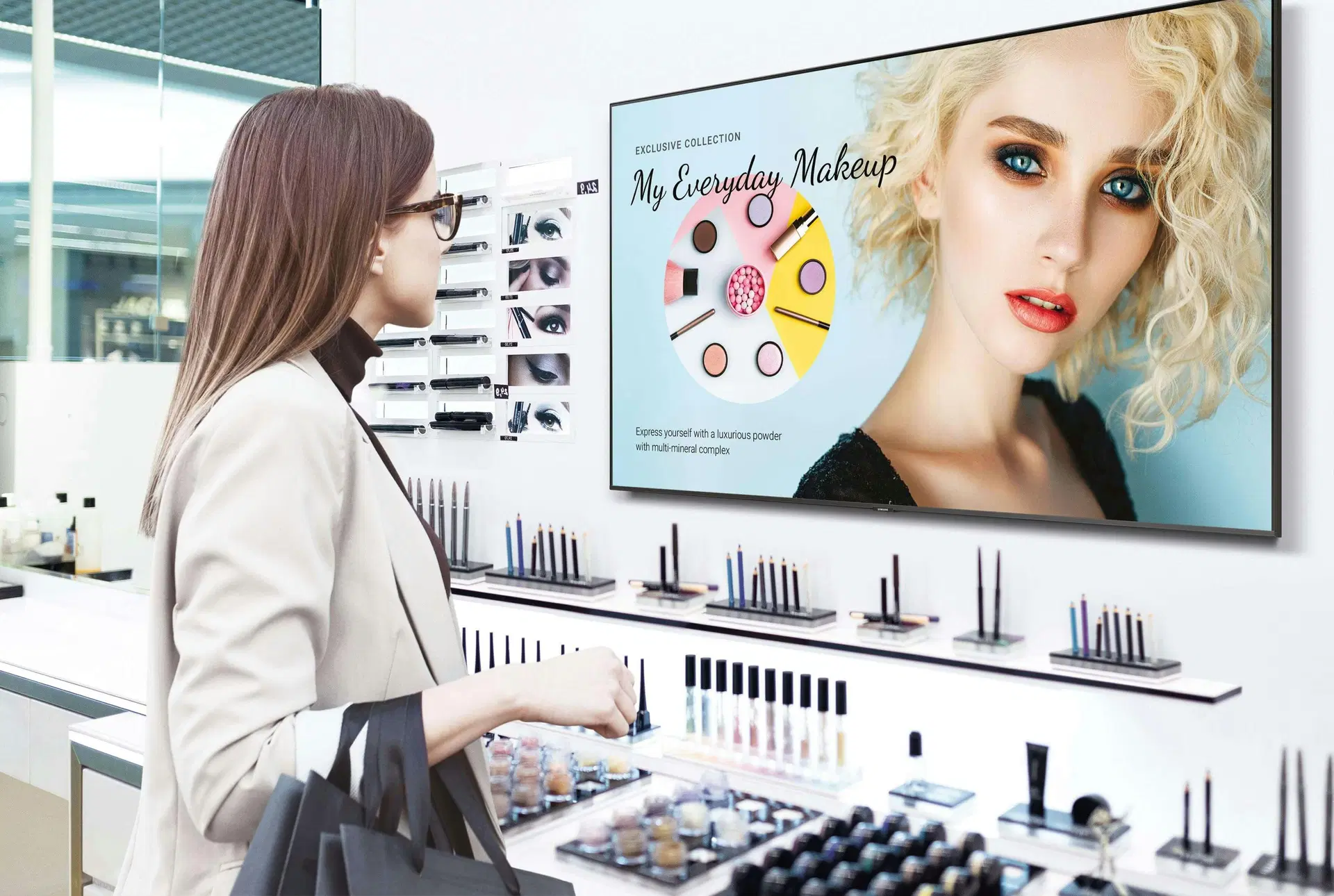
Choosing the best digital signage screen is a critical step in building an effective digital display network. The right screen ensures your content is visible, engaging, and aligned with your business needs. From retail environments to corporate lobbies and restaurants, screen selection impacts how well your message resonates with audiences. With Android-based displays and cloud software such as Samsung VXT, businesses now have cost-effective options that combine hardware simplicity with powerful management tools.

Selecting the Right Screen
When evaluating digital signage screens, consider factors like size, aspect ratio, and resolution:
- Size: Large screens work best in spacious lobbies, airports, or shopping malls where content needs to be viewed from afar. Smaller displays are more effective for close-up engagement in retail aisles or office corridors.
- Aspect ratio: A standard 16:9 ratio ensures compatibility with most video and graphic formats.
- Resolution: Full HD (1080p) or 4K provides sharp, detailed visuals, especially for indoor applications with close viewing distances.
OLED vs LED
- OLED screens deliver superior contrast, deeper blacks, and wide viewing angles, making them ideal for high-end indoor signage.
- LED screens offer brighter output and greater durability, making them better for long-term or high-brightness environments.
Setting Up Your Digital Signage System
Location plays a crucial role in screen performance. Place displays in high-visibility areas such as entrances, waiting rooms, and checkout counters. Avoid spots with excessive glare or direct sunlight unless the display is engineered for outdoor use. Always ensure the location has Wi-Fi or Ethernet connectivity for real-time updates.
Choosing the Right Software
Your signage is only as effective as the software driving it. Look for a content management system (CMS) that allows:
- Easy content creation and customization
- Remote scheduling and updating
- Multi-display management and monitoring
- Compatibility with various media formats
Samsung VXT Advantage
Samsung VXT offers a robust CMS with:
- Canvas design tools featuring customizable templates and fonts
- Cloud-based management to update screens anytime, anywhere
- Hardware compatibility with Android-based displays and more
This ensures businesses can scale their digital signage networks without heavy infrastructure investments.
Use Cases for Digital Signage Screens
- Retail: Promote sales, special offers, or product launches with eye-catching visuals.
- Corporate offices: Share company updates, welcome messages, or weather alerts to engage employees and visitors.
- Restaurants/QSRs: Deploy dynamic digital menu boards that update automatically for breakfast, lunch, and dinner.
- Education and community centers: Use bulletin boards to announce events, deadlines, or motivational content.
- Video walls: Combine multiple screens into large storytelling canvases for immersive impact.
Key Considerations
While consumer TVs may seem like a cheaper option, they are not built for continuous 24/7 use. Unlike commercial signage displays, consumer-grade TVs degrade quickly, overheat, and often lose warranty coverage when used in digital signage applications. Always invest in commercial-grade screens for long-term performance.
Final Thoughts
Selecting the best digital signage screen involves balancing display size, resolution, placement, and compatible software. By pairing Android-based displays with Samsung VXT, businesses can create an affordable yet scalable signage network that delivers real-time, engaging, and professional-quality communication.


