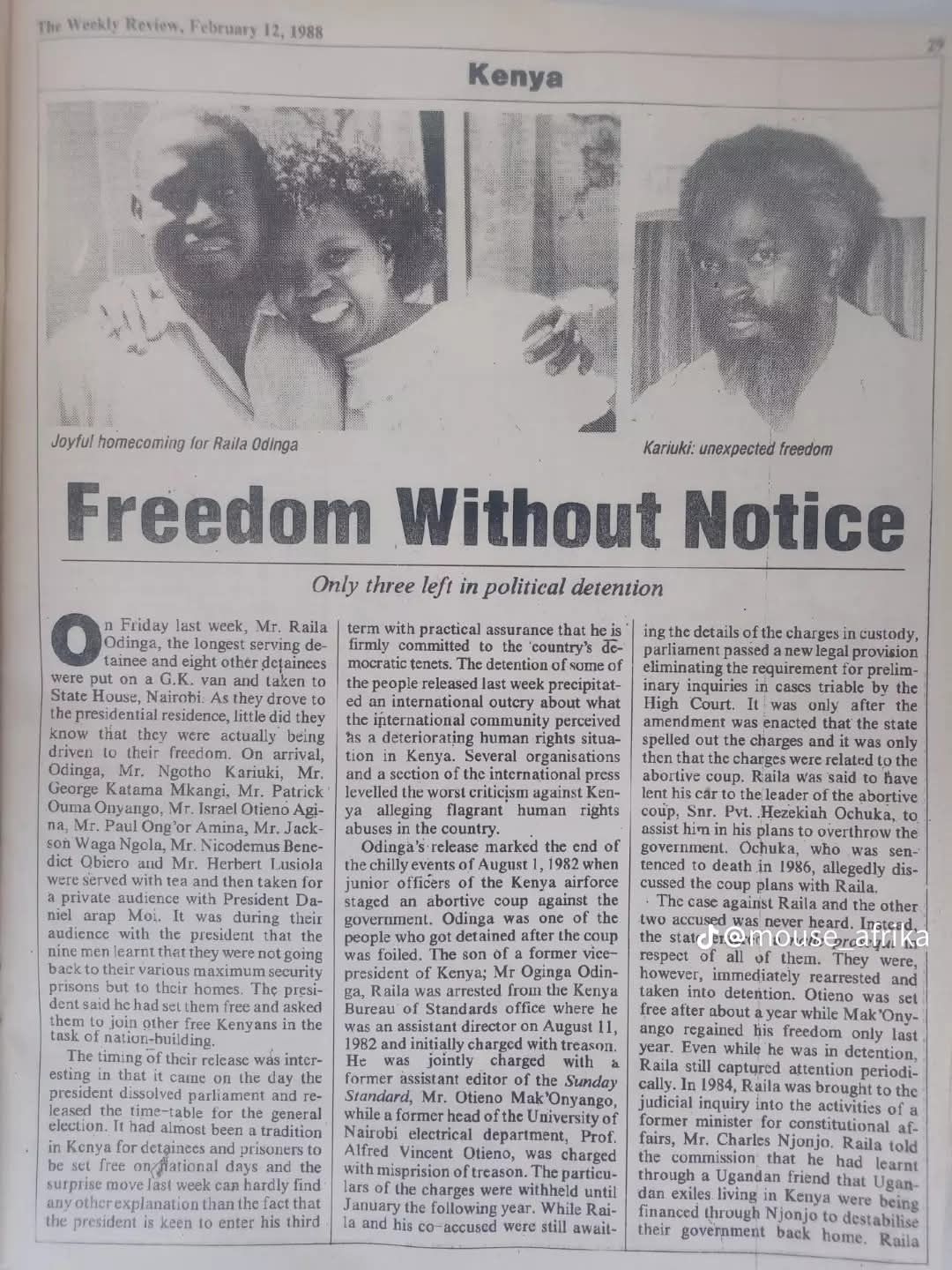
On Friday, February 5, 1988, Raila Amolo Odinga — then Kenya’s longest-serving political detainee — was unexpectedly released from detention alongside fellow prisoners Ngotho Kariuki, George Katama Mkangi, Patrick Ouma Onyango, Israel Olieno Agina, Paul Ong’ or Anima, Jackson Waga Ngola, Nicodemus Benedict Obiero, and Herbert Lusolia.
The release came without public notice or legal explanation. According to The Weekly Review of February 12, 1988, the men were collected from their cells, placed in a G.K. van, and driven to State House, Nairobi, unaware that they were on their way to freedom.
Upon arrival, they were met with unexpected hospitality — served tea and ushered into a private audience with President Daniel arap Moi. During the meeting, Moi told them that their detention terms had ended and that they were now free to rejoin their families. The moment marked a quiet yet significant turning point in Kenya’s human rights and political history.
The Road to Detention
Raila Odinga’s journey to that day of release had begun almost six years earlier. On August 11, 1982, he was arrested in connection with the failed Kenya Air Force coup attempt that took place on August 1, 1982. The coup, led by junior Air Force officers including Senior Private Hezekiah Ochuka, sought to overthrow Moi’s government but was crushed within hours.
As the son of Kenya’s first Vice President, Jaramogi Oginga Odinga, Raila was accused of having links with the coup plotters — a charge he consistently denied. He was detained under the Public Security Act, held without trial, and later re-arrested even after periods of release. His co-accused included journalists, university lecturers, and professionals such as Prof. Alamin Mazrui and Prof. Edward Oyugi, who were also accused of subversive activity.
During his detention, Raila endured years of isolation, interrogation, and restricted communication. His health suffered, yet his resolve to fight for democracy remained firm.
Why Moi Ordered the Release
The 1988 release, described by the Weekly Review as “Freedom Without Notice,” came amid growing international criticism of Kenya’s human rights record. Organizations like Amnesty International, foreign embassies, and church leaders had repeatedly called for the release of political prisoners.
By freeing Raila and others, Moi aimed to ease global pressure and portray Kenya as a country committed to reform. However, the release was carefully managed — the state offered no legal explanation, no compensation, and no acknowledgment of wrongdoing.
At the time of their release, only three political detainees remained in custody. The move signaled an unofficial end to the wave of mass detentions that had followed the 1982 coup and the political crackdowns of the early one-party era.
The Symbolism of That Moment
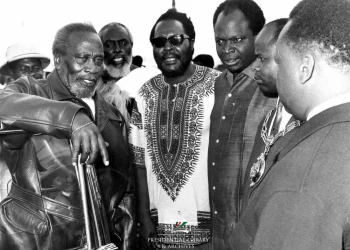
Photographs from that week captured the joyful reunion of Raila and his wife, Ida Odinga, symbolizing not only a family’s reunion but also a nation’s quiet yearning for freedom. The release gave new life to Kenya’s pro-democracy movement, emboldening reformers who would later drive the Second Liberation of the 1990s.
In hindsight, that Friday in February 1988 was not just the day Raila Odinga regained his freedom — it was the moment Kenya’s democratic fire began to burn brighter.