


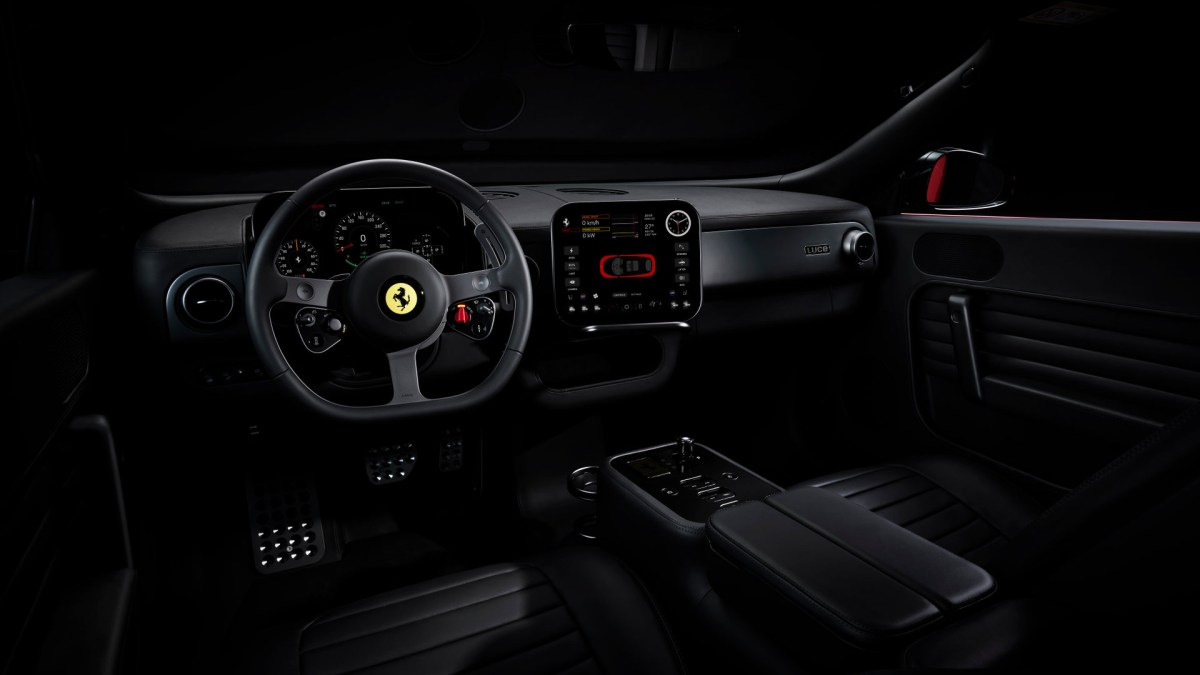
Ferrari is preparing to redefine automotive cockpit design with the upcoming Ferrari Luce, an ultra-premium vehicle that merges Italian performance heritage with cutting-edge digital technology. At the center of that transformation is an ambitious display system developed in partnership with Samsung Display — one that could reshape expectations for luxury vehicle interiors in the years ahead.
The Ferrari Luce, reportedly priced at around €550,000, features a sophisticated multi-display OLED setup unlike anything currently seen in mainstream production cars. The interior was designed under the direction of legendary designer Jony Ive, whose post-Apple design firm LoveFrom has increasingly expanded into luxury industrial and automotive projects.
Samsung Display will supply multiple OLED panels for the Luce’s cockpit, introducing proprietary display engineering that combines digital interfaces with physical mechanical elements. The result is a hybrid analog-digital experience designed to feel more immersive, tactile, and emotionally engaging than the flat glass dashboards dominating modern vehicles.
The Ferrari Luce may ultimately become one of the most technologically ambitious automotive interiors ever produced.
Ferrari Luce Introduces a Radical New OLED Cockpit Philosophy
Modern vehicles increasingly resemble rolling computers. Massive touchscreens, software-driven interfaces, and minimalist dashboards have become standard across both electric and luxury vehicles.
Ferrari, however, appears determined to preserve emotional driving engagement even while embracing advanced digital technology.
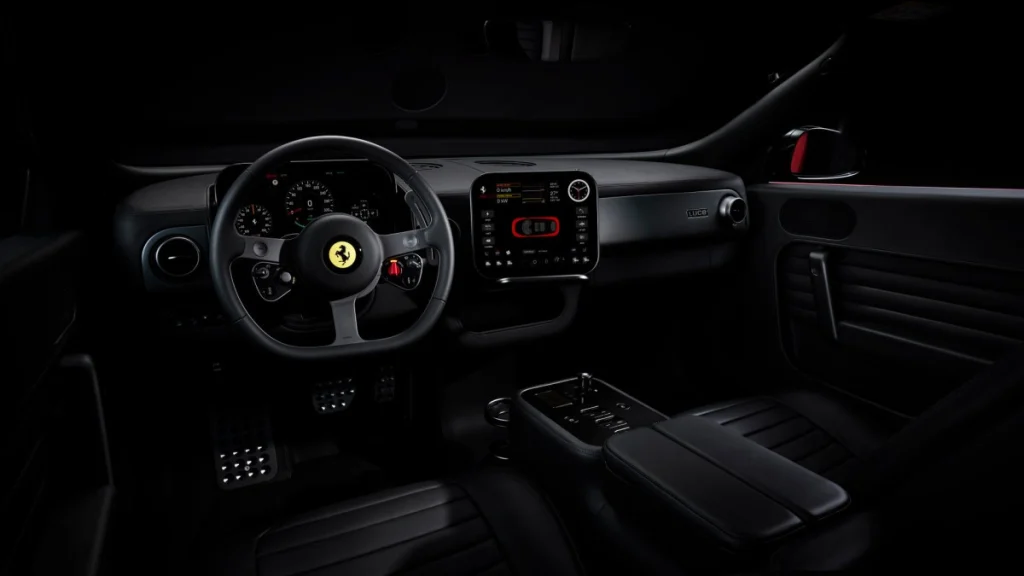
The Ferrari Luce’s cockpit reportedly features three primary digital display zones powered by Samsung OLED panels in four distinct sizes:
- 12.9-inch OLED panel
- 12-inch OLED panel
- 10.1-inch OLED display
- 6.3-inch rear passenger displays
Rather than relying solely on conventional flat-screen layouts, Ferrari and Samsung have developed a layered, three-dimensional interface concept that combines OLED displays with physical analog-style hands and cutout technologies.
This approach reflects Ferrari’s attempt to merge its mechanical heritage with next-generation interface design.
Samsung’s HIAA Technology Enables Physical Needles Through OLED Panels
One of the most remarkable innovations inside the Ferrari Luce is Samsung’s proprietary HIAA technology, short for “Hole In Active Area.”
The technology allows physical objects to pass directly through active OLED display surfaces while preserving surrounding screen functionality.
Samsung has previously implemented smaller versions of this concept in smartphones using punch-hole selfie camera designs. However, the Ferrari Luce dramatically scales up the technology.
Ferrari’s Instrument Cluster Uses Massive OLED Cutouts
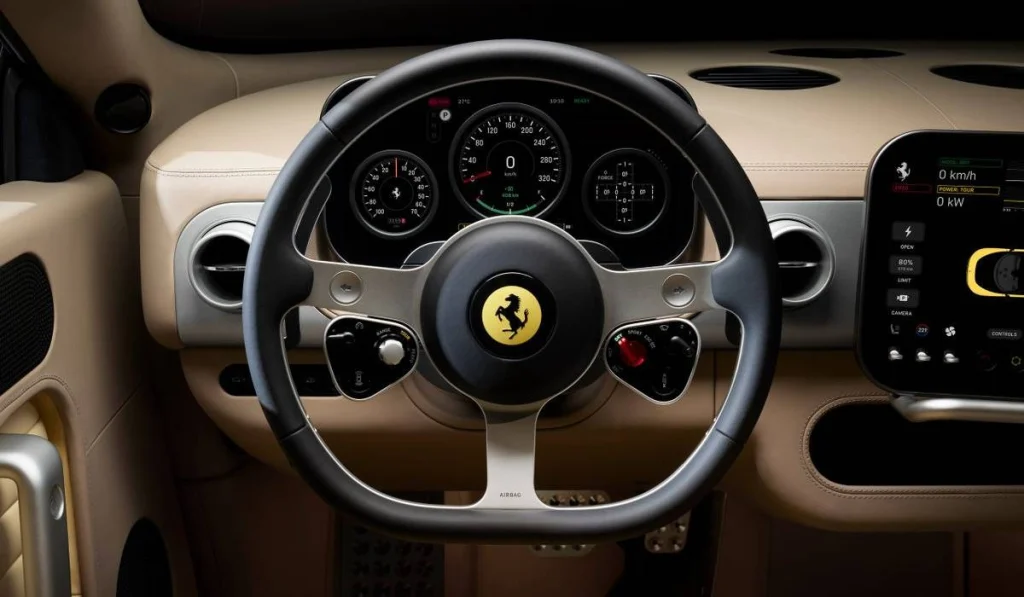
Unlike smartphone camera holes measuring only a few millimeters, the Ferrari Luce’s instrument cluster reportedly uses circular openings roughly 20 times larger.
The binnacle — the instrument cluster positioned directly in front of the driver — will feature physical mechanical needles protruding through the OLED display.
This creates an unusual fusion of:
- Analog instrument movement
- Digital OLED graphics
- Mechanical depth
- Layered visual effects
The design intentionally avoids the “flat glass tablet” aesthetic increasingly common in modern EVs and luxury cars.
Instead, Ferrari appears focused on restoring visual drama and tactile engagement to the cockpit experience.
Ferrari’s Stacked OLED Display Design Could Change Automotive Interfaces
Perhaps the most technically ambitious element of the Ferrari Luce interior is its stacked OLED architecture.
The instrument cluster reportedly combines two separate OLED layers:
- A 12-inch lower OLED panel
- A 12.9-inch upper OLED panel
The lower display handles background visual elements such as:
- Gauge indexes
- Ambient information
- Supporting graphical layers
Meanwhile, the upper display contains circular cutouts that allow physical gauge hands to move through the interface.
The layered arrangement creates genuine depth perception rather than simulated digital depth.
Why Ferrari Is Rejecting Flat Dashboard Trends
Most modern digital dashboards prioritize clean minimalism and software-centric layouts. Tesla helped popularize this design direction, which many automakers later adopted.
Ferrari’s approach appears fundamentally different.
The company is betting that luxury buyers still crave emotional and mechanical engagement, even inside digitally advanced vehicles.
By integrating physical components directly into OLED displays, Ferrari may be attempting to preserve the feeling of traditional analog instrumentation while still embracing modern software-driven flexibility.
That philosophy aligns closely with Ferrari’s broader brand identity, which historically emphasizes sensory driving experiences over pure technological abstraction.
Jony Ive’s Influence Is Evident Throughout the Ferrari Luce
The Ferrari Luce was designed by LoveFrom, the creative firm founded by Jony Ive after his departure from Apple.
Ive is widely regarded as one of the most influential industrial designers of the modern era, having played a central role in the design of products including:
- iPhone
- iMac
- iPad
- Apple Watch
- MacBook
His transition into automotive design has generated enormous industry interest.
The Ferrari Luce Reflects Apple-Like Design Philosophy
Several design themes associated with Ive’s Apple era appear visible inside the Luce:
Seamless Hardware-Software Integration
Ferrari specifically highlighted the importance of integrating physical hardware with digital interfaces seamlessly.
Minimal Visual Clutter
Despite the technological complexity, the cockpit reportedly maintains clean and elegant proportions.
Emotional User Interaction
The use of physical needles and layered displays creates sensory interaction rather than purely screen-based control.
Premium Material Focus
Ferrari’s ultra-luxury positioning suggests the cockpit will heavily emphasize craftsmanship alongside technology.
The Luce may represent one of the first major automotive projects to fully showcase Ive’s post-Apple design direction.
Ferrari’s Central OLED Display Adds Mechanical Clock Elements
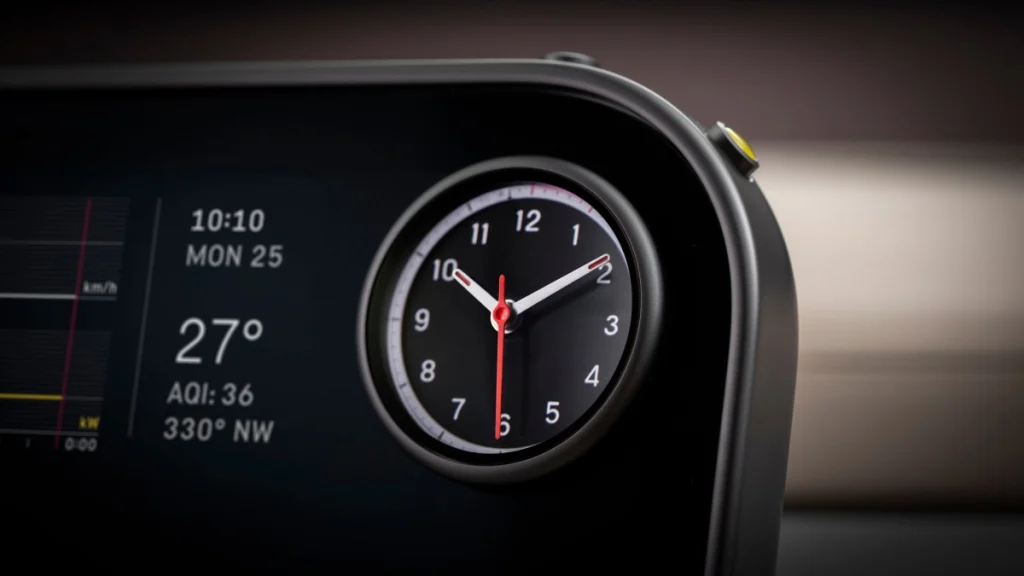
The Ferrari Luce’s center control panel reportedly uses a 10.1-inch OLED display with additional HIAA integration.
Unlike traditional infotainment systems, this panel will feature three physical hands protruding through the display surface.
The interface can reportedly function as:
- A clock
- Stopwatch
- Compass
- Dynamic control display
The use of physical clock hands is particularly symbolic.
Luxury watches and automotive design have long shared overlapping design philosophies centered around mechanical precision and craftsmanship. Ferrari appears to be intentionally leveraging that emotional association.
Samsung Display Is Expanding Beyond Consumer Electronics
The Ferrari Luce project also highlights Samsung Display’s growing ambitions within automotive technology.
While Samsung remains globally dominant in smartphone OLED production, the automotive display market has become increasingly strategic for major display manufacturers.
Automotive OLED systems require:
- Higher durability
- Extreme temperature resistance
- Long-term reliability
- Complex curved integrations
- Advanced brightness optimization
Luxury vehicles provide ideal testing grounds for experimental display technologies before they potentially scale into mainstream markets.
Rear Passengers Also Receive Dedicated OLED Controls
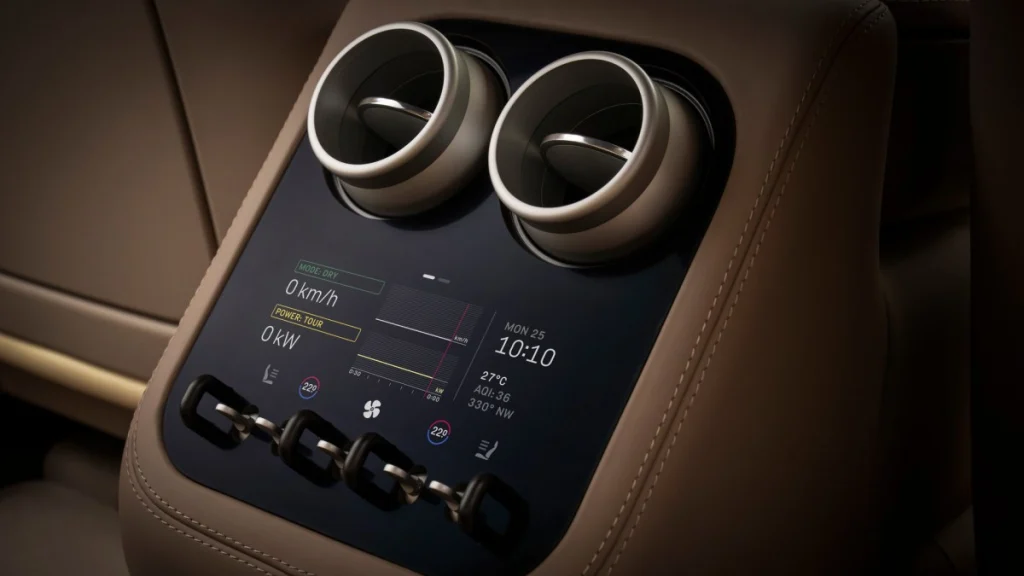
The Ferrari Luce’s rear passengers will reportedly receive separate 6.3-inch OLED panels.
These displays may provide access to:
- Climate controls
- Driving dynamics information
- Passenger customization features
- Vehicle data
- Comfort settings
Rear-seat technology has become an increasingly important battleground in luxury vehicles, particularly as automakers seek to differentiate high-end interiors through software experiences.
Ferrari’s decision to extend OLED technology throughout the cabin reinforces the Luce’s positioning as both a performance vehicle and a technology showcase.
Ferrari Is Blending Heritage With Future-Focused Innovation
According to Ferrari Chief Research & Development Officer Ernesto Lasalandra, the Luce’s display architecture was specifically designed to merge Ferrari’s heritage with advanced digital technology.
His statement emphasized “seamless software and hardware integration” and an “unprecedented cockpit experience.”
That language reflects broader automotive industry trends where manufacturers increasingly compete not only on horsepower or acceleration, but also on digital experience quality.
The Luxury Car Industry Is Undergoing a Display Revolution
The Ferrari Luce arrives during a period of rapid transformation in automotive interior design.
Across the industry, manufacturers are investing heavily in:
- OLED dashboards
- Panoramic screens
- AI-powered interfaces
- Augmented reality displays
- Gesture controls
- Voice assistants
However, many luxury vehicles now risk feeling visually similar due to widespread adoption of oversized rectangular displays.
Ferrari’s layered OLED strategy may represent an attempt to differentiate through emotional interface design rather than simply increasing screen size.
Why OLED Technology Is Becoming Dominant in Cars
OLED panels offer several advantages over traditional LCD automotive displays:
Superior Contrast
OLED displays deliver deeper blacks and higher contrast ratios.
Flexible Design Possibilities
OLED panels can support curved and layered implementations more easily.
Faster Response Times
This improves animation smoothness and interface responsiveness.
Better Premium Aesthetics
OLED technology generally produces richer visuals suited for luxury branding.
Samsung Display has become one of the global leaders in this category, supplying screens for smartphones, televisions, foldables, and increasingly automotive systems.
Ferrari Luce Could Influence Future Luxury Vehicle Design
The Ferrari Luce may ultimately serve as a preview of where luxury automotive interiors are heading over the next decade.
Several concepts introduced in the vehicle could influence broader industry trends:
- Hybrid analog-digital interfaces
- Layered OLED displays
- Mechanical integration inside screens
- Emotional cockpit design
- Advanced display cutout technologies
If the Luce receives strong reception, rival automakers may accelerate similar experimentation in future flagship vehicles.
Ferrari’s €550,000 Price Reflects Ultra-Luxury Positioning
The reported €550,000 pricing firmly places the Ferrari Luce within the ultra-exclusive luxury performance category.
At that level, buyers increasingly expect:
- Bespoke craftsmanship
- Technological innovation
- Unique design experiences
- Emotional exclusivity
The Samsung OLED integration therefore serves not only a functional purpose but also a branding one.
Ferrari is effectively using display technology as part of the car’s identity and prestige appeal.
The Automotive Industry Is Becoming a Technology Battlefield
The Ferrari Luce also highlights how automotive competition increasingly overlaps with consumer technology competition.
Companies like:
- Samsung
- Sony
- Qualcomm
- Nvidia
- Apple
are now deeply intertwined with the future of vehicle development.
Cars are rapidly evolving into software-driven digital ecosystems, and displays have become one of the most visible manifestations of that transition.
Ferrari’s partnership with Samsung demonstrates how luxury automakers increasingly rely on advanced electronics firms to create next-generation user experiences.
Frequently Asked Questions
What is the Ferrari Luce?
The Ferrari Luce is an upcoming ultra-luxury Ferrari vehicle featuring an advanced Samsung OLED cockpit display system and a design developed with LoveFrom.
Who designed the Ferrari Luce?
The vehicle was designed by LoveFrom, the creative firm founded by Jony Ive.
What display technology does the Ferrari Luce use?
The Luce uses Samsung OLED panels with HIAA (Hole In Active Area) technology that allows physical needles to pass through active display surfaces.
How many displays are inside the Ferrari Luce?
The cockpit reportedly includes three primary display zones using four OLED panel sizes: 12.9-inch, 12-inch, 10.1-inch, and 6.3-inch displays.
What makes the Ferrari Luce display system unique?
The display system combines layered OLED panels with physical analog-style hands to create a three-dimensional cockpit effect.
How much will the Ferrari Luce cost?
Reports suggest the Ferrari Luce could cost approximately €550,000.
Conclusion
The Ferrari Luce represents far more than another luxury performance vehicle. It signals a new direction for automotive interface design — one where digital technology no longer replaces mechanical emotion, but instead enhances it.
By partnering with Samsung Display and embracing layered OLED architectures, Ferrari appears determined to create a cockpit experience unlike anything currently available in the automotive industry.
The integration of physical needles through active OLED displays may sound futuristic, but it also reflects something deeply traditional: the desire for cars to feel alive, tactile, and emotionally engaging.
With design influence from Jony Ive and display innovation powered by Samsung, the Ferrari Luce could become one of the defining automotive technology showcases of the decade.
Read Also: Formula 1’s Most Valuable Teams in 2025: Ferrari, Mercedes, and More


