


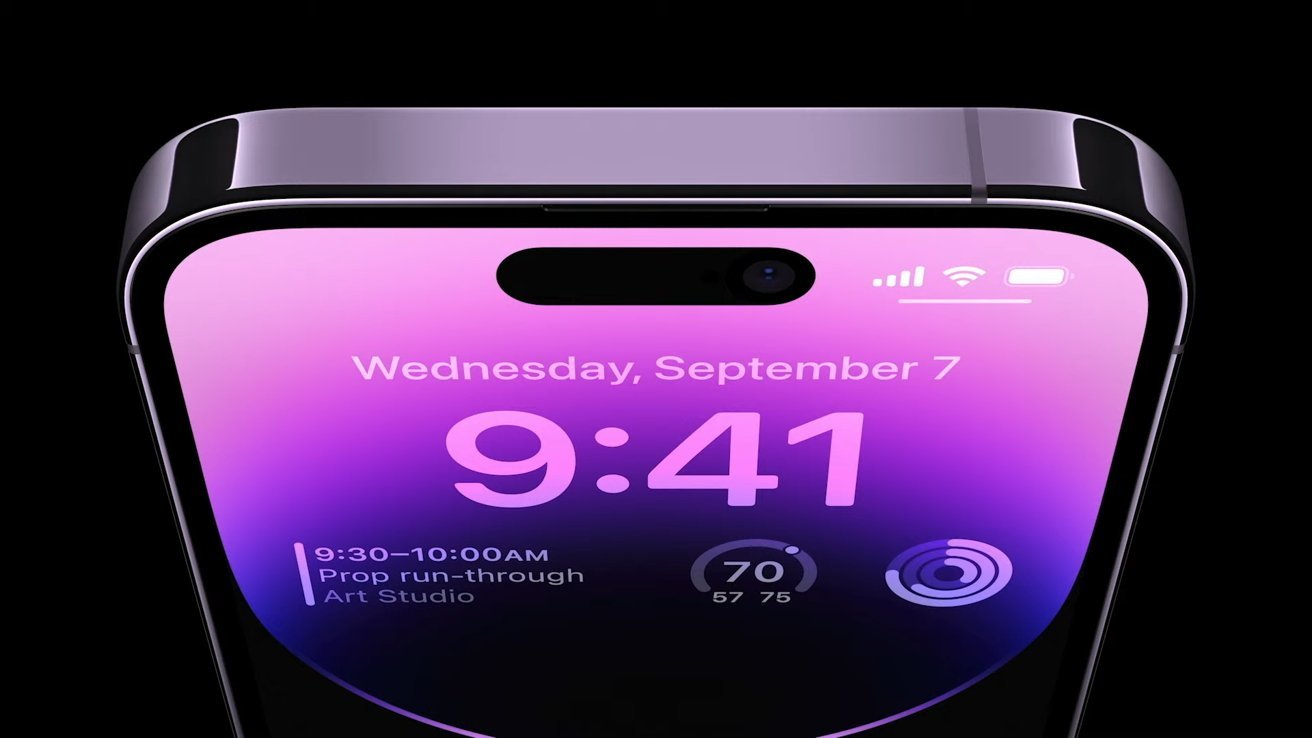
Speculation surrounding the integration of under-screen Face ID technology in iPhones has often hinted at its imminent arrival, yet the latest buzz suggests a postponement to the 2026 iPhone 18 Pro and iPhone 18 Pro Max. Ross Young, from Display Supply Consultants, initially proposed the inclusion of under-screen Face ID with the iPhone 17 Pro lineup, replacing the familiar camera notch with discreet pinhole front-facing cameras.
However, Young has since adjusted his forecast, indicating a one-year delay, placing the debut of under-screen Face ID on the 2026 models. If accurate, this implies that the iPhone 18 Pro series will pioneer the elimination of the notch, ushering in the era of under-screen FaceID. Meanwhile, non-Pro iPhone models may not feature this innovation until the iPhone 19 release in late 2027.
Additionally, Young foresees technical advancements in the iPhone 17 range, notably transitioning from low-temperature polysilicon (LTPS) to low-temperature polycrystalline oxide (LTPO) displays across all models by 2025. This shift, initiated with the iPhone 14 Pro, enables the implementation of an always-on display while conserving battery life.
Young maintains his projection that all variants of the iPhone 17, slated for fall 2025, will adopt LTPO
Why an iPhone Slim is not the answer
A thinner phone means a thinner screen, and that creates design issues. One of the major benefits of bigger phones is that they allow for bigger screens, leading to an improved user experience overall. I know this is the case because I tested eleven different apps on a Galaxy Z Fold 5 and the iPhone 14 Pro Max to see which was better; as you would expect the foldable phone with its extended screen often proved to be the better device.
However, foldable phones have the advantage of being… well, foldable. The increased size is countered by the ability to fold the phone into a more transportable mode — when they don’t break that is. This isn’t an option for normal smartphones so other options have to be tried, but making a phone’s screen thinner isn’t the solution.
The issue with making a phone thinner is that you have sacrificed screen size on one axis while keeping the extended length. This means that using the phone is more complicated, especially for those with issues using their hands who can’t manage the thinner touchscreen keyboard. It also means that you haven’t actually solved the problem as the phone remains difficult to carry.


