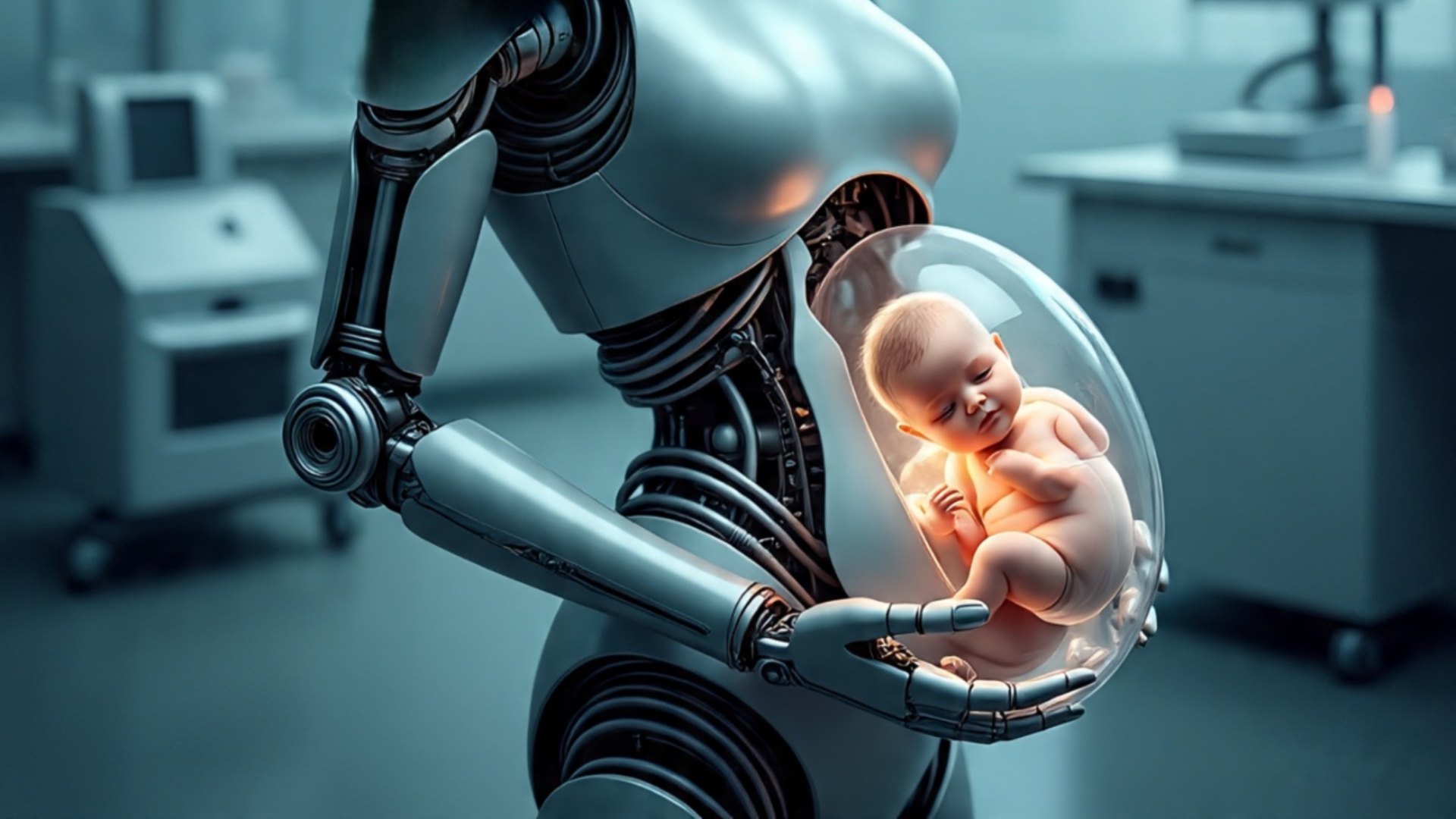
A Chinese startup has revealed a groundbreaking robot with an artificial womb, sending waves through the tech world and sparking intense debate online. Kaiwa Technology, based in Guangzhou, aims to bring the artificial womb inside humanoid robots to life by 2026. The company’s vision includes creating a humanoid robot capable of carrying a human baby for ten months, safely delivering it, and offering a life-changing solution to people dealing with infertility or those who want to avoid pregnancy.
The Robot with an Artificial Womb: A Sci-Fi Dream Come True
At first glance, this concept may seem like something out of a sci-fi movie, but the technology behind it is surprisingly real. Zhang Qifeng, the founder of Kaiwa Technology, revealed the idea at Beijing’s World Robot Conference. His goal is to create a life-sized humanoid robot with a functional artificial womb embedded in its abdomen.
The robot’s artificial womb operates by using synthetic amniotic fluid, which nourishes the developing fetus via a sophisticated tube system mimicking the umbilical cord. This advanced system aims to recreate the environment of a natural womb, providing all the necessary elements like oxygen, nutrients, and a liquid environment for the fetus’s growth.
The Potential of Artificial Wombs
Researchers at the Children’s Hospital of Philadelphia have previously kept premature lambs alive in artificial amniotic fluid back in 2017. These lambs, equivalent to 23-week human pregnancies, actually grew wool during their four weeks in the artificial environment. However, current technology mainly focuses on high-tech incubators to support premature babies.
In contrast, Zhang’s robot aims to take the concept a step further by managing the entire pregnancy process, from fertilization to full-term delivery. This raises several critical questions, particularly around the challenges of fertilization and implantation, two of the most complex processes in human reproduction.
Why China Needs This Technology
While the idea may seem futuristic, China’s demographic crisis makes this technology more relevant than ever. The country’s birth rate has been steadily declining, and infertility rates jumped from 12% in 2007 to 18% in 2020. Major cities like Beijing and Shanghai have already started covering fertility treatments under medical insurance to address these concerns.
Zhang’s robot offers a potential solution to infertility, allowing individuals who want children but dread pregnancy to outsource the process to a robot. The technology could also provide a new option for people facing infertility or those who simply don’t want to undergo a biological pregnancy. Kaiwa Technology is specifically targeting people who wish to have children outside traditional marriage structures, potentially providing an alternative to illegal commercial surrogacy, which remains prohibited in China.
Ethical Concerns and Debate
Naturally, this announcement has sparked intense discussions on social media and ethical issues. Supporters view it as a technological breakthrough, offering relief to women from the physical demands and risks of pregnancy. Some people have even shared personal stories of failed artificial insemination attempts, expressing hope that this technology could finally open a path to parenthood.
However, critics raise concerns about the psychological impact of growing up in a robotic environment with no biological connection to a mother. They question whether removing the biological bond between parent and child represents progress or a dangerous departure from human nature.
Another concern is the societal impact. If pregnancy becomes a purchasable service, will it lead to greater inequality between those who can afford such technological solutions and those who cannot?
Legal and Regulatory Hurdles
In addition to ethical challenges, the legal implications of robotic pregnancy are significant. Currently, Chinese law prohibits developing human embryos in artificial environments beyond two weeks, meaning that Kaiwa Technology would need to push for major legal changes to make this technology viable.
In Guangdong Province, Kaiwa Technology is already working with authorities, proposing policy changes to address these legal challenges. However, international regulations vary, and many countries have strict limits on embryo research and artificial reproduction technologies. The situation is similar in Kenya, where Assisted Reproductive Technology (ART) is not yet fully regulated, leading to a legal grey zone for procedures like IVF and surrogacy.
Conclusion
Kaiwa Technology’s robot with an artificial womb is more than just a technological curiosity—it’s a bold attempt to address fertility issues and the demographic crisis in China. The success of this project would not only revolutionize reproductive technology but could also redefine parenthood and family structures.
However, with the numerous ethical, psychological, and legal challenges, it remains to be seen whether this futuristic concept will become a reality. Kaiwa Technology has certainly raised a critical question: What does the future of human reproduction look like in a world where technology can entirely separate pregnancy from the human body?