The Burundian Franc BIF is the official currency of Burundi, used for all domestic transactions and financial operations. Issued and regulated by the Banque de la Republique du Burundi, the Burundian Franc BIF is represented by the symbol FBu and serves as the primary medium of exchange in the country. The BIF to USD exchange rate is closely monitored, reflecting the currency’s interaction with global markets.
The Burundian Franc BIF plays a central role in an economy largely driven by agriculture and small-scale trade. As Burundi continues to navigate economic challenges, the stability and management of its national currency remain critical to daily commerce and public finance.
Burundian Franc BIF Structure and Denominations
The Burundian Franc BIF is subdivided into 100 centimes, although smaller units are rarely used in everyday transactions. Inflation and pricing practices have reduced the practical use of centimes, with most transactions conducted in whole francs.
Coins in circulation commonly include Franc1 and Franc5. However, coins are used less frequently compared to banknotes, particularly in urban areas.
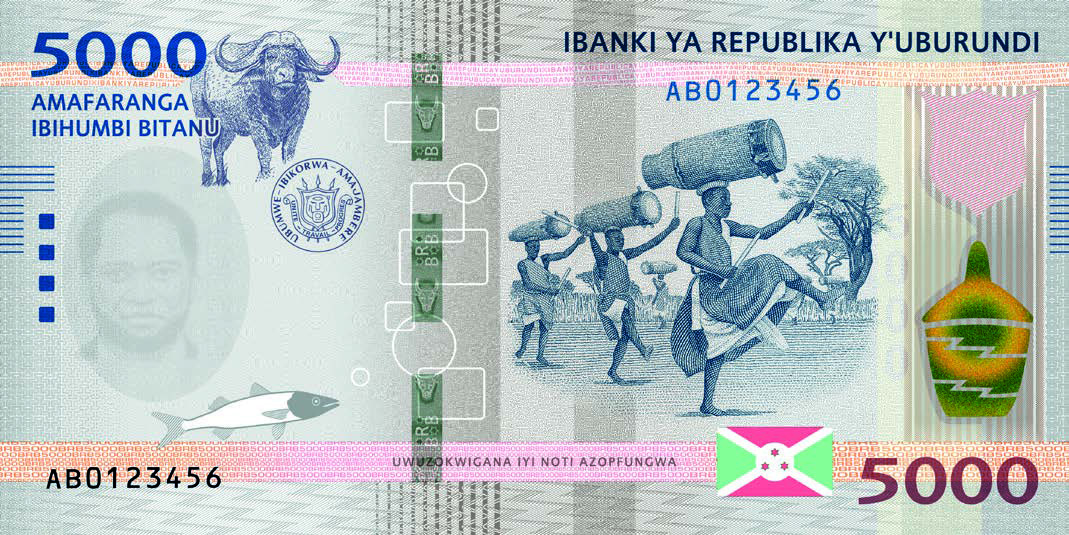
Banknotes form the backbone of the Burundian Franc BIF system. Frequently used denominations include Franc10, Franc20, Franc50, Franc100, Franc500, Franc1,000, Franc2,000, Franc5,000, and Franc10,000. These notes are widely used across the economy for both small and large transactions.
The design of Burundian currency reflects national identity, featuring cultural and historical elements significant to the country.
Burundian Franc BIF in Daily Transactions
The Burundian Franc BIF is used across all sectors of the economy, including retail, agriculture, services, and government operations. Prices for goods and services are typically quoted in francs, making it the primary unit of account.
However, foreign currencies, particularly the United States Dollar, are used in certain contexts such as international trade and large transactions. This reflects the need for stable currencies in cross-border economic activities.
Despite this, the Burundian Franc BIF remains dominant in everyday transactions, especially in local markets and rural areas.
Monetary Authority and Policy Framework
The Banque de la Republique du Burundi is responsible for issuing and managing the Burundian Franc BIF. Its mandate includes maintaining price stability, regulating financial institutions, and supporting economic development.
The central bank operates within a managed exchange rate environment. While the Burundian Franc BIF can fluctuate based on market conditions, authorities may intervene to stabilize the currency when necessary.
Monetary policy is influenced by inflation, foreign exchange reserves, and external economic conditions.
Burundian Franc BIF Exchange Rates and Market Dynamics
The Burundian Franc BIF is traded in foreign exchange markets, with the BIF to USD rate serving as a key indicator of its performance. Exchange rate movements are influenced by factors such as export revenues, import demand, and foreign aid flows.
Burundi’s economy relies significantly on agriculture, particularly exports such as coffee and tea. Fluctuations in global commodity prices can affect foreign exchange earnings and influence the value of the Burundian Franc BIF.
Additionally, external financial assistance plays a role in supporting the country’s foreign exchange reserves.
Economic Context and Challenges
Burundi faces several economic challenges, including limited industrial development, infrastructure constraints, and reliance on agriculture. These factors can impact currency stability and economic growth.
Cash-based transactions dominate the economy, with limited access to digital banking services. Expanding financial inclusion and improving banking infrastructure remain key priorities.
Inflation and exchange rate pressures can affect purchasing power and economic stability, making effective monetary management essential.
Regional and Global Perspective
Within East Africa, the Burundian Franc BIF interacts with currencies from neighboring countries through trade and cross-border transactions. Regional economic integration efforts may influence currency demand and exchange rate trends.
Globally, the Burundian Franc BIF is considered a minor currency. It is not widely used outside Burundi and is not held as a reserve currency. However, it remains important for understanding the country’s economic conditions.
Outlook for Burundian Franc BIF
The future of the Burundian Franc BIF will depend on economic reforms, agricultural performance, and improvements in financial infrastructure. Strengthening institutions and maintaining macroeconomic stability will be critical for sustaining confidence in the currency.
External factors, including global commodity prices and international financial support, will also influence the currency’s trajectory.
In conclusion, the Burundian Franc BIF is a vital component of Burundi’s financial system. It supports everyday transactions, reflects the country’s economic structure, and connects Burundi to regional and global markets. As the economy evolves, the franc will remain central to its monetary framework.