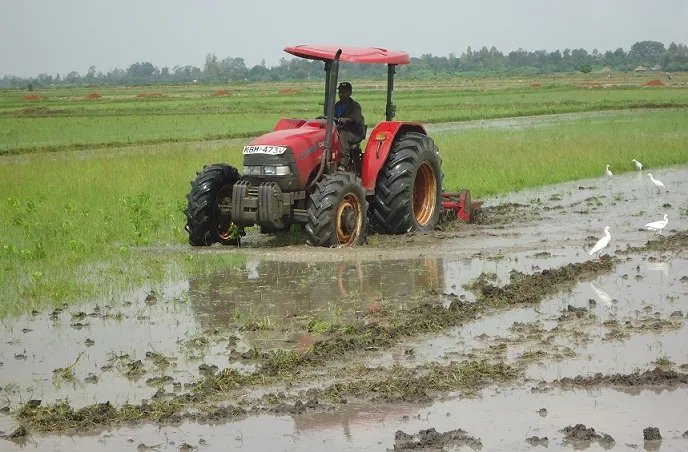
The Bunyala Rice Scheme is a prominent irrigation project located in Bunyala, Busia County, approximately 14 km east of Port Victoria and just 2 km from the border with Siaya County. If coming from Sio Port, the scheme is about 21 km southeast. Established in 1959 under the management of the National Irrigation Board, the scheme originally began with 534 acres of land devoted to paddy rice cultivation. The vision behind this large-scale irrigation project was to take advantage of the fertile soils and abundant water resources from the Nzoia River to cultivate rice, one of Kenya’s staple crops.
The irrigation system relies on water from the Nzoia River, which is pumped and channeled through open earth channels to the rice fields. The area features an intricate network of canals, dykes, and water diversion structures designed to distribute water efficiently across the rice paddies. The irrigation system allows for water to be diverted during the rainy season and stored in reservoirs, ensuring a steady supply throughout the dry months.
In 2007, the demand for increased rice production led to the installation of two additional pumps, raising the total area under irrigation from 534 acres to 1,880 acres. This expansion helped boost rice production, ensuring the scheme’s continued success and relevance in meeting Kenya’s growing rice demand. Although rice is the primary crop cultivated, maize, beans, and vegetables are also grown as part of crop rotation practices.
The Bunyala Rice Scheme is vital to the local economy, providing direct employment to farmers, laborers, and others involved in the rice cultivation and processing stages. It also contributes significantly to food security in the region, ensuring a steady supply of rice for local consumption and regional trade.
Despite being more of an agricultural hub than a tourism hotspot, the Bunyala Rice Scheme offers stunning scenery. The fields change through different phases of the growing season—from the vegetative and reproductive stages to the ripening of rice—each with its own unique beauty. Surrounded by conical hills, the rice paddies present a captivating view that represents a perfect harmony between nature and human ingenuity.
Looking ahead, the Bunyala Rice Scheme has the potential for further expansion, which could lead to increased rice production and enhanced livelihoods for the local population. However, this expansion requires significant investment and innovation to address the challenges the scheme faces, such as fluctuating water levels, soil management, and market access for farmers.