


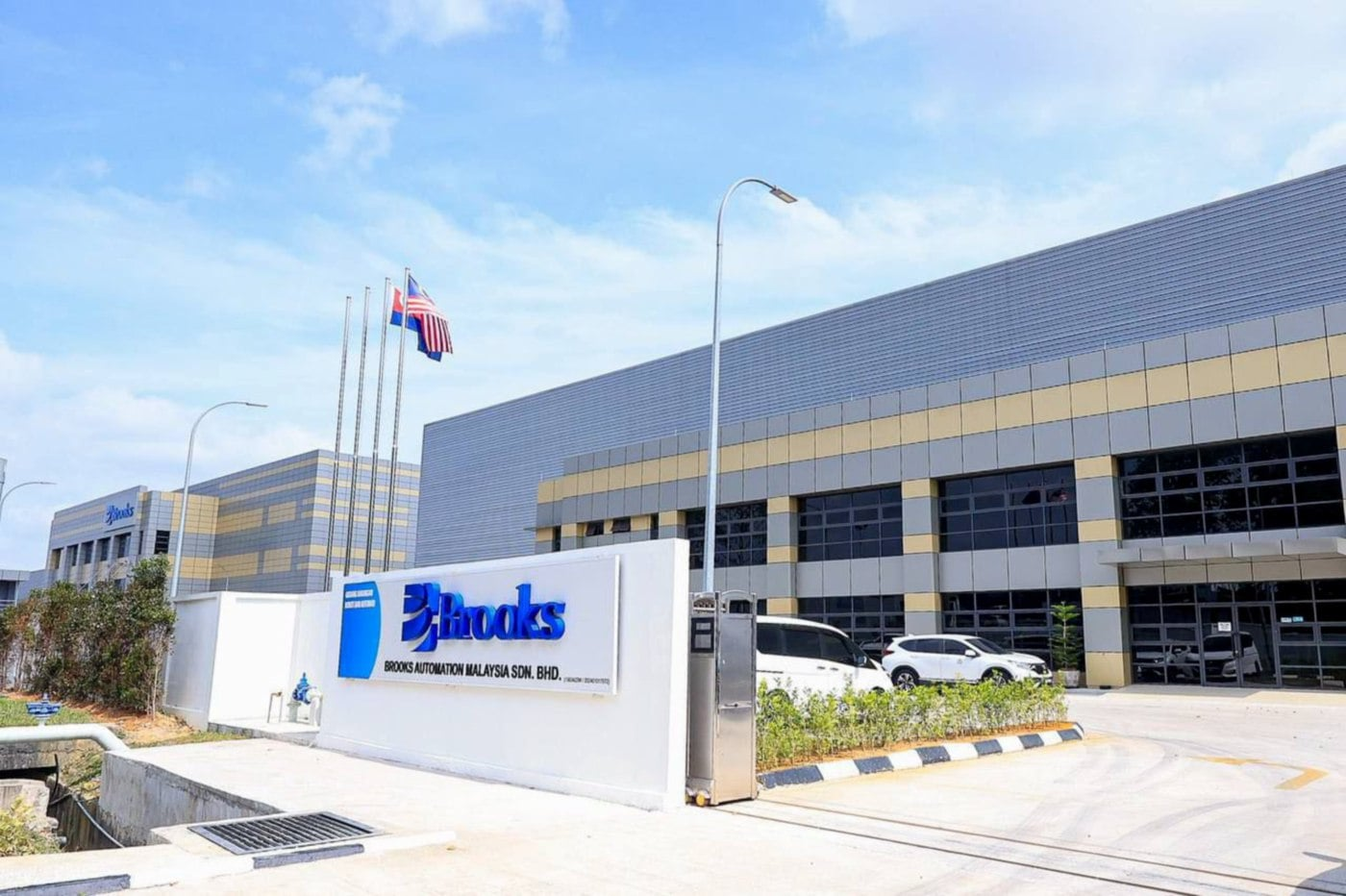
Brooks Automation Acquisitions show how a company rooted in semiconductor manufacturing automation used deal-making to expand across wafer handling, vacuum technology, precision control systems, industrial automation, life sciences, biological sample management, and genomics services.
Between 1996 and 2018, Brooks Automation made 17 acquisitions with a total disclosed deal value of about $1.4 billion. The average disclosed deal size was approximately $84.2 million, which reflects a strategy built mostly on targeted technology acquisitions rather than constant megadeals.
The company’s M&A activity focused primarily on semiconductor assets, with 11 deals. Manufacturing followed with 7 deals, while industrial automation accounted for 4 deals. Biotechnology appeared in 3 deals, and life science appeared in 2 deals. That category mix tells an important story: Brooks Automation began as a highly specialized semiconductor automation company, then gradually expanded into life sciences and biotechnology infrastructure.
The most recent listed acquisition was GENEWIZ, acquired in September 2018 for $450.0 million. GENEWIZ was a global genomics services company, and the deal became the clearest signal of Brooks Automation’s broader move beyond semiconductor manufacturing tools into life science services.
What Is Brooks Automation?
Brooks Automation provides automation, vacuum, and instrumentation solutions to the worldwide semiconductor manufacturing industry. Its traditional business has been closely tied to chip factories, wafer handling, reticle management, process control, vacuum systems, and precision automation.
In semiconductor manufacturing, automation is not optional. Chip production requires clean environments, precise movement, accurate inspection, reliable control systems, and sophisticated handling equipment. A small error can affect yield, quality, and production efficiency.
That is why Brooks Automation’s acquisition history is heavily concentrated in semiconductor automation and manufacturing. Many of its earlier deals added specific capabilities such as equipment control software, reticle automation systems, wafer carrier identification, vacuum technology, and high-precision handling systems.
Over time, however, the company also expanded into life sciences. This shift made strategic sense because life science sample management and semiconductor automation share some operating themes: precision handling, controlled environments, storage systems, automation, tracking, and high reliability.
Why Brooks Automation Acquisitions Matter
Brooks Automation Acquisitions matter because they show how a specialized industrial technology company can use M&A to deepen its core capabilities and then move into adjacent markets.
The company’s acquisition record highlights three major strategic phases.
First, Brooks Automation acquired technologies that strengthened its semiconductor automation business. Early deals such as Techware Systems, Irvine Optical, SEMY Engineering, CCS Technology, Progressive Technologies, Tec-Sem, Automation Systems Group, Intelligent Automation Systems, and HERMOS Informatik all supported semiconductor equipment, control, wafer handling, reticle systems, or automation.
Second, the company expanded its semiconductor manufacturing infrastructure with larger and more technical assets. Helix Technology, acquired for $454.0 million in 2005, added vacuum technology used in semiconductor manufacturing. Crossing Automation, acquired for $63.0 million in 2012, added systems for handling large silicon wafers inside chip factories.
Third, Brooks Automation moved into life sciences and biotechnology. Nexus Biosystems, Matrical, FluidX, BioStorage Technologies, and GENEWIZ all show this shift. These acquisitions helped the company build exposure to sample preparation, biological sample management, storage products, biostorage services, and genomics.
The result is a case study in adjacent-market expansion. Brooks Automation did not move randomly from chips into life sciences. It acquired businesses where automation, sample handling, precision systems, and controlled processes could create strategic overlap.
Full List of Brooks Automation Acquisitions
The following table summarizes Brooks Automation’s listed acquisitions, including announced date, price, main category, and strategic value.
| Acquiree | Announced Date | Price | Main Category | Strategic Value |
|---|---|---|---|---|
| GENEWIZ | Sep 26, 2018 | $450.0M | Biotechnology | Added global genomics services capabilities and expanded Brooks Automation’s life sciences platform. |
| Biostorage Technologies | Nov 5, 2015 | $127.0M | Biotechnology | Added comprehensive sample management solutions for the bioscience industry. |
| FluidX Ltd. | Oct 1, 2014 | $16.0M | Life Science | Added biological sample storage tubes and complementary bench-top instruments. |
| Dynamic Micro Systems Semiconductor Equipment | Apr 29, 2014 | $31.0M | Semiconductor | Added automated cleaner and stocker products for wafer and reticle carrier devices. |
| Matrical | Jul 23, 2013 | $10.0M | Life Science | Added biological sample preparation, management, and storage solutions. |
| Crossing Automation | Oct 30, 2012 | $63.0M | Semiconductor | Added systems for handling and moving large silicon wafers inside chip factories. |
| Nexus Biosystems | Jul 26, 2011 | $79.0M | Biotechnology | Added automation systems and technologies for pharmaceutical and biotechnology applications. |
| Helix Technology Corp. | Aug 1, 2005 | $454.0M | Semiconductor | Added vacuum technology used in semiconductor manufacturing. |
| HERMOS Informatik | Jul 8, 2002 | $41.0M | Semiconductor | Added wafer carrier ID reader technology for the 300mm market. |
| Intelligent Automation Systems | Feb 17, 2002 | $17.9M | Industrial Automation | Added high-end precision automation design and implementation capabilities. |
| Automation Systems Group | Dec 14, 2001 | $11.0M | Semiconductor | Added reticle automation systems manufacturing capability. |
| Tec-Sem AG | Oct 9, 2001 | $20.0M | Manufacturing | Added bare reticle stockers, tool buffers, and batch transfer systems for semiconductors. |
| Progressive Technologies | Jun 28, 2001 | $31.5M | Manufacturing | Added high-precision air flow and pressure control systems. |
| CCS Technology, Inc. | Jun 26, 2001 | $5.4M | Industrial Automation | Added 300 mm automation test and certification software. |
| SEMY Engineering | Feb 19, 2001 | $38.8M | Industrial Automation | Added advanced process and equipment control systems for semiconductor manufacturing. |
| Irvine Optical Co. | May 5, 2000 | $30.0M | Semiconductor | Added inspection, wafer handling, sorting, and control systems. |
| Techware Systems Corp. | Feb 22, 1996 | $6.0M | Semiconductor | Added equipment control solutions for semiconductor and magnetic media industries. |
Brooks Automation Acquisitions Timeline
1996: Equipment Control Through Techware Systems
Brooks Automation’s listed acquisition record begins in 1996 with Techware Systems Corp., acquired for $6.0 million. Techware supplied equipment control solutions for the semiconductor and magnetic media industries.
This deal fits the foundation of Brooks Automation’s business. Semiconductor factories depend on equipment control, process coordination, and reliable automation. By acquiring Techware, Brooks Automation added software and control capabilities that supported its semiconductor manufacturing focus.
2000: Inspection and Wafer Handling With Irvine Optical
In 2000, Brooks Automation acquired Irvine Optical Co. for $30.0 million. Irvine Optical made inspection, wafer handling, sorting, and control systems.
The acquisition strengthened Brooks Automation’s position in the physical movement and inspection of wafers. Wafer handling is central to semiconductor production because chips must move through highly controlled manufacturing steps without contamination or damage.
2001: A Major Year for Semiconductor Automation
The year 2001 was one of the most active periods in Brooks Automation’s acquisition history. The company acquired SEMY Engineering, CCS Technology, Progressive Technologies, Tec-Sem AG, and Automation Systems Group.
SEMY Engineering added advanced process and equipment control systems for semiconductor manufacturing. CCS Technology added 300 mm automation test and certification software. Progressive Technologies added high-precision air flow and pressure control systems. Tec-Sem added bare reticle stockers, tool buffers, and batch transfer systems. Automation Systems Group added reticle automation systems.
Together, these deals show Brooks Automation building a wider semiconductor automation platform. The company was acquiring technologies needed inside advanced chip factories: process control, testing, certification, airflow, pressure control, reticle storage, and automated handling.
2002: Precision Automation and 300mm Market Technology
In 2002, Brooks Automation acquired Intelligent Automation Systems for $17.9 million and HERMOS Informatik for $41.0 million.
Intelligent Automation Systems designed, built, and implemented high-end precision automation solutions. HERMOS Informatik provided wafer carrier ID readers for the 300mm market.
These acquisitions supported a semiconductor industry that was becoming more advanced and more automation-dependent. The 300mm market required specialized identification, tracking, and handling systems. Brooks Automation’s acquisitions helped it serve those needs.
2005: Vacuum Technology Through Helix Technology
The 2005 acquisition of Helix Technology Corp. for $454.0 million was one of the largest listed Brooks Automation acquisitions.
Helix provided vacuum technology used in semiconductor manufacturing. Vacuum systems are critical in many semiconductor processes because chip production often requires highly controlled environments.
This acquisition significantly strengthened Brooks Automation’s technology base. It also showed the company’s willingness to make larger strategic deals when the target supported a core semiconductor manufacturing need.
2011: Entering Life Sciences Automation With Nexus Biosystems
In 2011, Brooks Automation acquired Nexus Biosystems for $79.0 million. Nexus developed and provided technologies and automation systems for pharmaceutical and biotechnology applications.
This deal was strategically important because it marked a clearer expansion into life sciences automation. The company’s experience in precision automation could be applied to biological sample handling, laboratory workflows, and pharmaceutical research environments.
Nexus Biosystems helped bridge Brooks Automation’s semiconductor automation roots with life science applications.
2012: Large Wafer Handling Through Crossing Automation
In 2012, Brooks Automation acquired Crossing Automation for $63.0 million. Crossing Automation designed systems to facilitate the handling and movement of large silicon wafers inside chip factories.
The acquisition strengthened Brooks Automation’s semiconductor manufacturing capabilities, particularly in wafer handling. As chip manufacturing became more complex, reliable wafer movement remained essential to productivity and yield.
2013: Biological Sample Management With Matrical
In 2013, Brooks Automation acquired Matrical for $10.0 million. Matrical provided biological sample preparation, management, and storage solutions.
This deal supported the company’s life sciences expansion. Biological sample management requires precision, traceability, controlled storage, and efficient workflows. Those needs overlap with Brooks Automation’s automation and handling expertise.
2014: Semiconductor Tools and Biological Storage Products
In 2014, Brooks Automation made two listed acquisitions: Dynamic Micro Systems Semiconductor Equipment and FluidX Ltd.
Dynamic Micro Systems Semiconductor Equipment, acquired for $31.0 million, added automated cleaner and stocker products for wafer and reticle carrier devices. FluidX, acquired for $16.0 million, added biological sample storage tubes and bench-top instruments.
The combination of these deals shows Brooks Automation operating in two connected but distinct directions. It continued strengthening semiconductor automation while expanding its life science product base.
2015: Biostorage Technologies and Sample Management Scale
In 2015, Brooks Automation acquired Biostorage Technologies for $127.0 million. BioStorage Technologies provided comprehensive sample management solutions for the bioscience industry.
This was a major step in the company’s life sciences strategy. Biological samples are valuable assets in research, drug development, diagnostics, and clinical studies. Managing those samples requires infrastructure, tracking, storage discipline, and reliability.
The acquisition gave Brooks Automation stronger exposure to outsourced sample management and bioscience services.
2018: GENEWIZ and the Genomics Services Expansion
Brooks Automation acquired GENEWIZ for $450.0 million in 2018. GENEWIZ was a global genomics service company.
This was the most recent listed acquisition and one of the company’s largest. It marked a deeper move into life sciences and genomics, taking Brooks Automation beyond tools and storage into services that support genetic research and biotechnology customers.
The GENEWIZ acquisition completed a visible strategic shift. Brooks Automation was still tied to automation and precision systems, but its growth story increasingly included life sciences, sample management, and genomics services.
Biggest Brooks Automation Acquisitions by Deal Value
The largest Brooks Automation acquisitions show the company’s two major strategic pillars: semiconductor manufacturing technology and life sciences expansion.
| Rank | Acquiree | Announced Date | Price | Strategic Theme |
| 1 | Helix Technology Corp. | Aug 1, 2005 | $454.0M | Vacuum technology for semiconductor manufacturing |
| 2 | GENEWIZ | Sep 26, 2018 | $450.0M | Global genomics services |
| 3 | Biostorage Technologies | Nov 5, 2015 | $127.0M | Bioscience sample management |
| 4 | Nexus Biosystems | Jul 26, 2011 | $79.0M | Life sciences automation |
| 5 | Crossing Automation | Oct 30, 2012 | $63.0M | Large wafer handling systems |
| 6 | HERMOS Informatik | Jul 8, 2002 | $41.0M | Wafer carrier ID readers |
| 7 | SEMY Engineering | Feb 19, 2001 | $38.8M | Semiconductor process and equipment control |
| 8 | Progressive Technologies | Jun 28, 2001 | $31.5M | Air flow and pressure control systems |
| 9 | Dynamic Micro Systems Semiconductor Equipment | Apr 29, 2014 | $31.0M | Wafer and reticle carrier automation |
| 10 | Irvine Optical Co. | May 5, 2000 | $30.0M | Inspection, wafer handling, and sorting systems |
The ranking is revealing. Helix Technology and GENEWIZ were nearly equal in disclosed value, yet they served very different strategic purposes. Helix deepened Brooks Automation’s semiconductor manufacturing capabilities. GENEWIZ expanded the company into genomics services.
Most Common Acquisition Categories
Brooks Automation’s acquisition categories show a company that began with semiconductor depth and later added life sciences capabilities.
| Category | Number of Deals | What It Suggests |
| Semiconductor | 11 | Brooks Automation’s acquisition strategy was primarily built around chip manufacturing automation. |
| Manufacturing | 7 | Several deals added hardware, production, precision equipment, or industrial capability. |
| Industrial Automation | 4 | Automation systems, control software, and factory tools were central to the company’s M&A strategy. |
| Biotechnology | 3 | Later acquisitions expanded the company into bioscience, genomics, and biopharma-related markets. |
| Life Science | 2 | The company added sample preparation, storage, and laboratory workflow capabilities. |
The category mix confirms that Brooks Automation Acquisitions were not random. Most deals either strengthened semiconductor manufacturing automation or supported a deliberate expansion into life sciences.
Strategic Lessons From Brooks Automation Acquisitions
Core Capability Came First
Brooks Automation first used acquisitions to strengthen its semiconductor automation base. The early deals added equipment control, wafer handling, process control, reticle automation, pressure control, and identification technology.
This matters because successful acquisition strategies often begin with depth. Brooks Automation did not immediately move into unrelated markets. It first built strength in its core industry.
Life Sciences Became the Adjacency
The later move into life sciences was not as unrelated as it may appear. Biological sample storage and semiconductor automation both require controlled environments, precision handling, tracking systems, workflow automation, and reliability.
This made life sciences a logical adjacent market. Brooks Automation could apply parts of its automation expertise to laboratories, biobanks, pharmaceutical research, and genomics services.
The Company Used M&A to Add Specialized Technology
Many of the acquisitions were highly specific. CCS Technology added automation test and certification software. HERMOS Informatik added wafer carrier ID readers. FluidX added biological sample storage tubes. Dynamic Micro Systems added automated cleaner and stocker products.
This type of M&A can be powerful because small technologies can fill important gaps in a technical platform.
Larger Deals Marked Strategic Shifts
Helix Technology and GENEWIZ were the two largest listed acquisitions. Each marked a major strategic moment.
Helix strengthened the semiconductor manufacturing platform. GENEWIZ strengthened the life sciences and genomics platform. Together, they show how Brooks Automation used larger deals to define new growth priorities.
How Brooks Automation Acquisitions Fit Its Business Model
Brooks Automation’s traditional business model depended on selling automation, vacuum, and instrumentation solutions to semiconductor manufacturers. In that market, customers need precision, reliability, and integration with complex production environments.
Acquisitions fit this model because semiconductor manufacturing requires many specialized components and systems. A company can strengthen its offering by acquiring technologies that improve wafer handling, reticle management, process control, pressure control, equipment software, and vacuum systems.
The life sciences acquisitions fit a broader version of the same model. Laboratory automation and biological sample management also require precision, tracking, storage, and workflow control. By acquiring companies such as Nexus Biosystems, Matrical, FluidX, Biostorage Technologies, and GENEWIZ, Brooks Automation moved into markets where its operational expertise could be valuable.
This created a dual strategic identity: semiconductor automation on one side and life sciences infrastructure on the other.
Financial and Ownership Context
Brooks Automation made 17 acquisitions from 1996 to 2018, with total disclosed deal value of about $1.4 billion. Its average disclosed deal size was approximately $84.2 million.
Compared with megadeal-driven companies, Brooks Automation’s acquisition record is more targeted. Most deals were relatively modest in size, often below $100 million. That suggests a disciplined approach focused on specific technologies, product gaps, and adjacent growth opportunities.
However, two acquisitions stand out. Helix Technology Corp. was acquired for $454.0 million, while GENEWIZ was acquired for $450.0 million. These two deals were much larger than the rest of the listed transactions and together accounted for a major share of disclosed acquisition value.
The financial pattern shows that Brooks Automation combined small technical acquisitions with occasional platform-level deals. That can be an effective strategy when a company wants to build capabilities gradually while still making larger moves at critical moments.
Competitive Impact of Brooks Automation Acquisitions
Brooks Automation’s acquisitions affected competition in both semiconductor automation and life sciences.
In semiconductor manufacturing, the company added technologies that improved its ability to serve chipmakers. Deals involving wafer handling, reticle stockers, automation software, vacuum technology, and process control strengthened its role in the semiconductor equipment supply chain.
This mattered because semiconductor customers often prefer suppliers that can provide reliable, integrated systems for complex production environments. A broader technology portfolio can make a company more valuable to chip manufacturers.
In life sciences, acquisitions such as Nexus Biosystems, Matrical, FluidX, Biostorage Technologies, and GENEWIZ helped Brooks Automation compete in sample management, laboratory automation, and genomics services.
The competitive impact was also strategic. By moving into life sciences, Brooks Automation reduced its dependence on semiconductor cycles. Semiconductor markets can be cyclical, while life sciences demand may follow different drivers such as research funding, pharmaceutical development, genomics growth, and bioscience infrastructure.
Advantages of the Acquisition Strategy
Stronger Semiconductor Automation Portfolio
Brooks Automation used acquisitions to add wafer handling, reticle systems, process control, automation software, pressure control, and vacuum technology. This strengthened its core semiconductor business.
Expansion Into Life Sciences
The company moved into biological sample management, laboratory automation, bioscience services, and genomics. This created a broader growth platform beyond chip manufacturing.
Targeted Technology Acquisition
Many deals added very specific capabilities. This helped Brooks Automation fill technical gaps without relying only on internal development.
Reduced Dependence on One Market
By expanding into life sciences, Brooks Automation created exposure to markets outside semiconductor manufacturing. This diversification could help reduce reliance on semiconductor industry cycles.
Platform-Building Potential
Acquisitions such as Biostorage Technologies and GENEWIZ gave Brooks Automation stronger platforms in life sciences and genomics services.
Disadvantages of the Acquisition Strategy
Integration Complexity
Brooks Automation acquired companies across semiconductors, industrial automation, biotechnology, and life sciences. Integrating different technical teams, customers, and operating models can be difficult.
Market Cycle Exposure
Even with diversification, the company’s acquisition history remained heavily tied to semiconductor manufacturing. Chip industry cycles can affect demand for automation and equipment.
Strategic Stretch
Moving from semiconductor automation into life sciences created opportunity, but it also required new market knowledge, customer relationships, and operating expertise.
Technology Obsolescence Risk
Semiconductor and life science technologies evolve quickly. Acquired products can lose relevance if industry standards, customer needs, or scientific methods change.
Execution Risk in Services
GENEWIZ and Biostorage Technologies added service-oriented capabilities. Services can require different management skills from equipment and automation businesses.
Case Studies of Major Brooks Automation Acquisitions
Helix Technology Corp.
Helix Technology Corp. was acquired for $454.0 million in 2005. It was the largest listed Brooks Automation acquisition by a narrow margin.
Helix provided vacuum technology used in semiconductor manufacturing. The strategic fit was strong because vacuum systems are essential to many chip production processes.
This acquisition deepened Brooks Automation’s semiconductor manufacturing platform and strengthened its ability to serve chipmakers with critical process-environment technologies.
GENEWIZ
GENEWIZ was acquired for $450.0 million in 2018. It was a leading global genomics service company and the most recent listed Brooks Automation acquisition.
The deal was strategically important because it expanded Brooks Automation into genomics services. That moved the company further into life sciences and biotechnology, beyond sample storage and laboratory automation.
GENEWIZ also showed how Brooks Automation’s acquisition strategy had evolved. The company was no longer only buying semiconductor automation tools. It was building exposure to research services and genomics-driven demand.
Biostorage Technologies
Biostorage Technologies was acquired for $127.0 million in 2015. It provided comprehensive sample management solutions for the bioscience industry.
This acquisition strengthened Brooks Automation’s life sciences platform. Sample management is critical in bioscience because biological materials must be stored, tracked, protected, and retrieved with high reliability.
The deal gave Brooks Automation a stronger position in bioscience infrastructure and outsourced sample services.
Nexus Biosystems
Nexus Biosystems was acquired for $79.0 million in 2011. It developed and provided technologies and automation systems for pharmaceutical and biotechnology applications.
The acquisition helped Brooks Automation move into life science automation. It also created a bridge between the company’s semiconductor automation expertise and laboratory workflow needs.
Crossing Automation
Crossing Automation was acquired for $63.0 million in 2012. It designed systems for handling and moving large silicon wafers inside chip factories.
This acquisition strengthened Brooks Automation’s core semiconductor business. Wafer handling remains one of the most important functions inside advanced chip manufacturing, and the deal added relevant automation capabilities.
Common Mistakes When Analyzing Brooks Automation Acquisitions
One common mistake is treating Brooks Automation’s acquisition history as only a semiconductor story. Semiconductor deals dominate the record, but the company’s later life sciences acquisitions were strategically important.
Another mistake is focusing only on deal size. Some smaller acquisitions, such as CCS Technology, Matrical, FluidX, and HERMOS Informatik, added specific capabilities that supported broader strategic goals.
A third mistake is assuming that life sciences was a random diversification move. In reality, sample management and laboratory automation share several technical characteristics with semiconductor automation, including precision handling, tracking, storage, and controlled workflows.
Another mistake is overlooking cyclicality. Semiconductor equipment demand can rise and fall with chip industry investment cycles. This affects how analysts should view the company’s core acquisition strategy.
Analysts should also avoid assuming that every acquisition immediately creates value. Integration, customer adoption, technology relevance, and operating execution all determine whether a deal works.
Lessons for Business Owners and Investors
Brooks Automation’s acquisition history offers several useful lessons.
The first lesson is that small acquisitions can matter when they add precise capabilities. Not every important deal needs to be a billion-dollar transaction.
The second lesson is that adjacent-market expansion works best when there is a real capability overlap. Brooks Automation’s move into life sciences made sense because sample management and automation had technical links to its core business.
The third lesson is that timing matters. The company built semiconductor depth first, then expanded into life sciences after developing automation expertise.
The fourth lesson is that platform deals can define a strategic shift. Helix Technology strengthened semiconductor manufacturing, while GENEWIZ expanded genomics services.
The fifth lesson is that diversification does not remove execution risk. Moving into a new market requires customer understanding, operational discipline, and integration skill.
Key Takeaways
- Brooks Automation made 17 acquisitions between 1996 and 2018.
- Total disclosed deal value across Brooks Automation Acquisitions is about $1.4 billion.
- The average disclosed acquisition size is approximately $84.2 million.
- Semiconductor was the most common category, with 11 deals.
- Manufacturing accounted for 7 deals.
- Industrial automation accounted for 4 deals.
- Biotechnology appeared in 3 deals, while life science appeared in 2 deals.
- The largest listed acquisition was Helix Technology Corp. at $454.0 million.
- GENEWIZ was nearly as large at $450.0 million and marked a major expansion into genomics services.
- Brooks Automation used M&A to strengthen wafer handling, vacuum technology, control systems, and sample management.
- The company’s acquisition strategy evolved from semiconductor automation to life sciences infrastructure.
- Key risks included integration complexity, semiconductor cyclicality, technology obsolescence, and strategic stretch.
Frequently Asked Questions
What are Brooks Automation Acquisitions?
Brooks Automation Acquisitions are companies acquired by Brooks Automation to expand its semiconductor automation, industrial automation, manufacturing, biotechnology, life sciences, and genomics capabilities.
How many acquisitions has Brooks Automation made?
Brooks Automation made 17 listed acquisitions spanning from 1996 to 2018.
What is the total value of Brooks Automation acquisitions?
The total disclosed value of Brooks Automation acquisitions is about $1.4 billion.
What is Brooks Automation’s average acquisition size?
Brooks Automation’s average disclosed acquisition size is approximately $84.2 million.
What was Brooks Automation’s most recent acquisition?
The most recent listed acquisition was GENEWIZ, announced on September 26, 2018, for $450.0 million.
What is Brooks Automation’s biggest acquisition?
The biggest listed acquisition was Helix Technology Corp., acquired in 2005 for $454.0 million.
Why did Brooks Automation acquire GENEWIZ?
Brooks Automation acquired GENEWIZ to expand into global genomics services and strengthen its life sciences platform.
Which sectors did Brooks Automation acquire most often?
The company acquired most often in semiconductors, manufacturing, industrial automation, biotechnology, and life sciences.
Are Brooks Automation acquisitions mainly semiconductor deals?
Yes. Semiconductor deals account for 11 of the 17 listed acquisitions, making semiconductors the most frequent acquisition category.
Why did Brooks Automation move into life sciences?
Brooks Automation moved into life sciences because sample management, laboratory automation, and genomics services share some technical overlap with precision automation, controlled storage, and workflow management.
What are the main risks of Brooks Automation’s acquisition strategy?
The main risks include integration challenges, semiconductor market cycles, technology obsolescence, strategic stretch, and execution risk in service-based life sciences businesses.
Do Brooks Automation acquisitions guarantee business growth?
No. Acquisitions can support growth, but success depends on integration, customer demand, technology relevance, market timing, and operating execution.
Conclusion
Brooks Automation Acquisitions show how a specialized automation company used M&A to build depth in semiconductor manufacturing and later expand into life sciences, sample management, and genomics services.
The company made 17 acquisitions from 1996 to 2018, with total disclosed deal value of about $1.4 billion and an average disclosed deal size of approximately $84.2 million. Most of its transactions were targeted technology deals, but two larger acquisitions shaped the company’s strategic direction: Helix Technology Corp. at $454.0 million and GENEWIZ at $450.0 million.
The acquisition record shows a clear evolution. Brooks Automation first strengthened its core semiconductor automation platform through equipment control, wafer handling, reticle systems, process control, pressure control, and vacuum technology. It later expanded into life sciences through Nexus Biosystems, Matrical, FluidX, Biostorage Technologies, and GENEWIZ.
For business owners, investors, and technology analysts, Brooks Automation offers a valuable case study in adjacent-market expansion. The company’s M&A strategy shows how technical capabilities developed in one industry can create opportunities in another, especially when precision, automation, tracking, and controlled environments matter.
Brooks Automation Acquisitions therefore represent more than a list of completed deals. They show how focused M&A can help a company deepen its core business, enter adjacent markets, and reposition itself for new sources of long-term demand.
Disclaimer: This article is for informational and educational purposes only. It is not investment advice, financial advice, or a recommendation to buy or sell any security. Always conduct your own research and consider speaking with a qualified financial adviser before making investment decisions.
Read Also: Brookfield Asset Management Acquisitions: How Brookfield Built Its Business Through M&A


