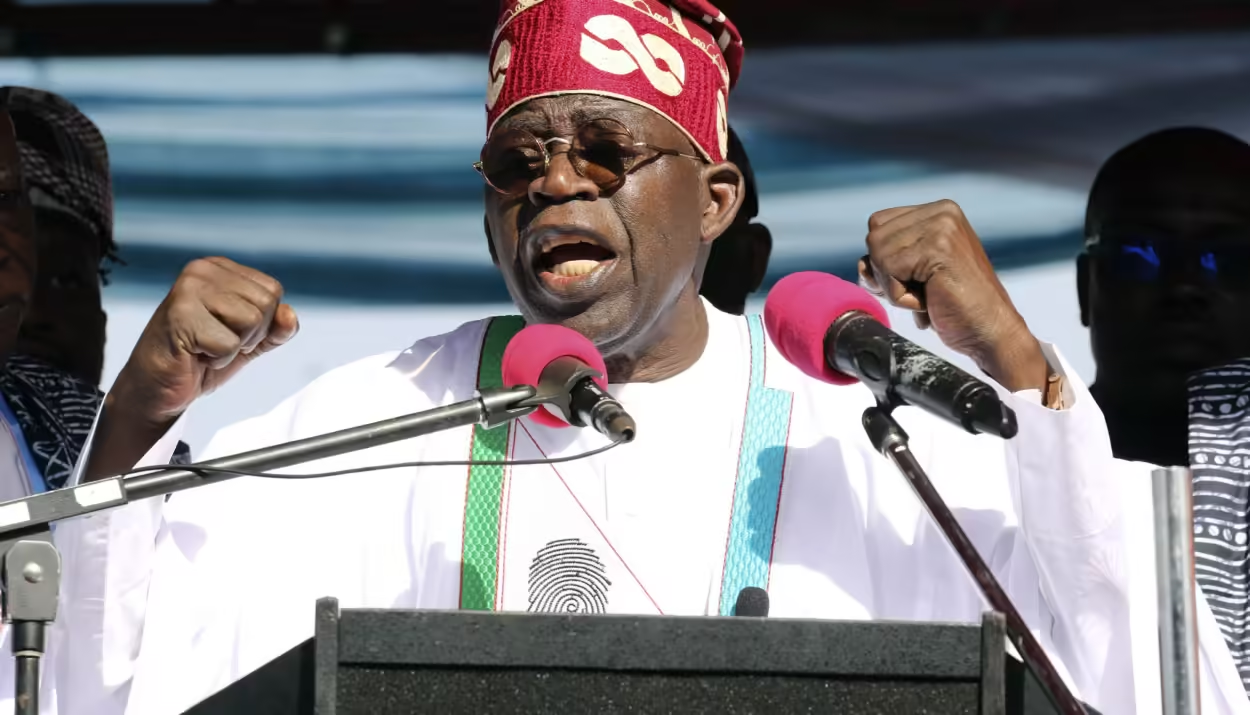
Bola Ahmed Tinubu is a name that has loomed large in Nigeria’s political landscape for decades. A master strategist, dealmaker, and influential power broker, Tinubu spent years shaping Nigeria’s democracy from behind the scenes before stepping into the limelight as the nation’s leader. His rise to power was not just a personal victory but the culmination of a political career built on alliances, resilience, and an uncanny ability to outmaneuver rivals.
From his humble beginnings in Lagos to becoming one of Nigeria’s wealthiest and most influential politicians, Tinubu’s journey to the presidency in 2023 was anything but smooth. He has been hailed as a reformer who transformed Lagos into Africa’s leading economic hub, yet he is also criticized for building a patronage network that kept him at the center of Nigeria’s power dynamics.
Now, as president, the former Lagos governor and self-styled political godfather faces the ultimate test—turning power into policy. His ability to deliver on his promises will determine whether he is remembered as a transformative leader or a master political operator who failed to deliver real change.
From Chicago to Lagos Politics: The Early Years
Born on March 29, 1952, in Lagos, Nigeria, Bola Ahmed Tinubu’s journey to political dominance began with a modest upbringing. In the 1970s, he moved to the United States, where he studied accounting at Chicago State University. While in the U.S., Tinubu worked various jobs—including as a security guard and taxi driver—to support himself through school.
Building a Career in Finance
After graduating in 1979, Tinubu worked for several major American companies, including:
- Deloitte & Touche
- GTE Services Corporation
- Arthur Andersen
During this time, he gained valuable experience in financial management, taxation, and corporate strategy—skills that would later influence his approach to governance.
In the 1980s, he returned to Nigeria and joined Mobil Oil Nigeria, where he rose to become the company’s treasurer. His role at Mobil deepened his understanding of Nigeria’s oil economy and financial sector, but politics remained his true passion.
Bola Tinubu’s Foray Into Politics
Tinubu’s first major political breakthrough came in 1992, when he was elected Senator for Lagos West under the short-lived Third Republic. In the Senate, he became a vocal advocate for economic reforms and governance transparency.
However, his time in office was cut short when General Sani Abacha seized power in 1993. Tinubu joined the National Democratic Coalition (NADECO), an opposition group that fought to restore democracy in Nigeria. His activism made him a target of the military regime, forcing him into exile in the U.S..
While in exile, Tinubu continued his pro-democracy advocacy, lobbying the international community to pressure the Nigerian junta. Following Abacha’s death in 1998, Nigeria transitioned back to civilian rule, and Tinubu returned home to contest the 1999 gubernatorial elections in Lagos State.
Transforming Lagos: Governor Tinubu’s Legacy
Elected Governor of Lagos State in 1999, Tinubu inherited a city plagued by poor infrastructure, crime, and financial mismanagement. Over the next eight years (1999–2007), he revamped the Lagos economy, implementing far-reaching reforms that made the state financially independent.
Key Achievements as Lagos Governor
- Public-Private Partnerships (PPP): Used private sector funding to develop infrastructure, reducing reliance on federal allocations.
- Tax Reforms: Increased internally generated revenue (IGR), making Lagos one of Nigeria’s wealthiest states.
- Bus Rapid Transit (BRT) System: Eased congestion in Lagos by introducing a modern transportation system.
- Security Improvements: Strengthened law enforcement to combat crime and improve public safety.
- Waste Management Overhaul: Established the Lagos State Waste Management Authority (LAWMA), improving sanitation across the state.
His reforms laid the foundation for Lagos’ emergence as Africa’s leading economic hub, but his dominance over Lagos politics did not end when he left office.
The Kingmaker: Tinubu’s National Political Influence
After leaving office in 2007, Tinubu focused on expanding his political network, handpicking successors and maintaining control over Lagos politics. He played a pivotal role in uniting Nigeria’s opposition, leading to the formation of the All Progressives Congress (APC) in 2013.
Tinubu’s Role in the 2015 Presidential Election
- Formed APC, merging opposition parties to challenge the ruling People’s Democratic Party (PDP).
- Backed Muhammadu Buhari, helping him win the presidency—the first time in Nigeria’s history that an incumbent was defeated.
- Strengthened APC’s dominance, ensuring the party’s control over Lagos and other key states.
For years, Tinubu wielded immense behind-the-scenes influence, shaping policy and deciding who got top government appointments. But as Buhari’s tenure neared its end, Tinubu’s long-held presidential ambitions became clear.
The Road to the Presidency: Nigeria’s Most Controversial Election
In 2022, Tinubu declared his intention to run for president, famously stating, “It’s my turn.” His campaign was a masterclass in political strategy, securing the APC nomination by outmaneuvering younger and more dynamic opponents.
The 2023 Election
- Faced Atiku Abubakar (PDP) and Peter Obi (Labour Party) in Nigeria’s most competitive election.
- Deployed grassroots political networks and financial resources to consolidate support.
- Election marred by allegations of vote rigging, voter suppression, and technical failures.
- Opposition challenged the results, but Nigeria’s electoral body (INEC) declared Tinubu the winner.
His victory cemented his status as Nigeria’s most formidable political strategist, but it also deepened divisions in the country.
The Wealth Question: How Rich is Bola Tinubu?
Tinubu’s fortune remains one of Nigeria’s great mysteries. He has never publicly disclosed his net worth, but he is widely regarded as one of Nigeria’s wealthiest politicians.
Sources of His Wealth
- Real Estate: Believed to own extensive properties across Lagos.
- Media: Controls The Nation, a pro-APC newspaper.
- Hospitality: Linked to high-end properties like Oriental Hotel.
- Consulting Firms: Allegedly connected to Alpha Beta Consulting, which collects taxes for Lagos State.
Controversies
- 1993 U.S. Drug Case: U.S. authorities seized $460,000 from Tinubu’s bank accounts over suspected drug-related transactions. While no criminal conviction occurred, the case remains a stain on his reputation.
- Alpha Beta Allegations: Critics argue that Alpha Beta Consulting has funneled billions of naira into private hands through Lagos tax collection.
Despite these controversies, Tinubu has never been formally convicted of corruption, a point often cited by his defenders.
A Rocky Presidency: Challenges in Office
Since taking office, Tinubu’s presidency has been marked by tough economic decisions and rising discontent.
Major Policy Decisions
- Fuel Subsidy Removal: Led to soaring fuel prices and nationwide protests.
- Floating the Naira: Caused currency devaluation and inflation.
- Security Crisis: Struggles with rising kidnappings, insurgencies, and economic hardship.
Critics accuse him of favoring loyalists over competence, while supporters argue he needs more time to deliver results.
Bola Tinubu’s Legacy: Reformist or Political Opportunist?
Whether Tinubu is remembered as a transformative leader or a kingmaker who failed to deliver depends on how his presidency unfolds. His track record in Lagos suggests he can drive reforms, but national governance is far more complex.
Key Questions for His Presidency
- Can he stabilize Nigeria’s struggling economy?
- Will he reduce corruption and improve governance?
- Can he unite a deeply divided country?
For now, Bola Tinubu’s presidency remains a work in progress. Whether he rises to the challenge or succumbs to the pressures of power will determine his place in Nigeria’s history.