
Investing in MMF Funds in Kenya has become one of the fastest-growing wealth-building strategies among retail investors, salaried professionals, entrepreneurs, SACCO members, and even institutional investors. As inflation pressures household finances and traditional savings accounts continue offering relatively low returns, more Kenyans are turning to Money Market Funds (MMFs) for stable income, liquidity, and professional portfolio management.
Money Market Funds (MMFs) in Kenya are pooled investment schemes licensed by the Capital Markets Authority (CMA) that invest in low-risk, highly liquid, short-term debt instruments like Treasury bills and fixed deposits. They are highly popular for wealth preservation, building emergency funds, and earning competitive daily yields.
The rise of digital investing platforms, M-Pesa integration, fintech innovation, and increasing financial literacy has transformed MMFs from niche investment products into mainstream financial tools. Today, investors can start building wealth with as little as KES 100 while accessing professionally managed portfolios backed by Treasury Bills, government securities, commercial paper, and short-term deposits.
According to industry trends and public market disclosures, Kenya’s Money Market Fund sector continues expanding rapidly as investors prioritize:
- Capital preservation
- Stable returns
- Liquidity flexibility
- Lower risk exposure
- Inflation-conscious investing
This detailed guide explores the best MMF Funds in Kenya for 2026, including detailed comparisons, risk analysis, withdrawal structures, taxation, liquidity, fund manager reputation, and practical investor strategies.
What Are MMF Funds in Kenya?
Money Market Funds are collective investment schemes that pool money from multiple investors and allocate it into low-risk short-term financial instruments such as:
- Treasury Bills
- Fixed deposits
- Commercial paper
- Government securities
- Bank deposits
These instruments are designed to preserve capital while generating relatively stable returns with lower volatility than equities and long-term bonds.
In Kenya, MMFs are regulated by the Capital Markets Authority, which oversees collective investment schemes and licensed fund managers.
Why MMF Funds in Kenya Are Growing Rapidly
Several economic and technological trends continue driving MMF adoption across Kenya.
Inflation and Declining Savings Returns
Traditional bank savings accounts often struggle to keep pace with inflation.
As a result, investors increasingly seek products capable of preserving purchasing power while maintaining liquidity.
Mobile-First Investing
Kenya’s mobile money ecosystem has transformed investing accessibility.
Many MMFs now support:
- M-Pesa deposits
- Digital onboarding
- Mobile account management
- Faster transactions
This has significantly lowered investment barriers.
Greater Financial Literacy
Young professionals and middle-income earners are becoming increasingly aware of:
- Compounding
- Passive income
- Wealth preservation
- Diversification
MMFs are often the first entry point into professional investing.
How MMF Funds in Kenya Work
MMFs pool investor capital into professionally managed portfolios.
Fund managers then invest in short-term low-risk instruments designed to generate predictable income.
Returns are distributed daily, monthly, or reflected in the fund’s unit price depending on the structure.
Understanding Compound Growth in MMFs
Compounding remains one of the most powerful wealth-building tools.
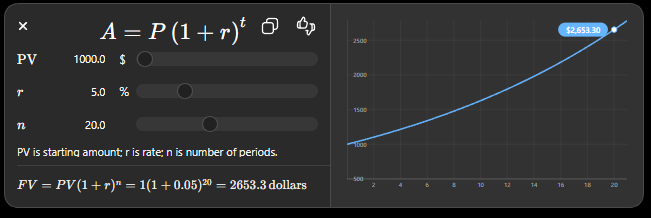
Where:
- A = final amount
- P = principal investment
- r = annual return
- t = time in years
Even relatively modest monthly contributions can grow significantly over time through disciplined reinvestment.
Key Features of MMF Funds in Kenya
| Feature | MMFs |
|---|---|
| Risk Level | Low |
| Liquidity | High |
| Return Potential | Moderate |
| Volatility | Low |
| Professional Management | Yes |
| Accessibility | Very High |
These characteristics make MMFs suitable for conservative investors and beginners.
Best MMF Funds in Kenya for 2026
The Kenyan MMF market has become highly competitive, with numerous CMA-licensed fund managers offering varying yields, liquidity structures, and investment thresholds.
Top MMF Funds by Effective Annual Return
| Fund | EAR | Estimated Net Yield | Minimum Investment |
|---|---|---|---|
| Cytonn Investments MMF | 12.1% | 10.29% | KES 1,000 |
| Lofty Corban MMF | 10.72% | 9.11% | KES 1,000 |
| Etica MMF | 11.23% | 9.55% | KES 100 |
| Avrocap MMF | 10.89% | 9.26% | KES 3,000 |
| Kuza MMF | 10.42% | 8.86% | KES 5,000 |
| Faulu MMF | 10.48% | 8.91% | KES 1,000 |
| Madison MMF | 10.43% | 8.87% | KES 5,000 |
| Nabo Capital MMF | 12.43% | 10.57% | KES 100,000 |
Rates may change depending on market conditions, interest rates, and portfolio allocations.
Detailed Review of Leading MMF Funds in Kenya
Etica Money Market Fund
The Etica MMF stands out because of its:
- KES 100 entry point
- Competitive yield
- T+2 withdrawal structure
- Professional management
The product appeals strongly to beginner investors and disciplined savers.
Cytonn Money Market Fund
The Cytonn MMF remains among the most discussed MMFs due to:
- Strong historical returns
- M-Pesa integration
- Rapid withdrawal capability
- Retail investor accessibility
However, investors should always assess liquidity structures and current market conditions carefully.
Nabo Capital MMF
The Nabo Capital MMF targets higher-net-worth investors with:
- Strong yields
- Institutional-grade portfolio management
- Relatively higher entry thresholds
The KES 100,000 direct investment minimum makes it less accessible for beginners.
MMF Funds in Kenya vs Savings Accounts
| Feature | MMF Funds | Savings Accounts |
|---|---|---|
| Return Potential | Higher | Lower |
| Liquidity | High | Very High |
| Inflation Protection | Better | Weak |
| Professional Management | Yes | No |
| Risk Level | Low | Very Low |
MMFs generally provide stronger wealth preservation than traditional bank savings accounts.
MMF Funds vs Treasury Bills
| Feature | MMFs | Treasury Bills |
|---|---|---|
| Minimum Investment | KES 100–5,000 | KES 100,000 |
| Liquidity | High | Moderate |
| Accessibility | Very High | Moderate |
| Management | Professional | Self-managed |
| Returns | Moderate-High | High |
Treasury Bills may offer stronger yields at times, but MMFs provide greater convenience and flexibility for retail investors.
Why Liquidity Matters in MMFs
Liquidity determines how quickly investors can access funds.
Common Withdrawal Structures
| Fund | Withdrawal Timeline |
|---|---|
| Cytonn MMF | ~3 minutes to M-Pesa under limits |
| Etica MMF | T+2 business days |
| Lofty Corban MMF | 2 business days |
| Kuza MMF | 2–4 business days |
| Madison MMF | T+2 business days |
Investors should always evaluate liquidity needs before investing.
Risks of Investing in MMF Funds in Kenya
Although MMFs are considered low-risk products, they are not risk-free.
Interest Rate Risk
MMF yields fluctuate depending on prevailing market interest rates.
If the Central Bank of Kenya lowers rates significantly, future MMF returns may decline.
Inflation Risk
Inflation can gradually reduce purchasing power.
Even relatively strong MMF returns may become less attractive if inflation rises sharply.
Liquidity Risk
Some funds impose:
- Lock-in periods
- Withdrawal limits
- Processing timelines
Investors should understand these structures before investing.
Fund Management Risk
Although CMA regulation improves oversight, poor management decisions may still affect fund performance.
Understanding MMF Taxation in Kenya
Most MMFs apply:
- 15% withholding tax on interest income
Investors should focus on net yields rather than headline returns.
Why Net Yield Matters
Many investors mistakenly compare only gross annual rates.
However, actual returns depend on:
- Taxes
- Management fees
- Inflation
- Liquidity costs
Net yield provides a more realistic picture of investor earnings.
Who Should Invest in MMF Funds in Kenya?
MMFs may suit:
- Beginner investors
- Conservative savers
- Emergency fund builders
- Salaried employees
- SMEs managing cash reserves
- Passive income seekers
They may not suit aggressive investors seeking rapid capital appreciation.
How Kenyan Investors Are Using MMFs
Many investors now use MMFs for:
- Emergency savings
- Salary parking
- Business liquidity management
- School fees planning
- Short-term wealth accumulation
- Portfolio stabilization
MMFs increasingly serve as foundational financial products within diversified portfolios.
How to Choose the Best MMF Fund in Kenya
Key Factors to Evaluate
1. Effective Annual Return
Higher returns improve wealth accumulation potential.
However, investors should assess sustainability and consistency.
2. Liquidity Structure
Withdrawal timelines matter significantly.
Some funds provide near-instant access while others require several business days.
3. Fund Manager Reputation
Established managers generally improve investor confidence.
4. Minimum Investment
Some MMFs target retail investors while others focus on higher-net-worth clients.
5. Digital Accessibility
Mobile-first investing has become increasingly important in Kenya.
Best Strategy for Beginner Investors
Beginner investors should prioritize:
- Liquidity
- Low fees
- Simplicity
- Consistent saving habits
A disciplined approach often outperforms short-term speculation.
Suggested Beginner MMF Strategy
| Monthly Contribution | Annual Yield | Potential Long-Term Growth |
|---|---|---|
| KES 5,000 | 10% | Significant compounded growth |
| KES 10,000 | 10% | Faster wealth accumulation |
| KES 20,000 | 10% | Strong long-term savings potential |
Consistency matters more than timing for conservative investors.
Why MMFs Matter During Economic Uncertainty
Periods of market volatility often increase demand for conservative investments.
MMFs offer:
- Relative stability
- Liquidity
- Reduced volatility
- Predictable income generation
This makes them particularly attractive during uncertain economic cycles.
The Future of MMF Funds in Kenya
Kenya’s MMF industry is expected to continue expanding because of:
- Digital investing adoption
- Mobile-first finance
- Growing middle-class participation
- Improved financial literacy
- Increased demand for passive income products
The integration of fintech and traditional wealth management is likely to accelerate retail investment participation further.
Final Thoughts on MMF Funds in Kenya
MMF Funds in Kenya continue transforming how retail investors approach savings, liquidity management, and wealth preservation. Their combination of accessibility, professional management, relatively stable returns, and lower risk exposure makes them among the most practical investment products available in Kenya today.
For beginner investors, MMFs offer one of the easiest entry points into professional investing. For conservative investors, they provide stable income generation and liquidity flexibility. For businesses and professionals, they help optimize idle cash while preserving accessibility.
However, investors should remain realistic about risks. MMFs are not guaranteed products. Inflation, interest rate changes, liquidity constraints, and management quality all influence actual returns.
The most successful investors typically combine:
- Disciplined saving
- Long-term planning
- Diversification
- Realistic expectations
- Continuous financial education
As Kenya’s investment ecosystem continues evolving, MMFs are likely to remain foundational products within diversified wealth-building strategies for millions of investors across the country.
Read Also: Kuza MMF Review Kenya