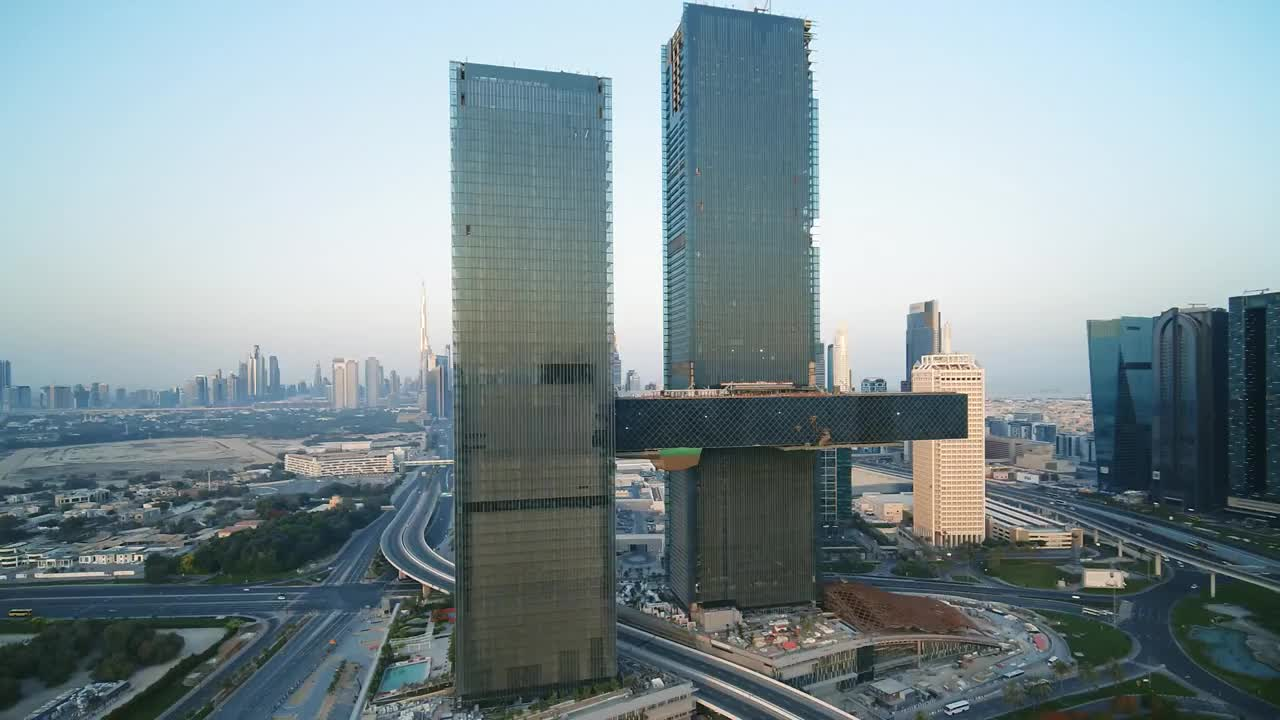
UAE construction companies operate in one of the world’s most demanding development markets, where ambitious architecture, large transport programmes, industrial facilities and fast-growing communities must be delivered under strict technical, safety and regulatory requirements.
The United Arab Emirates has spent decades building the physical foundations of a globally connected economy. Its construction sector has supported the growth of Dubai and Abu Dhabi as commercial centres while also contributing to development in Sharjah, Ajman, Ras Al Khaimah, Fujairah and Umm Al Quwain.
The resulting market is much broader than luxury towers. It includes airports, roads, railways, bridges, residential communities, hospitals, schools, data centres, utility networks, hotels, ports, industrial buildings and environmental infrastructure.
Demand is also changing. Developers and government agencies increasingly expect contractors to demonstrate digital construction capabilities, reliable supply chains, environmental performance, workforce safety and the ability to manage complicated projects involving multiple specialist packages.
Dubai Municipality reported that 23,270 buildings were under construction in the emirate during 2025, covering more than 40 million square metres. The total included private and investment villas, multistorey buildings, public facilities and industrial properties. The figures illustrate both the scale of current activity and the variety of work available to contractors.
This guide identifies several established infrastructure and construction businesses with documented operations or completed projects in the UAE. It is not a strict ranking from first to last. A contractor that is well suited to a major airport, railway or utility scheme may not be the best choice for a residential tower, hotel refurbishment or private development.
The companies have therefore been selected on the basis of publicly documented UAE experience, engineering capabilities, sector coverage and involvement in significant projects.
Leading UAE Construction Companies and Their Strengths
The UAE contracting market includes locally founded groups, regional construction businesses and international engineering companies. Many offer more than basic building services, combining civil engineering, mechanical and electrical work, fit-out, infrastructure, equipment, facilities management or long-term operations.
The following companies represent some of the most established names active in this market.
1. ALEC Engineering and Contracting
ALEC Engineering and Contracting is one of the UAE’s most prominent construction groups, with operations across building construction, mechanical, electrical and plumbing services, fit-out, energy solutions, equipment rental, data-centre construction and technology systems.
The company’s significance comes partly from the breadth of services it can coordinate within one group. This integrated structure can be valuable on technically demanding developments where the main contractor must control multiple specialist packages while maintaining programme, cost and quality standards.
ALEC’s publicly listed project portfolio includes work across airports, hospitality, retail, commercial property, leisure developments and complex mixed-use projects. Its airport experience includes projects at Dubai International Airport and Abu Dhabi’s aviation facilities. The company identifies work associated with airport lounges, terminal refurbishment, aircraft stands, arrival facilities and specialised aviation infrastructure.
The contractor is also associated with major landmark developments in the UAE and wider Middle East. Its positioning is particularly strong where clients require a large main contractor capable of coordinating structural works, building services, interiors and specialist technical systems.
Why ALEC stands out
ALEC is notable for its integrated service model. Construction projects increasingly rely on close coordination between structural engineering, MEP systems, interior completion, digital controls and commissioning. Keeping several of these functions within related businesses may reduce interfaces that would otherwise have to be managed across independent subcontractors.
Its documented experience in aviation and technically complex buildings also gives it relevance as the UAE expands its transport, tourism, commercial and digital infrastructure.
Best suited for
ALEC may be considered for large commercial developments, airports, resorts, shopping destinations, data centres, complex mixed-use projects and developments requiring extensive specialist coordination.
2. ASGC Construction
ASGC is a UAE-based construction group established in 1989. It operates across sectors including residential property, hospitality, commercial buildings, healthcare, education, leisure, social infrastructure and industrial development. The company also reports experience working with private developers and government entities.
Its portfolio includes prominent projects such as the Mohammed bin Rashid Library, Creek Edge and Marsa Al Arab. ASGC states that it received the design-and-build contract for the Marsa Al Arab hotel development, a project near the Burj Al Arab that includes a five-star hotel and serviced apartments.
The group has also carried out infrastructure and enabling works. Its published infrastructure portfolio identifies projects including internal roads in Nad Al Sheba, work connected to the Enterprise Command and Control Centre, Al Gurm Phase 2 and enabling works associated with the Etihad Museum.
ASGC has emphasised vertical integration, construction technology and sustainability as parts of its operating model. In practice, vertical integration can allow a contractor to maintain more direct control over selected materials, specialist operations or supply-chain functions.
Why ASGC stands out
ASGC combines a strong UAE building portfolio with exposure to multiple asset classes. This reduces its dependence on a single segment such as residential towers or hospitality.
Its portfolio also demonstrates experience in projects where architectural quality and public visibility are important. Such assignments require more than structural completion. They can involve specialist façades, complex MEP systems, public-realm works and demanding handover standards.
Best suited for
ASGC may be relevant for hospitality developments, cultural institutions, premium residential projects, commercial buildings, healthcare facilities, educational campuses and selected infrastructure works.
3. Al Naboodah Construction Group
Al Naboodah is one of the UAE’s longest-established family business names. The Saeed & Mohammed Al Naboodah Group was founded in 1958 and developed operations across construction and several other industries.
Al Naboodah Construction Group has participated in a wide variety of projects across the Emirates. Its official materials identify involvement in Palm Jumeirah, Business Bay, Yas Island, the Dubai Water Canal, Dubai International Airport, Dubai World Central, the Museum of the Future and the Expo 2020 site.
The company has historically been particularly visible in civil engineering, roads, infrastructure, utilities and major urban development works.
One of its important operational characteristics is its ability to provide some construction inputs and services internally. The group says it can supply asphalt, concrete, plant, machinery and specialist engineering resources. That structure can improve control over material availability, quality and logistics, although performance will still depend on the requirements and management of each project.
Why Al Naboodah stands out
The company combines local market knowledge with substantial civil construction capacity. Deep familiarity with UAE approval processes, site conditions, suppliers and public-sector requirements can be valuable when delivering large infrastructure packages.
Its self-supply capabilities are also relevant in a market where material shortages or logistics disruptions can affect construction schedules. In February 2026, Dubai Municipality held discussions with ready-mix concrete businesses and contractors after concerns about supply constraints and their possible effect on project delivery.
Best suited for
Al Naboodah may be considered for roads, bridges, airports, utilities, large civil works, urban infrastructure, public projects and major developments requiring extensive plant and materials capacity.
4. Khansaheb Civil Engineering
Khansaheb is a longstanding UAE contractor with activities extending beyond construction into facilities management and related services.
The company is known for building, refurbishment, civil engineering and project-delivery work in Dubai and other parts of the Emirates. Its corporate positioning emphasises reliability, safety, quality and digital construction.
Khansaheb’s importance in the market is connected to its long operating history and its ability to work across both new construction and the upgrading of existing assets. Refurbishment requires a different set of capabilities from greenfield development. Contractors must often operate around occupied spaces, protect existing structures, coordinate phased work and manage unforeseen conditions.
Through Khansaheb Facilities Management, the wider group also provides integrated maintenance and asset-management services. This creates potential continuity between construction, handover and long-term building operations.
Why Khansaheb stands out
Khansaheb offers a combination of local experience, construction capacity and lifecycle services.
A building’s commercial performance depends not only on how it is constructed but also on how efficiently it operates after completion. Contractors with an understanding of facilities management may be better positioned to consider accessibility, maintainability and operational requirements during delivery.
Best suited for
Khansaheb may be suitable for commercial buildings, refurbishment assignments, hospitality projects, institutional facilities, civil engineering works and developments where long-term maintenance is a major consideration.
5. Arabian Construction Company
Arabian Construction Company, commonly known as ACC, is a regional contractor with extensive experience in high-rise, residential, commercial, hospitality and mixed-use development.
The company has built a strong reputation in technically complicated tower construction. High-rise projects demand detailed structural planning, vertical logistics, façade coordination, fire and life-safety systems, high-capacity mechanical services and carefully sequenced work.
ACC’s UAE portfolio includes the Gate Towers development in Abu Dhabi. The project consists of three 64-storey residential towers supporting a skybridge of penthouses, alongside the 22-storey Arc building. ACC describes it as one of the largest mixed-use residential complexes delivered in Abu Dhabi.
The company has also secured work on VELA and VELA Viento, two waterfront residential developments by OMNIYAT at Marasi Bay in Dubai. ACC reported that the two projects together cover a built-up area of 92,237 square metres.
Why ACC stands out
ACC’s clearest strength is its record in major buildings and tall structures. The operational risks of high-rise construction are substantially different from those of low-rise property.
Contractors must manage tower cranes, façade installation, worker movement, material lifting, vertical MEP distribution and testing across dozens of floors. Experience on completed towers provides useful evidence of the organisational systems required for this work.
Best suited for
ACC may be considered for skyscrapers, premium residential towers, mixed-use developments, hotels, large commercial properties and architecturally demanding urban projects.
6. China State Construction Engineering Corporation Middle East
China State Construction Engineering Corporation Middle East, or CSCEC ME, is the regional operation of China State Construction Engineering Corporation.
The company works across both buildings and civil infrastructure. Its UAE portfolio includes roads, housing, hotels, commercial developments, digital infrastructure and drainage projects.
CSCEC ME participated in Package A of Stage Two of the Etihad Rail network and reported completing track-laying works on the package. It has also delivered road projects, including the Expo 2020 Roads Network Contract Two and the Dubai Hills Estate Mall access works.
Its building portfolio includes Dubai Digital Park, formerly known as Silicon Park. The project received its taking-over certificate from the Dubai Silicon Oasis Authority and was designed to meet LEED Gold requirements.
The contractor has also expanded its municipal infrastructure work. In January 2025, it announced two rapid rainwater-drainage projects awarded by Dubai Municipality. The works cover the Saih Al Selem-Al Marmoom area and the intersection of Al Khail Road and Meydan Road.
Why CSCEC Middle East stands out
CSCEC ME has demonstrated the ability to work across transport, municipal infrastructure and large buildings.
That range is increasingly relevant as UAE development shifts towards integrated districts. A new community may require roads, drainage, utility networks, public spaces, residential buildings and commercial facilities to be delivered in coordinated phases.
The company’s involvement in railway and road works also distinguishes it from contractors whose portfolios are concentrated almost entirely in vertical buildings.
Best suited for
CSCEC ME may be considered for transport infrastructure, roads, drainage, large residential developments, government housing, hotels, commercial projects and integrated urban schemes.
7. BESIX Middle East and Six Construct
BESIX has operated in the Middle East since 1965, commonly through Six Construct. The group has experience in building construction, marine engineering, infrastructure, water treatment and environmental projects.
Its regional portfolio has included major UAE developments such as the Emirates Towers complex and Cleveland Clinic Abu Dhabi, alongside infrastructure and environmental works.
One of its most important recent projects is the Dubai waste-to-energy facility. BESIX and Kanadevia Inova were responsible for financing, detailed design, construction and long-term operation and maintenance under a 35-year build-own-operate-transfer arrangement.
According to BESIX, construction began in 2020 and the facility became operational in 2024. It can process approximately 5,500 tonnes of waste per day and supply up to 193 megawatts of electricity to the grid.
The project shows the company’s ability to work on infrastructure that combines civil engineering, industrial systems, energy generation, environmental management and long-term operations.
Why BESIX stands out
BESIX is differentiated by its experience in complex infrastructure and concession-style projects.
Under a conventional construction contract, the contractor primarily builds an asset and hands it over. A long-term arrangement creates additional incentives to consider durability, operating efficiency, lifecycle cost and maintenance performance.
Its marine and environmental capabilities can also be important in a country where waterfront development, desalination, waste management and coastal infrastructure are major parts of the investment pipeline.
Best suited for
BESIX and Six Construct may be relevant for environmental infrastructure, waste-to-energy facilities, marine works, water projects, complex public buildings, healthcare facilities and concession-based developments.
8. Consolidated Contractors Company
Consolidated Contractors Company, or CCC, is one of the Middle East’s largest and most internationally established engineering and construction businesses.
Founded in 1952, CCC says it has completed more than 1,500 projects valued at a combined total exceeding $300 billion. It reports a global workforce of more than 60,000 people. These are group-wide figures rather than UAE-only statistics.
CCC operates across oil and gas, buildings, transport, power, water, wastewater and industrial infrastructure. Its current published UAE project list includes work associated with Oil Processing Train 6 on Zirku Island and technical and non-process buildings for an LNG development in Ruwais.
The company also highlights capabilities in renewable power, conventional energy systems and water infrastructure. Its building division addresses sustainability standards including LEED and WELL certification requirements.
Why CCC stands out
CCC has particular relevance for large industrial and energy-related projects.
These developments involve demanding engineering, procurement, construction and commissioning requirements. They may also require the management of complex international supply chains, specialist equipment, strict safety standards and detailed client specifications.
Its geographical reach and equipment base can support projects that require significant mobilisation and multidisciplinary expertise.
Best suited for
CCC may be considered for energy facilities, industrial developments, water and wastewater systems, large infrastructure packages, technically complex buildings and major engineering, procurement and construction contracts.
Background: Why This Story Matters
Construction has played a central role in the UAE’s transformation from a collection of relatively small coastal economies into an international centre for trade, tourism, aviation, finance, property, manufacturing and logistics.
Dubai’s growth required airports, highways, ports, hotels, offices, housing and public services. Abu Dhabi’s expansion created demand for government facilities, residential districts, cultural institutions, healthcare infrastructure, energy projects and industrial developments.
The northern Emirates have also attracted new property, tourism, manufacturing and transport investment.
This development model continues to generate demand, but the type of demand is becoming more sophisticated. The market is no longer defined simply by the number of cranes or towers.
Clients increasingly evaluate whether contractors can deliver assets that use less energy, withstand environmental pressures, integrate digital systems and remain cost-effective throughout their operating lives.
The Dubai 2040 Urban Master Plan, for example, promotes integrated communities, expanded green and recreational areas, mass transit, walking and cycling. These priorities imply continued demand for transport links, public spaces, utilities and mixed-use development rather than isolated buildings alone.
The UAE’s Net Zero by 2050 strategy also places pressure on the construction industry to reconsider materials, building efficiency and energy systems. Contractors will be expected to support emissions reduction while meeting the needs of a growing population and economy.
Key Details From the UAE Construction Market
The market extends far beyond real estate towers
Dubai’s skyline attracts global attention, but construction activity in the Emirates includes a much larger range of assets.
Road networks must be expanded as new communities emerge. Airports require terminal improvements and aircraft facilities. Industrial zones need warehouses, factories, power connections and worker accommodation. Residential districts require drainage, water, electricity, schools and healthcare facilities.
National transport infrastructure is also developing. Etihad Rail was established to develop and operate the UAE’s national railway network, improving connectivity between industrial centres, ports and cities.
The passenger network entered a new phase in June 2026 with the inauguration of Mohammed bin Zayed City station and the unveiling of passenger services. Etihad Rail said its passenger fleet consisted of 13 trains, each capable of carrying up to 400 passengers.
Dubai is also advancing the Metro Blue Line. The planned route includes 14 stations, among them interchange, elevated and underground stations, and is designed to serve several major growth areas.
Such projects create opportunities not only for main civil contractors but also for specialists in tunnelling, track, systems integration, stations, utilities, structures and transit-oriented development.
Regulation is becoming more demanding
Strong construction demand brings risks if safety, professional standards and building quality fail to keep pace.
Dubai has introduced a unified building code intended to set minimum design and construction requirements. Its regulatory framework covers contractors, engineering consultants, safety, green buildings and the professional qualifications of engineers.
In 2025, Dubai enacted legislation regulating contracting activities, construction safety and engineering consultancy practice. This direction suggests that contractor classification, professional accountability and compliance systems will become increasingly important.
Dubai Municipality conducted more than 25,000 construction-site inspections in the first half of 2025, covering more than 18,800 buildings and over 36 million square metres. It reported a 96% compliance rate and issued 1,669 building-completion certificates during the period.
For developers, these requirements make contractor selection a risk-management decision as much as a procurement decision.
Sustainable construction is becoming a commercial requirement
Sustainability now affects planning approvals, investor expectations, financing, tenant preferences and operating costs.
Dubai’s Al Sa’fat green-building system seeks to improve building performance, reduce energy use, increase the efficiency of electrical and mechanical systems and lower carbon emissions.
Dubai Municipality reported that five million cubic metres of green concrete were used during the first half of 2025. Although the term covers different specifications and production methods, the figure indicates the growing role of lower-impact materials in major construction activity.
Contractors therefore need the technical knowledge to implement environmental specifications without compromising structure, safety, durability or delivery schedules.
Digital construction is moving into the mainstream
Building information modelling, digital twins, drone surveying, automated reporting, prefabrication and data-based project controls are becoming more common across the region.
In December 2025, Dubai Municipality and Expo City Dubai announced an agreement to establish a construction-technology innovation hub. The initiative is intended to support the development and testing of advanced technologies for construction, smart cities and urban systems.
Digital tools do not automatically prevent delay or cost escalation. Their value depends on accurate data, disciplined project management and collaboration among the client, consultant, main contractor and subcontractors.
However, companies that invest effectively in these systems may identify clashes earlier, improve cost forecasting and give clients clearer information on project performance.
How to Evaluate the Best UAE Construction Companies
A company’s size or public profile should not be the only basis for appointment. Clients should assess whether the contractor’s experience matches the proposed development.
Relevant project experience
The most persuasive qualification is the successful delivery of comparable projects.
A contractor experienced in villas may not have the systems required for a metro station. A high-rise specialist may not have the necessary equipment for marine construction. An oil-and-gas contractor may be highly capable but commercially unsuitable for a modest retail development.
Clients should examine completed projects of similar size, use, structural complexity and procurement method.
Financial and operational capacity
Major projects require significant working capital. Contractors must pay labour, suppliers, subcontractors and equipment costs before receiving all payments from the client.
A financially weak contractor may slow work, delay suppliers or seek frequent commercial adjustments.
Due diligence should consider audited financial information, banking support, current workload, payment history and exposure to unresolved disputes.
Health and safety performance
Construction involves heavy machinery, work at height, electrical systems, lifting operations and other occupational hazards.
Clients should review safety policies, incident records, training programmes, site supervision and the authority given to safety personnel.
A low bid should not compensate for inadequate safety systems.
Supply-chain resilience
The availability of steel, cement, concrete, façade materials, elevators, mechanical equipment and imported finishes can affect delivery.
Contractors with dependable supplier relationships, internal manufacturing capacity or diversified procurement channels may be better prepared to manage disruptions.
However, vertical integration should still be evaluated commercially. Internal supply does not automatically guarantee the lowest price or best quality.
Digital and engineering capability
Contractors should be able to demonstrate how they use BIM, scheduling tools, cost controls, quality systems and document management.
The evaluation should focus on practical application rather than software ownership. Clients should ask how digital tools were used to resolve design conflicts, control variations or improve handover on previous projects.
Claims and dispute history
Construction contracts frequently generate disagreements over scope, delay, design changes and payment.
A history of disputes does not necessarily mean a contractor is unreliable, particularly for companies delivering many large projects. However, the pattern, scale and outcome of disputes should be understood.
Clear contract administration and early problem resolution can protect both the client and contractor.
Impact on Investors, Developers and Businesses
For property investors, contractor performance affects completion dates, financing costs, rental income and asset quality.
A delayed development may miss favourable market conditions. Poor workmanship can create defects that reduce occupancy, increase maintenance expenses or damage the developer’s reputation.
Institutional investors are also paying closer attention to environmental and governance risks. Contractors may be expected to report on materials, emissions, worker welfare and site safety.
For hotel and retail operators, late delivery can postpone opening revenue. For industrial businesses, a delay in factory or warehouse completion may interrupt expansion plans or supply contracts.
Government agencies face a different set of pressures. Public infrastructure must deliver economic and social benefits while meeting budget, safety and durability requirements.
A road, railway station or water facility will often remain in service for decades. Decisions made during design and construction therefore have long-term consequences for maintenance spending and public reliability.
Market, Policy and Industry Context
The UAE’s construction outlook is supported by population growth, tourism, business expansion and government infrastructure planning.
Dubai’s 2040 plan anticipates significant urban growth and prioritises accessibility, green areas and integrated communities. This will require continued investment in mobility, public services and utilities.
At the same time, rapid activity can create pressure on materials, skilled labour, consultants and approval systems.
Dubai Municipality’s February 2026 meeting with ready-mix concrete suppliers shows how quickly demand can affect critical inputs. The municipality said the discussions covered shortages, project timelines and possible measures to strengthen supply-chain efficiency.
Contractors will need to manage inflation, subcontractor availability and imported equipment while responding to stronger sustainability requirements.
There is also growing interest in data centres and digital infrastructure. These facilities require dependable power, cooling, fire protection, security and highly controlled construction processes. Contractors with specialist MEP and commissioning capabilities may therefore gain an advantage.
Environmental infrastructure is another important field. Waste-to-energy, water treatment, drainage and resilient public utilities will become more significant as cities grow and authorities prepare for climate-related risks.
What Comes Next
Several trends are likely to influence contractor selection across the UAE.
First, infrastructure and property development will become increasingly connected. Railway stations, metro corridors and new road links can encourage residential and commercial construction around transport nodes.
Second, clients will demand more evidence of sustainability. Contractors may need to document embodied carbon, waste reduction, water efficiency and energy performance.
Third, digital project controls will become a standard expectation on larger developments. Developers will want real-time information on cost, schedule, procurement and quality.
Fourth, supply-chain capability will remain important. Contractors that can secure critical materials and specialist subcontractors without sacrificing quality may outperform rivals during periods of heavy demand.
Finally, regulation will continue to shape the market. Stronger contractor classification, safety oversight and professional accountability may favour businesses with established systems and documented compliance.
Expert Analysis
The UAE has no single construction company that is objectively best for every assignment.
ALEC and ASGC have strong positions in complex buildings, hospitality and mixed-use developments. ACC is particularly notable for high-rise construction. Al Naboodah has substantial civil engineering and infrastructure experience combined with internal supply capacity.
CSCEC Middle East offers capabilities across rail, roads, municipal infrastructure and buildings. BESIX brings expertise in environmental, marine and concession-based projects. CCC has deep experience in energy, industrial and large engineering contracts. Khansaheb combines building and refurbishment experience with facilities-management capabilities.
The correct choice depends on the client’s priorities.
A developer focused on a luxury tower may place high value on façade execution, vertical logistics and premium finishes. A government transport authority will prioritise civil engineering, systems integration, safety and public-interface management.
An industrial client may require advanced commissioning and process engineering. An infrastructure investor may prefer a contractor willing to participate in long-term operations or concession arrangements.
Price remains important, but the lowest tender can become expensive when it results in delay, claims or defects.
Sophisticated clients evaluate total project risk. They consider the contractor’s technical record, commercial stability, management team, current workload and ability to collaborate with consultants and suppliers.
In a mature construction market, the best contractor is not necessarily the biggest name. It is the company whose resources, systems and experience most closely match the asset being built.
Frequently Asked Questions
What are some of the leading construction companies in the UAE?
Established contractors with documented UAE portfolios include ALEC Engineering and Contracting, ASGC, Al Naboodah Construction Group, Khansaheb Civil Engineering, Arabian Construction Company, CSCEC Middle East, BESIX or Six Construct, and Consolidated Contractors Company.
This is not a definitive ranking. Each contractor has different strengths and sector experience.
Which UAE contractor is best for high-rise buildings?
Arabian Construction Company has extensive documented experience in high-rise and mixed-use developments, including the Gate Towers in Abu Dhabi. ALEC, ASGC and other major contractors also deliver complex tower projects.
The final selection should depend on comparable completed work, project team quality, financial capacity and commercial terms.
Which companies specialise in UAE infrastructure projects?
Al Naboodah Construction Group, CSCEC Middle East, BESIX and CCC have significant infrastructure capabilities.
Their experience covers areas such as roads, railways, drainage, environmental facilities, water systems, energy projects and major civil works.
How should a developer select a construction company?
A developer should review comparable project experience, finances, safety performance, current workload, supply-chain capacity, engineering systems and dispute history.
Tender price should be considered alongside lifecycle value and delivery risk.
Why is the UAE construction sector important?
Construction supports housing, tourism, logistics, aviation, industrial development, public services and urban growth.
It also generates demand across engineering, professional services, building materials, technology, transport and facilities management.
Is sustainable construction mandatory in the UAE?
Requirements differ by emirate, authority and project type. Dubai applies building codes and green-building systems, while the UAE’s wider policy direction supports energy efficiency and lower emissions.
Developers and contractors must confirm the rules that apply to each specific site and development.
What is the outlook for UAE construction companies?
The outlook is supported by transport expansion, population growth, new communities, tourism investment and environmental infrastructure.
However, contractors must manage material supply, labour, regulation, safety, sustainability and tighter client expectations.
Conclusion
The UAE’s leading construction businesses have helped deliver far more than a recognisable skyline. Their work supports airports, railways, roads, hotels, hospitals, homes, commercial districts, energy facilities and essential municipal services.
ALEC, ASGC, Al Naboodah, Khansaheb, ACC, CSCEC Middle East, BESIX and CCC each bring distinct capabilities to the market. Some are strongest in high-rise buildings, while others have deeper expertise in civil engineering, industrial facilities, environmental infrastructure or long-term asset operations.
For investors and developers, the central lesson is that contractor selection must be based on project fit rather than brand recognition alone.
As the UAE advances its urban, transport and sustainability objectives, the strongest contractors will be those able to combine engineering quality, financial discipline, safe delivery, digital management and resilient supply chains.
That combination will determine which companies are best positioned to participate in the next phase of the UAE’s development.