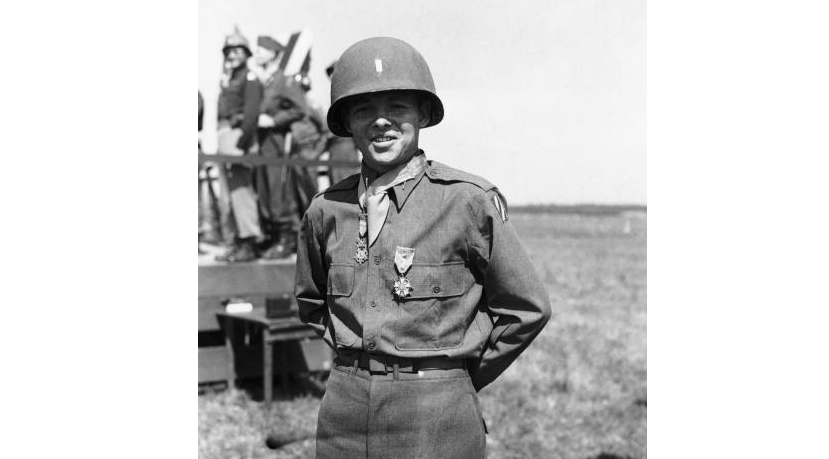
Audie Murphy, one of the most decorated American soldiers of World War II, had a net worth of $10 thousand at the time of his death in 1971. After serving with valor during the war, Murphy became a Hollywood actor and continued to live a life marked by both triumph and personal struggles. His story is a unique blend of military heroism, film stardom, and a life shaped by the psychological and financial toll of war.
Early Life
Audie Leon Murphy was born on June 20, 1925, in Kingston, Texas, into a life of extreme poverty. Growing up on a cotton farm with eleven siblings, Murphy learned to hunt and shoot to help feed his family. His father abandoned the family, and his mother died when he was just 17, leaving him to care for his younger siblings. Despite these hardships, Murphy’s determination and resilience set the stage for his extraordinary future.
World War II Heroics
Audie Murphy enlisted in the U.S. Army at the age of 17, lying about his age and weight to join. Despite his small size and lack of military training, Murphy proved to be an exceptional soldier. He served in North Africa, Sicily, Italy, and France, participating in some of the fiercest battles of World War II. His most heroic act occurred in January 1945, when he single-handedly held off a German force, using a burning tank destroyer to fight off enemy troops. For this action, he received the Medal of Honor, becoming the most decorated American soldier of World War II with 33 medals and decorations.
Hollywood Career
After the war, Murphy transitioned into acting, with James Cagney helping him break into Hollywood. Murphy starred in approximately 40 films, most of them Westerns and war movies, often playing characters that mirrored his real-life persona of a brave, morally-driven soldier. His most famous film was To Hell and Back (1955), based on his autobiography, in which he portrayed himself. Despite his fame, Murphy was reluctant about his acting career and often joked about his lack of talent, saying financial necessity motivated much of his work.
Financial Struggles and Bankruptcy
Despite his Hollywood success, Murphy’s financial situation deteriorated later in life. He suffered from poor business decisions and a severe gambling addiction. In 1968, Murphy declared bankruptcy after losing a large sum of money in a failed oil deal during the Six-Day War. He also faced mounting debts, including unpaid taxes, which led to the IRS garnishing his television residuals. Despite these setbacks, Murphy turned down lucrative offers to appear in commercials for alcohol or cigarettes, preserving his public image as a role model.
Personal Struggles and Later Years
Behind his heroic public persona, Murphy struggled with post-traumatic stress disorder (PTSD), experiencing severe nightmares, insomnia, and emotional distress. He rarely discussed the psychological toll of his war experiences, but his personal difficulties were well-known to those close to him. He was married twice and had two children, but his later years were marred by financial and emotional challenges. Despite this, he advocated for better treatment of veterans and continued to raise awareness about the psychological cost of war.
Death and Legacy
Audie Murphy died in a plane crash on May 28, 1971, at the age of 45. The crash, which occurred in poor weather conditions on Brush Mountain, Virginia, claimed the lives of Murphy, the pilot, and four others. Murphy was buried with full military honors at Arlington National Cemetery, where his grave remains one of the most visited.
Today, Audie Murphy’s legacy endures. His name lives on in numerous veterans’ organizations, hospitals, and the Audie Murphy Club, which honors excellence among U.S. Army noncommissioned officers. He is remembered as an American hero who faced the horrors of war with bravery and grace, despite the personal toll it took on him.
Plane Crash Settlement
In 1975, a court awarded Murphy’s widow and their two children $2.5 million in damages due to the crash, which is equivalent to $15 million today. This settlement helped provide financial security for his family after his untimely death.