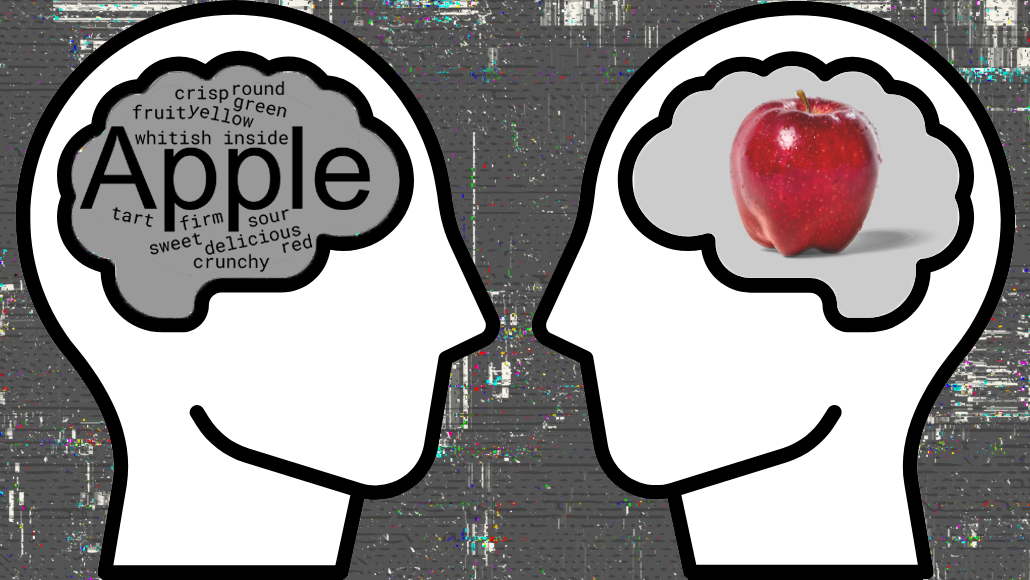
Ten years ago, the world was introduced to a remarkable discovery: some people have no conscious mental imagery at all. When asked to “see an apple in your mind’s eye,” they see nothing—no color, no shape, just darkness. This condition, known as aphantasia, revealed a striking divide in human cognition. What many had assumed was universal—the ability to visualize—turned out to be optional.
But as research has expanded, it’s become clear that aphantasia is not a single, uniform condition. Rather, it’s a spectrum with immense variation in how it manifests and affects daily life.
Rethinking What It Means to “See” in the Mind
For most people, closing their eyes and imagining a red apple produces a faint but recognizable visual—round, shiny, perhaps sitting on a table. For someone with aphantasia, no such image appears. Yet this absence of visual imagery doesn’t necessarily imply a lack of imagination or creativity. In fact, studies show that aphantasics are no less creative and are even overrepresented among scientists, mathematicians, and visual artists.
What’s more, they may be less prone to certain mental health problems. Because mental imagery plays a role in rumination and intrusive thoughts, aphantasics often report fewer symptoms of anxiety and post-traumatic flashbacks. The brain, it seems, compensates in other ways.
A Spectrum, Not a Category
Recent research has shown just how different one aphantasic can be from another. There are multiple forms of aphantasia, each reflecting unique neurological mechanisms:
- Dream imagery: Some aphantasics report vivid dreams with visual elements, while others dream in sounds, feelings, or words only.
- Sensory selectivity: Some cannot picture images but can still “hear” a song internally or “feel” textures in their mind. Others experience a total lack of sensory imagination across all senses.
- Involuntary imagery: Certain individuals experience flashbacks or spontaneous images, even though they cannot create mental pictures voluntarily.
- Drug-induced imagery: Psychedelics or certain medications can trigger temporary visual imagery in some aphantasics—but not all.
- Perceptual illusions: Some forms of aphantasia alter how people perceive optical illusions, suggesting deep differences in how the visual cortex processes information.
These distinctions mirror the complexity of blindness. Just as there are many causes and types of physical blindness—ranging from damage to the retina to lesions in the brain—there are likewise many neurological pathways through which imagery can be disrupted. The “mind’s eye” relies on multiple brain systems; when any link in the chain fails, the result is a different version of aphantasia.
Why This Matters
Understanding these differences is crucial. When we lump all aphantasics into a single group, we overlook how diverse their experiences are. Some may struggle with tasks requiring visual memory, while others compensate effortlessly using verbal or spatial reasoning. Some might feel emotionally detached from memories, while others recall sensations vividly but without pictures.
This diversity also matters for future interventions. Just as doctors tailor treatments for distinct forms of blindness, cognitive scientists and clinicians must learn to identify what kind of aphantasia each person has—whether it stems from perceptual disconnection, memory encoding, or emotional imagery deficits.
The Many Ways to Imagine
As philosopher and neuroscientist Adam Zeman, one of the pioneers in this field, once noted, “Mental imagery is the canvas of the mind.” Yet for those without it, imagination doesn’t disappear—it simply takes other shapes. Aphantasics often describe thinking in words, concepts, or bodily sensations rather than pictures. Their creativity proves that imagination is not confined to sight; it thrives in the language of abstraction.
To echo Leo Tolstoy’s famous line, “Happy families are all alike; every unhappy family is unhappy in its own way.” Conscious imagery may be similar for everyone—but the absence of imagery, aphantasia, is unique in every mind. Understanding its many forms not only deepens neuroscience—it expands what it means to imagine at all.