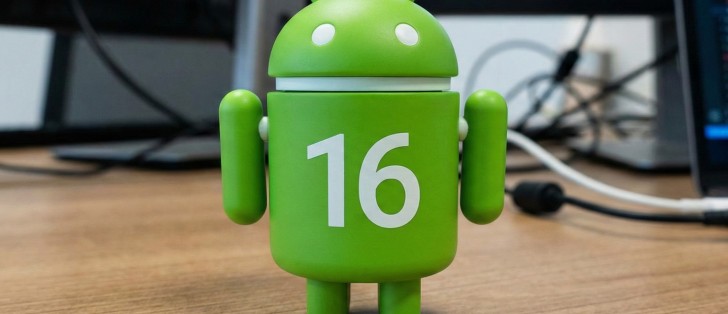
The tech world was abuzz when Google released Android 16 in June 2025 for its Pixel devices, but more than seven months later, the question on many users’ minds is: how many Android devices are actually running the latest version of the operating system?
In an effort to provide some clarity, Google recently updated its Android version distribution chart with data from December 1, 2025. While this information is a few months old, it offers a snapshot of the Android ecosystem’s update landscape. The results, though not particularly striking, shed light on the adoption rate for Android 16 across different devices.
Android 16: Adoption Rate and Current Statistics
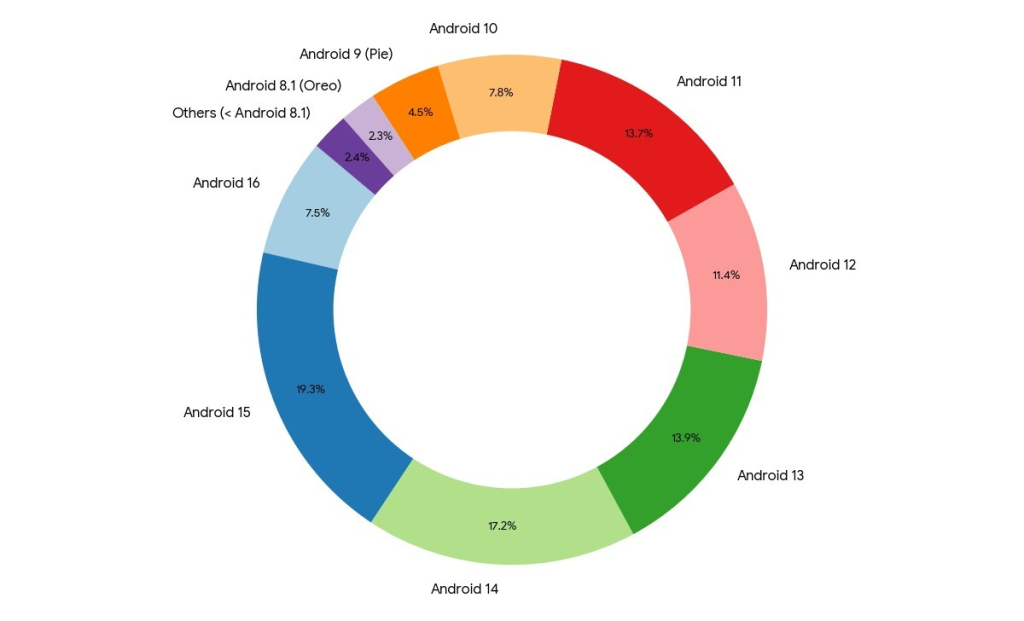
According to Google’s latest update, Android 16 currently runs on 7.5% of all active Android devices. While this figure seems modest, it’s important to consider the vast number of devices in the Android ecosystem. Unlike Apple’s tightly controlled iOS platform, Android is an open-source system with devices from various manufacturers. Each of these companies has its own approach to software updates, making the process far more complex than in the Apple ecosystem.
In comparison, Apple’s latest iOS versions generally experience faster adoption rates due to its centralized distribution model. Android, on the other hand, faces the challenge of updating a wide array of devices with different hardware specifications, which often causes delays in receiving updates.
Other Android Versions: A Comparison of Adoption Rates
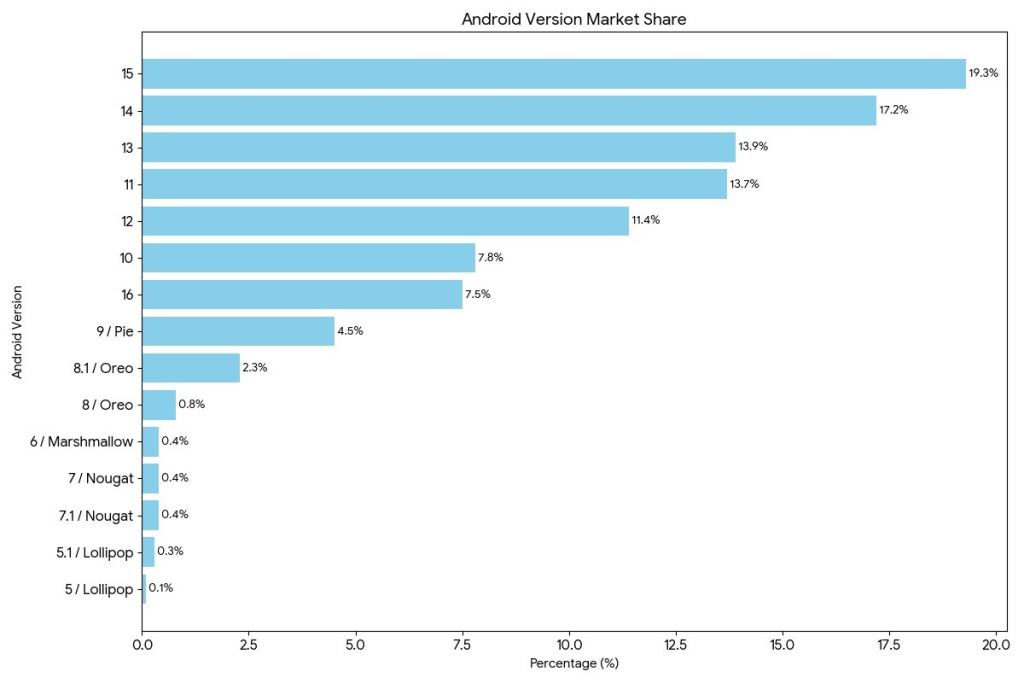
The distribution of Android versions shows that Android 16 lags behind other, older versions. The leading version in terms of adoption is Android 15, with 19.3% of devices still running it. Following closely are Android 14 with 17.2% and Android 13 with 13.9%. Android 16, unfortunately, sits in seventh position, behind even older versions like Android 11, Android 12, and Android 10.
Here’s a breakdown of the top five Android versions by adoption rate:
- Android 15: 19.3%
- Android 14: 17.2%
- Android 13: 13.9%
- Android 11: 11.1%
- Android 12: 9.7%
This ranking highlights the fragmented nature of the Android ecosystem, where many users continue to run older versions due to slow or staggered updates from device manufacturers.
Why Is Android 16 Adoption So Slow?
The slower adoption of Android 16, while disappointing for those eager to try out the new features and improvements, isn’t surprising. As mentioned, Android’s open ecosystem creates challenges for rapid adoption. Manufacturers need to test and optimize the new Android version for a variety of devices, ranging from budget phones to high-end flagship models, before they can roll out the update.
Moreover, some manufacturers are known for being slower than others when it comes to delivering major updates, leading to uneven distribution across devices. In contrast, Apple’s ecosystem benefits from a controlled release, which ensures that updates reach users quickly and efficiently.
Future Growth: What’s Next for Android 16?
While the adoption rate of Android 16 may be lower than expected, the data reflects a trend that’s familiar for Android updates. As time progresses, the adoption rate will likely increase. Device manufacturers and carriers are gradually pushing out updates, which means more users will eventually experience Android 16.
Additionally, as Android 16 becomes the baseline for new devices, its adoption rate will continue to climb steadily. It’s also worth noting that many Android users choose to skip updates for various reasons, including concerns over performance or battery life, which can delay the process.
Conclusion
The distribution of Android 16 across devices may seem underwhelming right now, but it is important to consider the bigger picture. Android is an open ecosystem, and the process of rolling out software updates is inherently more complicated than it is for iOS. As more devices receive the update and manufacturers push Android 16 to their devices, the adoption rate will naturally rise. In the coming months, Android 16 will continue to grow, offering users access to new features, improved security, and a smoother experience.