Amid Sudan’s deepening humanitarian emergency, Chad has been praised for showing solidarity by hosting hundreds of thousands of refugees fleeing violence, as United Nations officials warn that needs inside Sudan continue to outpace available support.
The conflict, which erupted in 2023 between the Sudanese Armed Forces and the Rapid Support Forces, has displaced about 9.3 million people and triggered one of the world’s largest hunger crises. Communities inside Sudan report severe shortages of shelter for internally displaced people, limited assistance for survivors of sexual violence, and inadequate support for people living with disabilities.
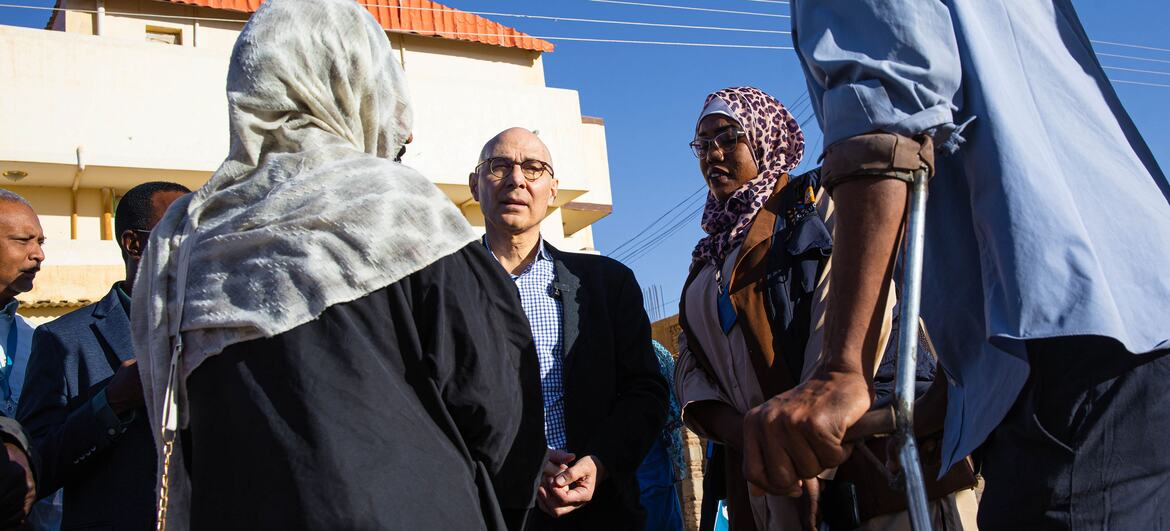
These concerns were highlighted by Volker Türk, the UN High Commissioner for Human Rights, following meetings with more than 40 Sudanese civil society leaders in Dongola, the capital of Sudan’s Northern State. He said local groups are struggling under the weight of the crisis but remain determined to find solutions.
Türk noted that civil society organisations inside Sudan are calling for stronger cooperation from national authorities and sustained engagement from the international community. He stressed that without broader support, their efforts to protect vulnerable populations will remain severely constrained.
During his visit, Türk met with Sudanese officials, humanitarian partners, and displaced families affected by fighting in Darfur and Kordofan. He is expected to conclude the mission with press briefings outlining key human rights concerns and recommendations.
As the crisis inside Sudan worsens, neighbouring Chad has become a critical refuge. Since April 2023, more than 900,000 Sudanese refugees have crossed into eastern Chad, according to the UN refugee agency. New arrivals continue to enter the country daily, many after being displaced multiple times.
The recently appointed UN High Commissioner for Refugees, Barham Salih, visited Chad this week, meeting refugee families and local authorities. Refugees described years of violence, displacement, and serious human rights abuses since the conflict began.
Salih described Chad’s response as a powerful act of solidarity, noting that the country has kept its borders open despite economic strain and environmental pressures. He also acknowledged host communities that have shared limited resources with displaced families.
The UN refugee agency said it is working with the Chadian government and partners to expand access to basic services and economic opportunities for both refugees and host populations. Officials emphasised that long-term solutions require sustained international funding and inclusive national policies.
Salih also pointed to lessons from Chad and Kenya, saying both countries demonstrate how refugee protection and inclusion can help shift responses from emergency relief to durable solutions. He said when refugees are supported and integrated, they can rebuild their lives and contribute positively to host communities.
As fighting continues in Sudan, UN officials warn that regional solidarity alone will not be enough. They are urging the international community to increase humanitarian funding, protect civilians, and support pathways toward peace to prevent further displacement and suffering.